


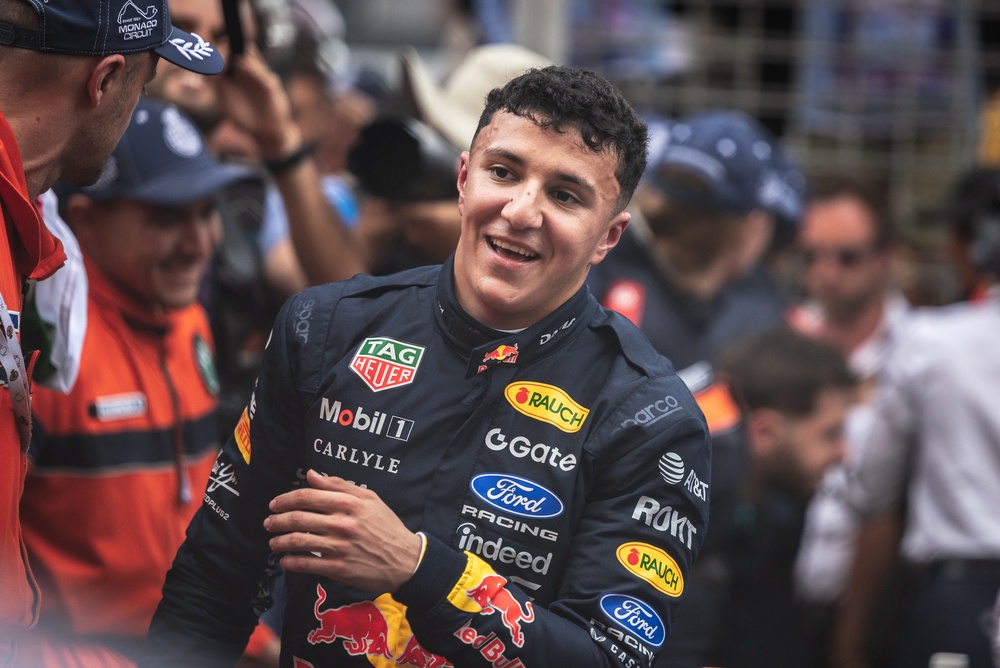
Red Bull has confirmed Isack Hadjar as its second driver for 2027, settling the more scrutinized half of a lineup that has been unstable for years.
Why does this seat matter so much?
Because of what happened to everyone else in it. A succession of drivers has struggled alongside Max Verstappen at Red Bull, with several removed or reassigned within a season. Isack Hadjar has produced eight points finishes and a podium at Monaco in his first year at the senior team, which by the standard of recent occupants is a clear success rather than a modest one.
What is his background?
He came through Red Bull’s junior programme, joining the organisation in 2022 and racing for the junior team in 2025 before promotion. This is only his second season in Formula 1, a detail the team principal emphasised in explaining why the extension was straightforward. Isack Hadjar returns this weekend in Azerbaijan after missing three races with a wrist injury.
What did the team say?
The principal described his first year as strong on and off track, praising his time at the factory working with engineers and his composure from the opening weekend in Melbourne. He framed the extension as a statement of belief during a difficult period, referring to the injury layoff. Isack Hadjar said he understood the scale of the organisation immediately and described driving alongside a four time champion as a privilege.
How does this fit with Verstappen?
Red Bull ended months of speculation at the Dutch Grand Prix in August by announcing a deal keeping Verstappen with the team through 2030. With both seats now settled, the senior team has the longest secured lineup it has had in some time, which matters heading into a season with new technical regulations.
What is still unresolved?
The junior team. Racing Bulls has two drivers performing well in Liam Lawson and Arvid Lindblad, and a Red Bull junior currently leading the Formula 2 championship with three rounds remaining. Lawson deputised for Isack Hadjar during the injury absence. Lindblad has ten points finishes from 14 rounds as a rookie. Three credible candidates for two seats is the position the team principal there recently described as a fortunate problem.
How might that be resolved?
One option is retaining the current pairing and placing the Formula 2 leader in a reserve role for a year, which is how Red Bull has historically parked drivers it is not ready to promote. The junior team has said it feels no urgency and typically decides later than this point in the season.
What does this say about Red Bull’s approach?
A change in patience. The organisation built a reputation for moving drivers quickly, sometimes mid season, and that churn arguably made the second seat harder to occupy than it needed to be. Extending Isack Hadjar after eight months at the senior team, including a stretch on the sidelines injured, is a different posture than the one that produced the revolving door.
What comes next?
Baku, and his return to the car. The extension removes the pressure that would otherwise attach to a driver coming back from injury into an unresolved contract situation, which is not nothing in a sport where form and security tend to move together.
