


The final whistle had barely sounded when the two men embraced at midfield. One was holding the World Cup winner’s medal, the other the runner-up’s. What passed between them in those quiet seconds has become one of the most talked-about moments of the tournament.
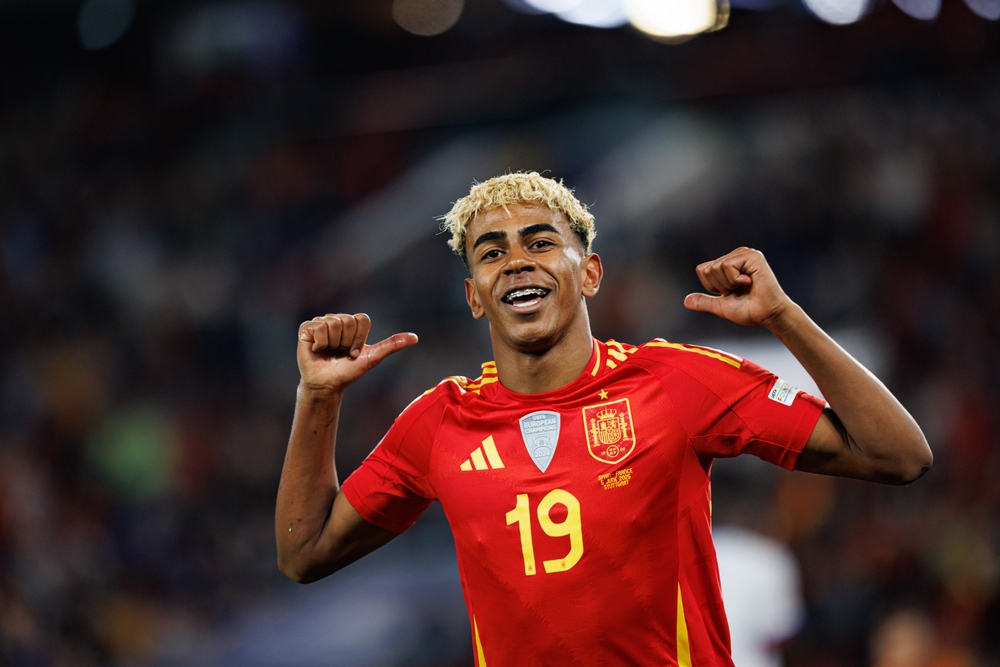
Lamine Yamal, 19, sought out Lionel Messi on the pitch at MetLife Stadium immediately after the final whistle. The two had a brief but meaningful exchange that the young Spanish winger later described with reverence. The veteran told the teenager to keep going his own way, and that the future of the game belongs to their generation. Yamal said those words carried as much weight for him as the gold medal around his neck.
Coming from the player many regard as the greatest in the history of the sport, directed at a teenager who now wears the No. 10 shirt Messi once wore at Barcelona, the moment felt like more than a post-match pleasantry. It felt like a passing of something intangible.
A connection that goes back nearly two decades
The relationship between Messi and Yamal predates their careers as teammates or opponents. A photograph that resurfaced widely in the days before the final showed a then-20-year-old Messi cradling a five-month-old infant during a UNICEF and Barcelona charity calendar shoot. That infant was Yamal.
The image, which had circulated as a curiosity in prior years, took on an entirely new dimension as the two prepared to face each other in the championship match of the world’s biggest sporting event. Messi had spoken about Yamal generously before the final, describing him as a tremendous player and a global star, and saying that at 19 he had his entire career ahead of him. By Sunday night, those words felt prophetic. Yamal had been one of Spain’s most electric performers throughout the tournament.
He has worn Messi’s former No. 10 shirt at Barcelona since last season, inheriting one of football’s most pressurized numbers from a player still very much active and visible on the world stage. The shirt number is a thread that ties the two across geography and generation.
Messi’s final chapter, Yamal’s first
The Argentina captain finished the 2026 World Cup with eight goals and four assists across all eight of Argentina’s matches. At 39, with a runner-up medal and a career already beyond comparison, he exited the tournament having performed at a level that few of his critics would have predicted at the start of the competition. Whether Sunday’s match was his last appearance for Argentina remains an open question he declined to address immediately after the final.
For Yamal, the tournament represented something entirely different. He is at the beginning of a career that is already drawing extraordinary projections. Multiple players and coaches described him throughout the tournament with a reverence usually reserved for veterans, not teenagers.
What Messi said to him on the pitch carried meaning precisely because of who said it. Yamal called Messi the best in the history of the game and described approaching him after the final as an act of respect, the kind shown by someone who has grown up watching another person define what excellence in football looks like.
Why the moment resonated
Post-match exchanges between opponents are common at every level of the sport. Players congratulate each other, share brief words and move on. This one was different, and the reason it registered with people around the world is not complicated.
He has been the dominant figure in global football for nearly two decades. The question of who comes next has been asked in various forms since he and Cristiano Ronaldo began to age out of their absolute peaks. Sunday’s moment on the pitch in New Jersey did not answer that question definitively, but it offered a frame. The man who has held the game at its highest level for longer than most was telling a teenager that the game belongs to him now.
The teenager received the gold medal and the encouragement of his hero in the same evening. For a 19-year-old, that may be more than anyone could reasonably ask for.
