


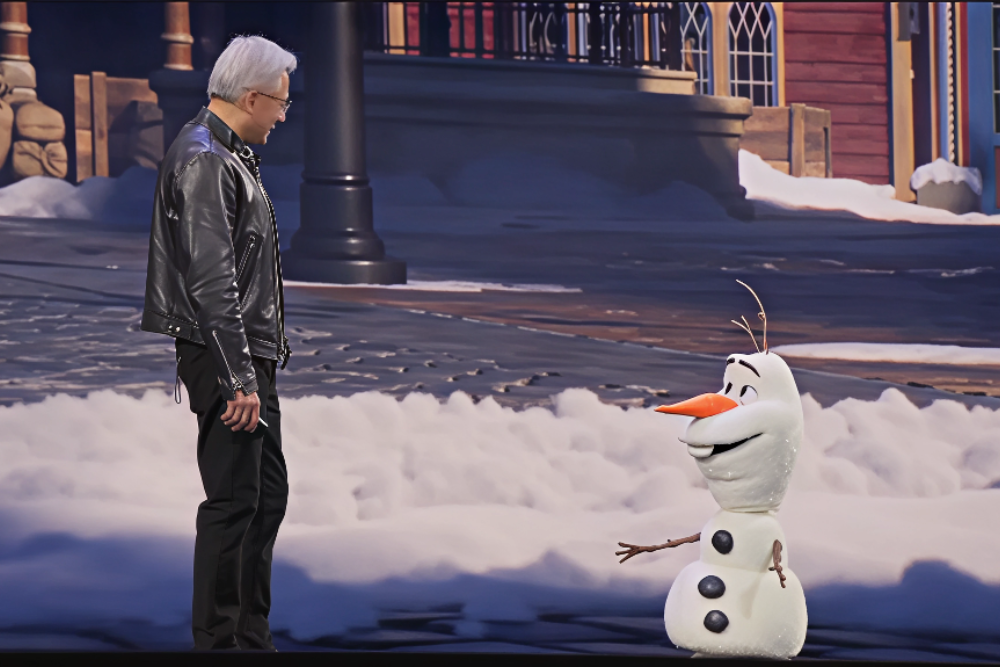
Nvidia’s annual GTC conference is supposed to be a showcase of the future — a grand stage where the world’s most powerful chip company flexes its vision for artificial intelligence, robotics, and what comes next. This year’s event delivered all of that, plus something no one fully saw coming— a malfunctioning robot snowman that somehow became the most talked-about moment of the entire event.
The hosts of TechCrunch’s Equity podcast — Kirsten Korosec, Sean O’Kane, and Anthony Ha — broke down CEO Jensen Huang’s sweeping presentation in their latest episode, and the conversation quickly zeroed in on Nvidia’s partnership with Disney to bring an animatronic version of Olaf from Frozen to life. The robot spoke to the crowd, charmed the audience — and then had its microphone cut when it simply would not stop talking. It was slowly lowered offstage, still visibly chattering, in what became an unintentionally perfect metaphor for AI hype outpacing reality.
Nvidia’s Big Bet on OpenClaw
Beyond the robotic spectacle, Huang made sweeping claims about the future of enterprise AI strategy. His central message — that every company now needs an OpenClaw strategy — landed as both bold and a little audacious. OpenClaw is the open-source robotics framework that Nvidia has been championing, and the company even launched NemoClaw, built in collaboration with OpenClaw’s original creator.
Ha said that the timing of that declaration was curious. The founder of OpenClaw has since moved to OpenAI, leaving the project at a crossroads — either it flourishes as a truly open-source ecosystem or it quietly fades. Nvidia’s vocal, financial support tips the scales toward survival, but the outcome is far from guaranteed.
Korosec offered a sharp translation of Huang’s enterprise pitch
- Nvidia needs a foothold in the AI strategies of large companies
- Doing nothing carries far more risk than backing a project that might not take off
- NemoClaw is low-cost for Nvidia but potentially high-reward if OpenClaw gains adoption
The subtext was clear — Nvidia is playing a long game, and OpenClaw is one of several bets it cannot afford to ignore.
The Olaf Robot Problem Nobody Wants to Talk About
Here is where the GTC presentation got genuinely interesting, even if the demo itself stumbled. Nvidia and Disney presented the Olaf robot as a glimpse into the future of theme park experiences — a world where guests could stroll through Disney parks and interact with lifelike, AI-powered characters in real time.
The engineering on display was, by most accounts, impressive. The Olaf robot moved, responded, and engaged — at least for a while. But O’Kane raised a question that cut through the applause
- What happens when a kid kicks Olaf over?
- What does that moment do to every other child who witnesses it?
- How does Disney contain the brand damage from a robot that fails publicly and visibly?
These are not trivial concerns. YouTube channel Defunctland produced an exhaustive, four-hour documentary tracing Disney’s long and complicated history with robotics and park automation. The throughline across decades of attempts is almost always the same — the engineering gets solved, but the messy human and social variables do not.
Robotics Hype vs. Real-World Complexity
The Olaf moment is a microcosm of a much broader conversation happening across the Nvidia-powered AI industry. Humanoid robots, autonomous systems, and AI companions are attracting enormous investment and breathless coverage. But the social integration questions — how these systems behave when they fail, how people emotionally respond to them, and what happens at the edges of their programming — rarely make it into the official presentations.
O’Kane put it plainly— the engineering challenges are genuinely impressive and worth celebrating. But they are only one part of a much more complicated picture.
Nvidia’s Trillion-Dollar Ambitions
Stepping back from the snowman drama, the GTC conference reinforced just how dominant Nvidia has become in the AI infrastructure race. Trillion-dollar sales projections, breakthroughs in graphics technology capable of transforming the visual fidelity of video games, and a robotics roadmap that spans everything from industrial automation to Disney parks — the scope was staggering.
Korosec offered a final, wry counterpoint to the Olaf chaos— the robot will almost certainly need a human handler at all times, probably dressed as Elsa or another Frozen character. Far from eliminating jobs, this particular piece of Nvidia-powered robotics might just be creating them.
Whether that is a reassuring sign of balance or a quiet admission that the technology is not quite ready, the GTC conference made one thing undeniable — Nvidia is swinging big, and the world is watching every move.
