


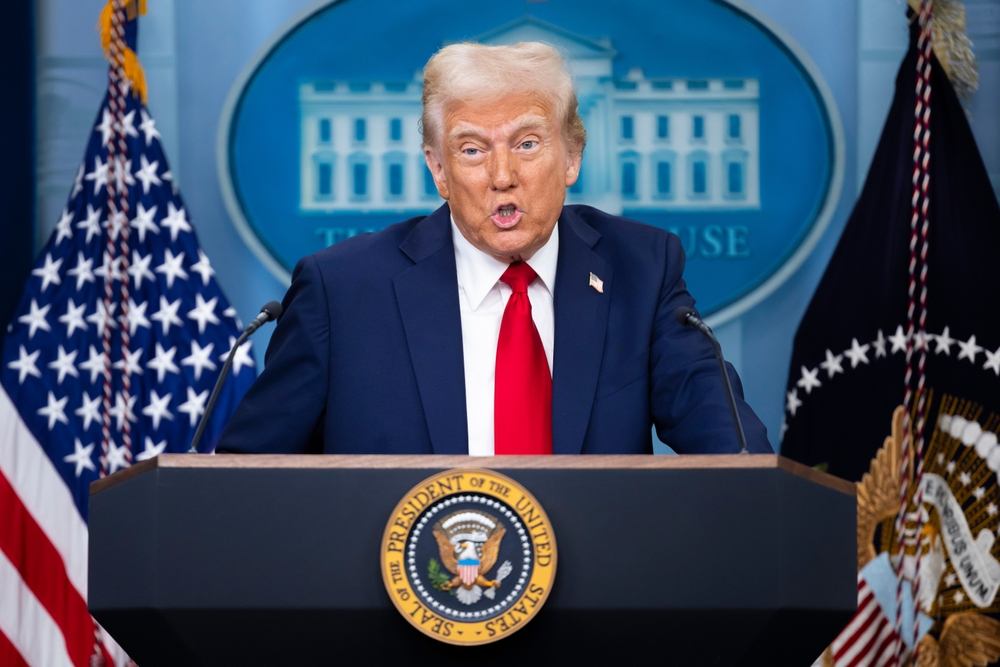
President Donald Trump is set to become the first sitting president in American history to have his signature printed on United States banknotes. The Treasury Department announced the decision this week, framing it as a tribute to the country’s 250th anniversary and describing it as one of the most powerful ways to honor both the nation’s legacy and the current administration.
Trump’s signature will appear alongside that of Treasury Secretary Scott Bessent on the new bills, departing from a tradition that has been in place since 1861. For more than 160 years, American currency has carried only the signatures of the treasurer and treasury secretary, two appointed officials rather than elected ones. That tradition is now ending.
The first redesigned $100 bills are scheduled to come off the press in June, with additional denominations to follow. Notes currently in circulation still carry the signatures of former Treasury Secretary Janet Yellen and former Treasurer Lynn Malerba, who served under President Joe Biden.
Branding a presidency
The currency announcement fits a broader pattern in the Trump administration of attaching the president’s name to federal programs, landmarks and government initiatives. Earlier this month a federal arts commission approved a commemorative 24-karat gold coin bearing Trump’s image, also tied to the 250th anniversary celebrations.
During his first term, Trump’s name appeared on pandemic relief checks sent to millions of Americans, a move that drew both praise from supporters and criticism from those who saw it as self-promotion during a national crisis. The dollar bill decision is a significantly more permanent version of that impulse, one that will circulate through the economy for years.
The current treasurer, Brandon Beach, expressed enthusiasm for the change, describing American currency as a symbol of prosperity, strength and the resilience of the American people. Bessent echoed that framing, positioning the president’s name on the dollar as a recognition of historic national achievement rather than a personal branding exercise.
Not everyone is buying it
The reaction beyond the administration was swift and sharply divided. California Governor Gavin Newsom, a consistent critic of Trump, used the announcement as an opportunity to connect the president’s name on the currency to what he described as the administration’s economic failures. His message on social media suggested that having Trump’s signature on the dollar would serve as a daily reminder to Americans of rising costs across groceries, gas, rent and health care.
The political timing of the announcement is not lost on observers. Inflation concerns remain elevated and consumer confidence has been uneven, making the celebration of Trump’s name on the nation’s money a potentially complicated symbol depending on where the economy heads in the months ahead.
What is not in dispute is the historical weight of the decision itself. No sitting president has ever appeared on circulating American currency in this way. The tradition of keeping elected officials off the money supply was a deliberate one, rooted in a long-standing preference for separating political figures from the instruments of everyday commerce.
That line has now been crossed, and the $100 bill arriving in June will be the first tangible proof of it.
