


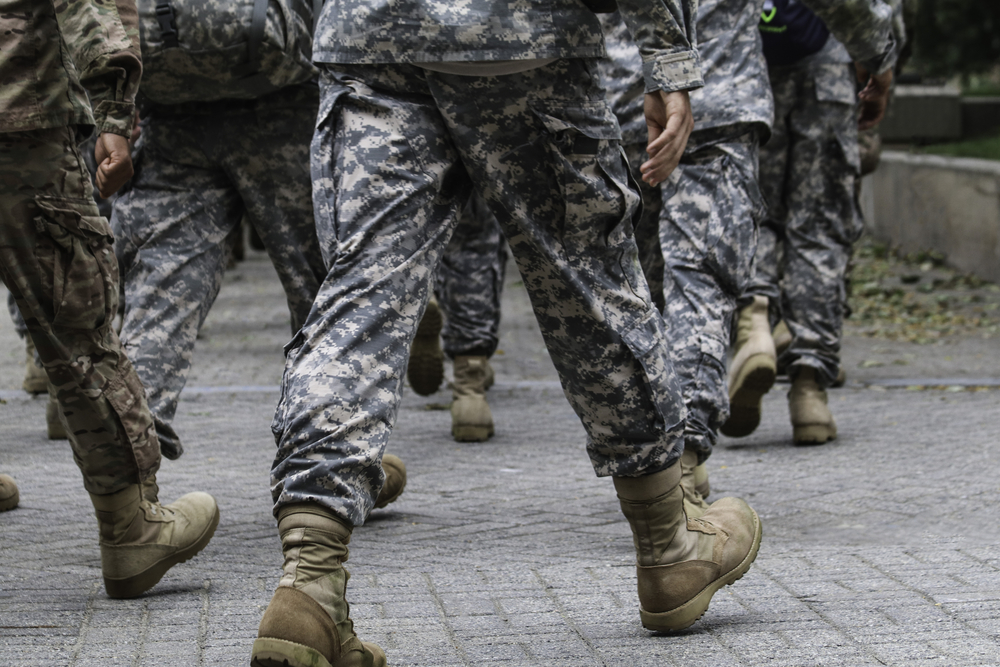
U.S. special operations forces rescued a second American airman from Iranian territory Saturday night, completing a two-day operation that senior officials described as one of the most complex search and rescue missions in recent military history.
President Donald Trump announced the rescue Sunday on Truth Social, confirming that the service member had sustained injuries but was expected to recover fully. The airman had been airlifted to Kuwait for medical treatment, according to the New York Times.
The rescue came days after a U.S. F-15E Strike Eagle was shot down over Iran on Friday, the first American aircraft lost since the start of the war on Feb. 28. The aircraft carried two crew members: a pilot and a weapons systems officer. Trump confirmed that the pilot had been rescued a day earlier but said the military had withheld that information to avoid compromising the second operation.
A two-day race against Iranian forces
The operation to recover the weapons systems officer unfolded over two days in the mountains of southern Iran. The New York Times, citing current and former U.S. officials familiar with the mission, reported that hundreds of special operations troops were involved. Iranian forces were also searching for the airman, and Iranian media reported that rewards of up to $100,000 had been offered for his capture.
The officer was ultimately retrieved after what Al Jazeera, citing a U.S. government official, described as a heavy firefight. Video footage reviewed by the Wall Street Journal showed Iranian forces firing at U.S. helicopters during the rescue attempt.
Two transport aircraft that had been deployed to extract the airman and the special forces team became stuck inside Iran during the operation. Three replacement aircraft were sent to retrieve the troops. The two aircraft left behind were destroyed to prevent them from falling into Iranian hands, according to a U.S. military official cited by the New York Times.
Trump said the military had been monitoring the airman’s location around the clock and that dozens of aircraft were deployed to support the mission. He described the officer as never having been truly alone, though Iranian forces were described as closing in by the hour.
Significance and context
The recovery of both crew members without any American fatalities was presented by the Trump administration as confirmation of U.S. air superiority over Iran. Trump repeated that claim in his Sunday announcement, arguing that the success of the two operations demonstrated overwhelming military dominance in Iranian airspace.
The stakes of the operation extended beyond the rescue itself. Laurel Rapp, director of the U.S. and North America program at Chatham House, told the BBC before the rescue that a captured crew member would have represented significant leverage for Tehran in any negotiations to end the conflict. The war was launched by the U.S. and Israel on Feb. 28.
Trump had separately issued a renewed threat on Saturday, warning of a major assault on Iranian power stations if Tehran failed to agree to a peace deal or reopen the Strait of Hormuz within 48 hours. The rescue announcement came against that backdrop of continued pressure on Iran to reach a settlement.
