


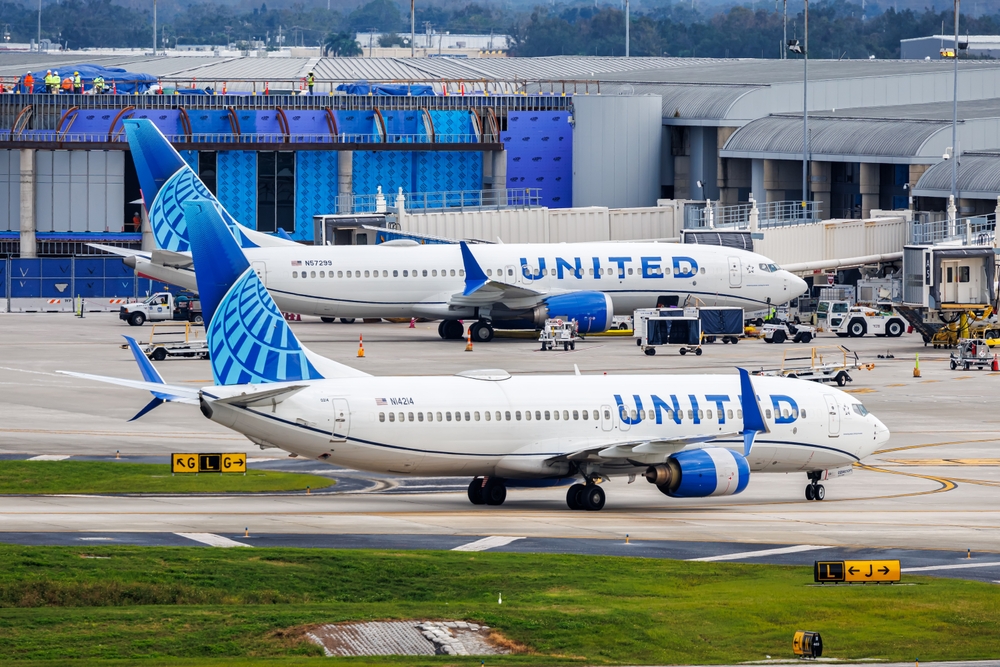
A middle seat has long been aviation’s least loved perch, wedged between elbows and armrests, but United Airlines is turning that discomfort into a business opportunity worth paying for.
The airline said Tuesday that it will begin charging extra to keep that seat open on select rows of its new Airbus A321XLR jets, giving window and aisle passengers a shared tray table and a bit more room to stretch out during longer flights. The rows sit within the extra legroom section of the cabin, a space United has already spent years expanding as travelers show a growing willingness to pay for comfort over a lower fare. United views the shared tray table setup as a low cost way to test demand before committing to a wider rollout.
United has not revealed pricing yet, and the seats will not go on sale until later this year, though the concept already borrows from a playbook popular across Europe, where similar setups are sold as a short haul version of business class rather than a simple upgrade. United has signaled the option could eventually expand beyond the A321XLR to other aircraft in its fleet, suggesting this could become a lasting fixture rather than a one plane experiment.
For a company competing in one of travel’s most cutthroat corners, the move fits a broader pattern of slicing cabins into narrower, more customizable tiers, each carrying its own price tag and its own set of perks.
Rivals Reshape Their Cabins Too
Delta joined this shift just last week, rolling out a basic business fare and a stripped down premium economy option, both missing perks once bundled automatically into a single ticket. Travelers who book Delta’s cheapest long haul business fare will no longer get automatic access to the airline‘s top tier lounge, and seat selection is no longer guaranteed either, features that used to feel like standard parts of flying up front.
The pattern across the industry is unmistakable. Carriers are unbundling premium cabins the same way they unbundled economy years earlier, splitting comfort into a menu of add ons instead of folding everything into one fixed fare. What once felt like a simple choice between coach and business class has turned into a layered pricing structure where nearly every comfort has its own line item.
United Explores Bigger Bets On Comfort
United is not stopping at tray tables. Back in March, the carrier unveiled plans for a trio of economy seats on select widebody jets that fold into something close to a bed, a configuration United calls the Relax Row. The idea shows how far carriers are willing to go to capture travelers who want extra room but cannot or will not pay for a full business class fare, effectively creating a new tier between coach and premium cabins.
United’s recent moves so far include the following.
- A new charge for an open middle seat on select A321XLR rows
- A setup that already functions as short haul business class across parts of Europe
- Plans for bed like Relax Row seating on select widebody aircraft
- A wider industry shift toward narrower upsell tiers, from empty seats to lounge access
Why Comfort Keeps Paying Off
Premium cabins have become one of aviation’s most resilient revenue sources, prompting carriers including United to keep adding seats, curtains and perks that separate paying more from paying extra. Spending on these upgraded cabins has held steady even as budget conscious flyers hunt for cheaper coach fares, giving airlines a clear incentive to keep expanding that side of the plane.
The trend has grown so aggressive that manufacturers have struggled to keep pace, with increasingly elaborate seat designs contributing to delays in new aircraft deliveries across the industry. Building a fully reclining suite or a convertible bed row takes far more engineering than a standard seat, and that complexity has rippled through production schedules well beyond a single carrier.
Whether travelers embrace paying to avoid a stranger’s elbow remains to be seen, but United is betting the answer is yes. If history is any guide, rivals will be watching closely before deciding whether to follow suit, and the empty middle seat may soon become just another line on the fare menu rather than a stroke of luck.
Source: CNBC
