


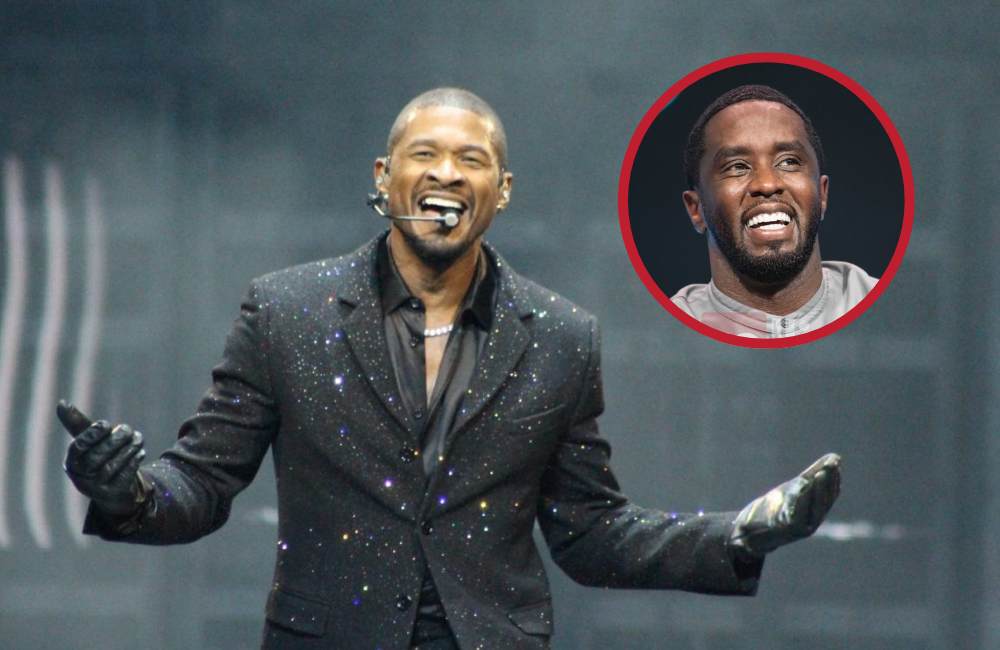
Usher is facing significant public criticism after speaking favorably about Sean “Diddy” Combs in a recent interview. Combs, the founder of Bad Boy Records, is currently serving a 50-month federal prison sentence following his July 2025 conviction on two federal prostitution-related charges. The remarks have sparked widespread debate about loyalty, accountability and what it means to separate a person’s legacy from the harm they caused.
In a conversation with Forbes, Usher described Combs using the word “legacy” and made clear that his personal experience with the mogul did not reflect the picture of him that emerged through the legal proceedings and public allegations. He framed his comments as a recognition of Combs’ undeniable contributions to Black entrepreneurship and hip-hop culture rather than a dismissal of the serious charges he now faces.
Usher reflects on Diddy’s influence on his career
The two men share a history that stretches back decades. Usher was still a teenager in the early 1990s when he first connected with Combs, who took him under his wing and mentored him during the formative years of his music career. Usher, now 47, described that relationship as foundational, crediting Combs with shaping his understanding of business, discipline and the mechanics of building something lasting within an industry that was still fighting to be taken seriously.
He spoke about the era in which Combs rose to prominence as a critical moment for hip-hop, one where a generation of artists and executives were actively working to prove the genre’s cultural and commercial legitimacy. He placed Combs among the figures most responsible for that shift, describing his ability to transform culture into something tangible and financially viable as one of his most significant achievements. Usher made clear that those lessons stayed with him and continue to inform how he operates as a businessman today.
He also acknowledged that success at the level Combs reached brings its own pressures and complications, stopping short of excusing any specific behavior while framing his admiration around what he personally witnessed and benefited from.
Fans push back hard on social media
The public response was fast and largely critical. Clips from the interview spread quickly across social media, and many viewers were not willing to separate Combs’ cultural contributions from the gravity of what he was convicted of. Fans expressed disappointment, frustration and in some cases genuine hurt, with several pointing out that praising his legacy while acknowledging his flaws felt inadequate given the nature of the charges.
Some commenters questioned whether Usher fully appreciated the experiences of those who did not share his positive history with Combs. Others suggested his framing of the situation as one of misrepresentation was particularly troubling given the legal outcome. A number of fans also pushed back on the idea that Combs was uniformly beneficial to the artists and people around him, noting that not everyone who passed through his orbit came out ahead.
What the reaction reveals about a larger conversation
Usher’s comments have landed at a moment when the culture is still actively processing what accountability should look like for powerful figures whose contributions and conduct exist in painful tension with each other. His willingness to speak at all, and to do so with evident warmth toward someone the public has largely turned against, has forced a conversation that many would have preferred to avoid.
Whether his remarks reflect a blind spot, a genuine difference in experience or something else entirely, the reaction from fans makes one thing clear. When it comes to Diddy, there is very little room left for nuance, and Usher may have underestimated just how little patience people have for anything that sounds like a defense.
