


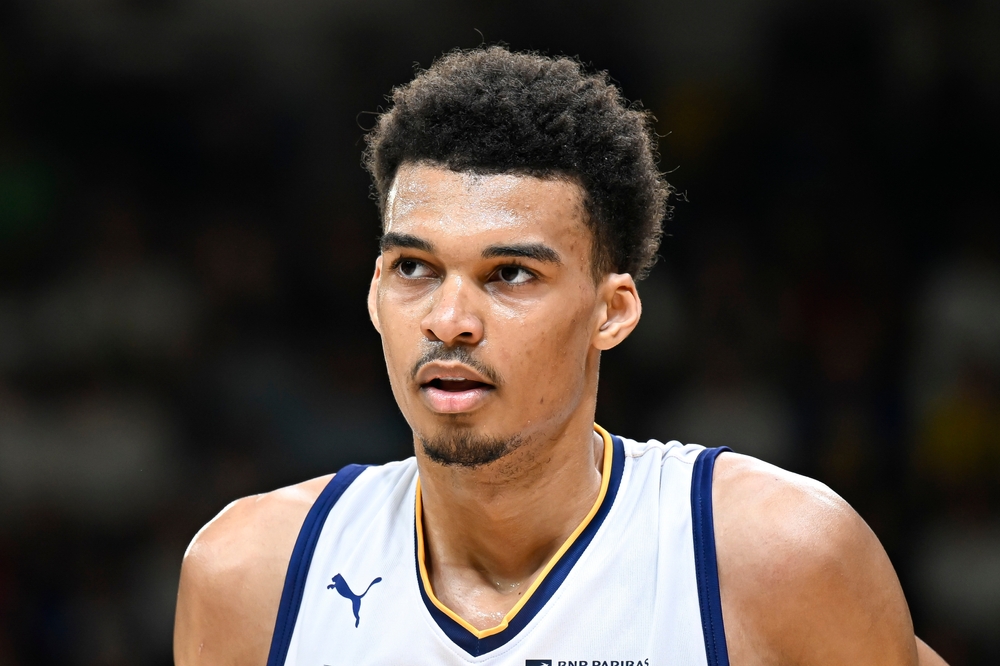
Chris Bosh knows what it is like to live with blood clots, and he knows what it can cost. Having watched Victor Wembanyama complete a remarkable postseason run with the San Antonio Spurs after his own blood clot diagnosis, the retired Miami Heat star is offering both advice and a candid warning rooted in his own experience.
Bosh, whose career was cut short by clotting issues that required him to stop playing basketball, has urged Wembanyama to stay disciplined about his medical regimen. He told a basketball media outlet that Wembanyama needs to stay on top of his treatment, adding that it only takes one more episode. Bosh said that for him, a second incident ended everything. He cannot play anymore.
The warning carries real weight. In February of this year, Bosh experienced a clotting emergency he described as life-threatening, saying he nearly dropped dead and had another pulmonary embolism. He was candid about having believed he was past the worst of it. He was not. He described the condition as something he now has to manage for the rest of his life.
Wembanyama’s own health journey
Wembanyama’s second NBA season was interrupted in February 2025 when the Spurs announced he had been diagnosed with deep vein thrombosis, a form of blood clotting, in his right shoulder. The condition is typically treated with blood-thinning medication, which generally prevents players from participating in contact sports. He played 46 games that season before being shut down.
What made his story remarkable was the speed of his return. Wembanyama was cleared to play basketball again in July 2025 and appeared in 64 games last season, including all five games of the NBA Finals against the New York Knicks. The Spurs managed his workload carefully throughout the season, but his presence and performance in the postseason erased much of the public anxiety about what the diagnosis might mean for his career.
Wembanyama spoke about the initial diagnosis in February, describing it as deeply destabilizing before he reframed his thinking. Wembanyama said he broke down when he first learned the news, not knowing how long he would be sidelined, and allowed himself to feel completely vulnerable. He then shifted his perspective and began treating the situation as a challenge. He now relies on a team of trainers, therapists, doctors and surgeons to maintain his health.
What Bosh experienced
Bosh first encountered the issue in February 2015, when a blood clot formed in one of his legs and traveled to his lungs, requiring a multiday hospital stay. He returned to play 53 games in the following season, but that proved to be the final campaign of his 13-year career. A subsequent clotting episode ended his playing days entirely, and the condition has remained part of his life.
Bosh is not speaking from a place of general wellness counsel. He is speaking as someone who experienced one too many episodes and lost the ability to do the thing he had spent his life doing.
The medical reality of blood clots in athletes
Deep vein thrombosis and related clotting conditions are manageable for many patients, but they require sustained attention to medication, monitoring and lifestyle factors that can influence recurrence risk. For professional athletes, the challenge is that the blood thinners used to treat clotting disorders can make participation in contact sports dangerous, because injuries that would be minor for other players can become severe in someone whose blood does not clot normally.
The fact that Wembanyama played at an elite level while managing this condition represents a significant medical and athletic achievement. Bosh’s point is that Wembanyama’s success last season does not guarantee future safety, and that the vigilance required to protect a player with this history cannot be relaxed simply because things have gone well.
The Bosh warning is a gift from someone who wished he had not needed to learn its lesson the hard way.
