


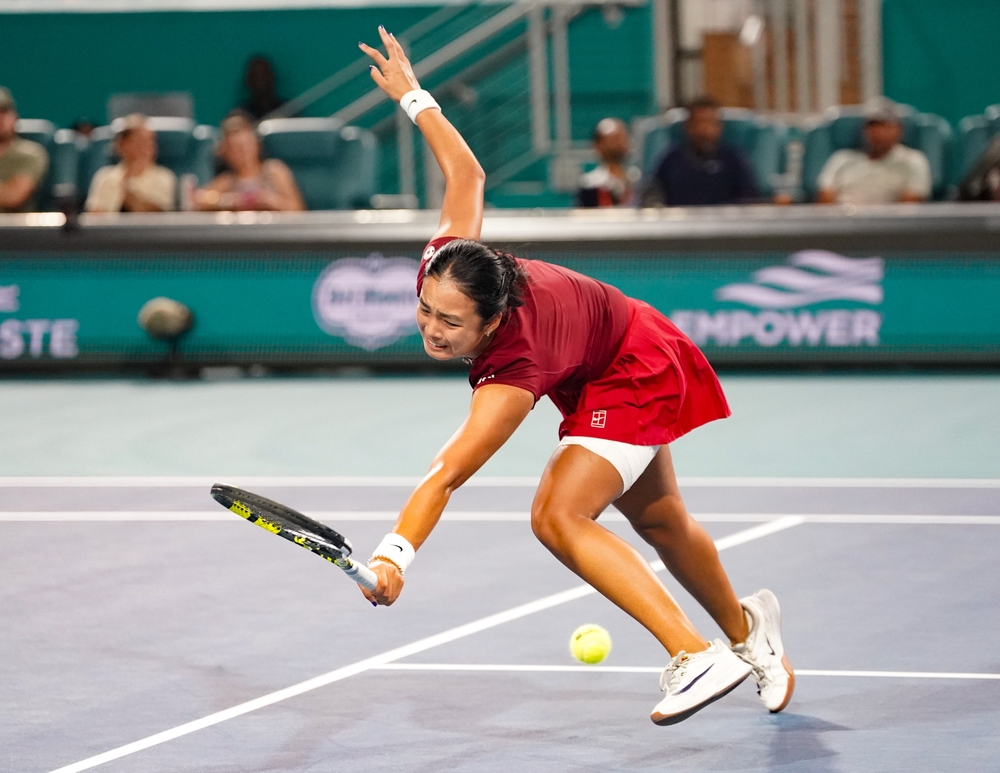
Alex Eala arrives in Cincinnati as a different player than the one who started the North American hard-court swing, and she knows it. A 7-1 record on hard courts this season, a maiden WTA title at the DC Open and a run to the round of 16 in Toronto have pushed the 21-year-old Filipina to a career-high ranking of No. 20 and earned her the 17th seed at the Cincinnati Open, giving her a first-round bye as the US Open draws closer.
The seeding is one measure of the distance she has traveled in a few months. Cincinnati is the final WTA 1000 event before the final Grand Slam of the year, and Eala is using it to calibrate where her game sits against the highest-level competition available before she arrives at Flushing Meadows.
The draw and what it holds
Eala will open her campaign in the second round against Elena-Gabriela Ruse. A win there could bring her face to face with world No. 10 Amanda Anisimova, a first-ever meeting that would allow Eala to test the 9-4 record she has built against Top-10 opponents this season.
Should she advance further, Linda Noskova represents a familiar and unresolved challenge. Noskova has defeated Eala twice in 2026, 6-2, 6-0 at Indian Wells and 6-2, 6-4 in the Berlin Open semifinals, and the Czech player has consistently exposed the limits of Eala’s game when they have met. A potential rematch in Cincinnati would tell her something useful about how much has changed.
A quarterfinal path could lead to third-seeded Jessica Pegula, which would carry particular weight given that Eala defeated Pegula 4-6, 6-4, 6-0 in the DC Open final to claim her breakthrough title. Pegula will be motivated to reverse that result. Beyond that, potential semifinal threats include Iga Swiatek and Elena Rybakina, two of the players who contested the Toronto final, which Swiatek won Thursday night.
What the DC Open title changed
Winning a title changes something in a player’s understanding of what is possible. She had been building toward a breakthrough, beating ranked players and reaching deep draws, but converting a final is different from reaching one. The DC Open in July was Eala’s first WTA 500 title and the first time a Filipina player had won at that level, a fact that attached cultural significance to an achievement that was already substantial on its tennis merits.
The Toronto run, which ended in the round of 16 against Belinda Bencic, added further evidence that the DC Open was not an anomaly. Eala entered Toronto in form and left it still in form, which is a more reliable signal than a single tournament breakthrough.
The US Open in view
She reached the fourth round of the US Open in 2025, her best Grand Slam result to that point. Eala arrives in 2026 with a higher ranking, more title experience and a hard-court record that suggests she belongs in the conversation about the tournament’s later rounds.
Cincinnati is where she sharpens the specific things a Grand Slam demands, particularly the ability to maintain focus and physical freshness across back-to-back matches at the end of a long season, the mental steadiness to handle a draw that gets more dangerous with every round, and the tactical adjustments that come from seeing high-level opponents in a pressure environment.
The 7-1 hard-court record this season is the backdrop, but what she does in Cincinnati over the next week will matter more directly to what happens at the US Open than anything she has done before.
