


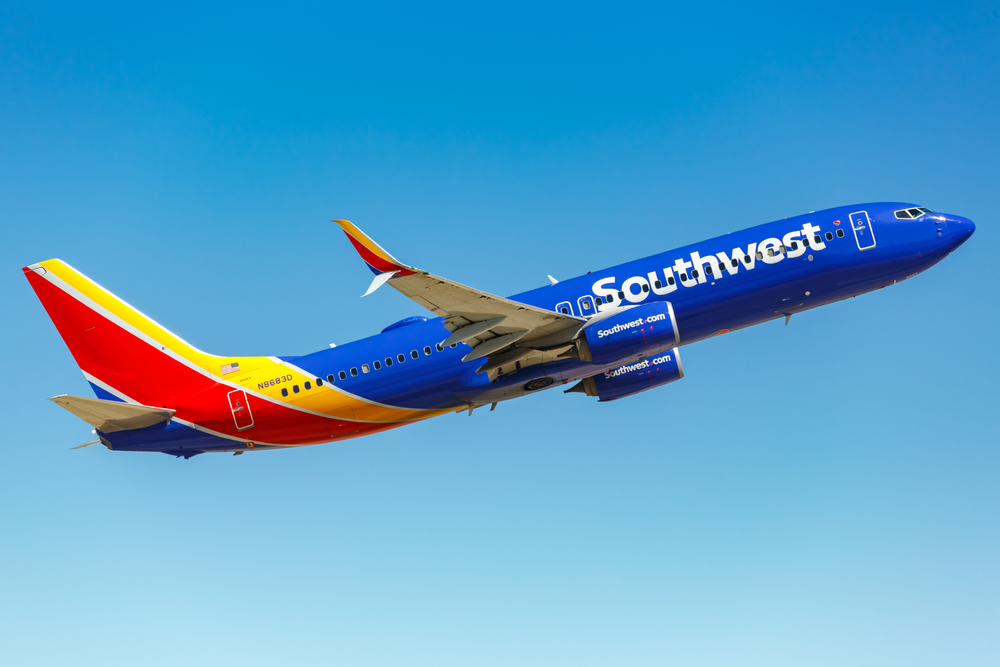
Two Southwest Airlines planes collided on the tarmac at Rhode Island T.F. Green International Airport late Thursday night, and it was the passengers who first raised the alarm.
According to the Federal Aviation Administration, the wing of Southwest Flight 3515 made contact with the tail of Southwest Flight 3409 at approximately 10:45 p.m. as Flight 3515 pushed back onto a taxiway. Both planes were able to return to their gates, and all passengers deplaned without incident. No injuries were reported.
What made the episode more alarming than the collision itself was what happened in the moments after it. Passengers aboard Flight 3515 told local news station NBC 10 that the aircraft continued moving after making contact with the other plane. It took several people speaking up loudly before anyone in the cockpit responded to what had happened. One traveler, who had been moved to a window seat on the half-empty aircraft, said he watched the plane inch closer to the other but never anticipated an actual impact.
The passenger described on social media how his flight had already been delayed six hours before the aircraft struck what he characterized as a parked plane while trying to leave the gate. Flight 3515 was subsequently canceled, with a rebooked departure set for Friday afternoon.
Southwest Airlines responds
Southwest Airlines confirmed it is aware of the incident and said both aircraft will undergo thorough inspections before returning to service. The airline also said it has made alternative arrangements for affected passengers.
The FAA confirmed it is investigating the collision. T.F. Green Airport directed media inquiries to the airline.
A pattern worth watching
The T.F. Green incident is not an isolated footnote for Southwest this year. In May, a Southwest flight bound for Maryland was forced to divert after its windshield cracked midflight. Earlier in 2026, the airline also updated its seating policy for plus-size passengers following public criticism of its previous approach.
For Southwest, the T.F. Green collision adds to a string of safety-adjacent headlines that have drawn renewed attention to the airline’s operational procedures. The FAA’s investigation will determine what, if any, procedural breakdowns contributed to the late-night tarmac incident and whether the crew’s initial failure to detect the collision raises additional concerns.
What passengers and investigators will want answered
The central question is straightforward. How did a commercial aircraft continue taxiing after making contact with another plane, and why did it fall to passengers rather than the flight crew to catch it?
Tarmac collisions, while not uncommon in the broader history of commercial aviation, are taken seriously by federal regulators precisely because of what they can escalate into. The FAA’s investigation will examine ground control communications, crew awareness protocols, and the physical damage to both aircraft.
Southwest has not indicated a timeline for completing its own internal review. The airline’s statement emphasized safety as its top priority, though passengers who lived through a six-hour delay followed by a jarring collision and an abrupt cancellation may take some convincing.
