


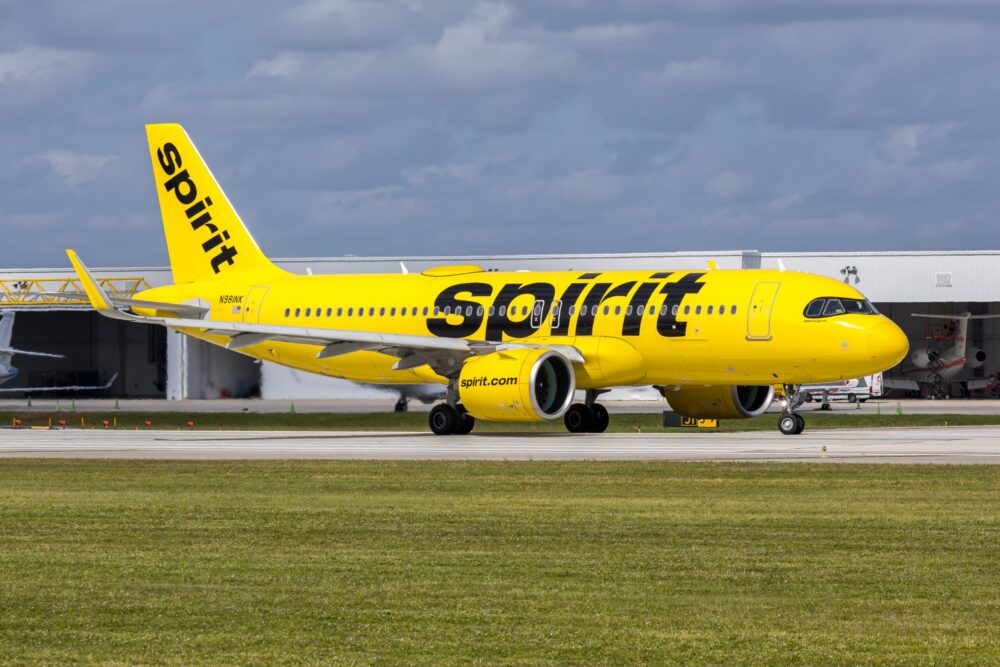
Spirit Airlines promised to help a man with dementia. His family says the airline never showed up. A family is holding Spirit Airlines responsible for the death of their elderly father, alleging the budget carrier failed to provide assistance it had explicitly promised to a 75 year old man with dementia a lapse they say led directly to his death.
Marcos Humberto Vindel Osorio was fatally struck by multiple vehicles on a roadway near George Bush Intercontinental Airport in Houston on June 8, 2024. According to federal court documents, the road where he was found dead is roughly an eight minute drive from the airport a distance that, for a disoriented elderly man traveling on foot, would have taken approximately two hours to cover.
What the family says happened
According to an April 22 lawsuit filing, Osorio boarded his Spirit Airlines flight at Palmerola International Airport in Comayagua, Honduras, where airline staff were instructed to arrange assistance for him upon his arrival in Houston. The family says Spirit confirmed that Osorio who had a known cognitive disability would receive help deboarding the plane and navigating the airport.
When Osorio’s flight landed in Houston at 6:49 p.m. local time, the family alleges that no one from the airline met him. He reportedly walked off the plane and through the terminal without any supervision, escort, or guidance of any kind.
His son, waiting to pick him up, grew alarmed when Osorio did not appear. After contacting U.S. Customs and Border Protection, the family learned that Osorio had been processed at 7:43 p.m. but was unaccompanied at the time. A search began immediately and lasted more than three hours. At 11:15 p.m., Osorio was found dead in the roadway.
The legal argument
The family’s lawsuit invokes the Montreal Convention, an international treaty governing airline liability to which both the United States and Honduras are signatories. Under the convention, carriers can be held responsible for passenger deaths or injuries that occur during the course of embarking or disembarking regardless of whether a third party was directly involved in causing the harm.
The lawsuit contends that Spirit’s failure to honor its commitment to Osorio constitutes an accident as defined under the convention, and that the airline’s liability is not diminished by the physical distance between the airport and where Osorio ultimately died.
The filing further argues that airlines do not routinely confirm specialized assistance for a cognitively impaired passenger and then provide nothing making Spirit’s conduct a departure from what any reasonable commercial carrier would do. The family characterizes the airline’s inaction not as a minor oversight but as gross negligence, and is also pursuing claims of negligent undertaking should the Montreal Convention be found not to apply.
What the family is seeking
The plaintiffs are asking for compensatory damages covering Osorio’s wrongful death and the injuries he sustained before dying. They are also seeking damages for loss of companionship and support, loss of parental guidance for a minor plaintiff in the case, mental anguish, and funeral and burial expenses. The family has additionally requested a trial by jury.
Spirit Airlines ceases operations days later
The lawsuit was filed just days before Spirit Airlines announced on May 2, 2026, that it was shutting down all operations effective immediately ending 33 years in business. The airline had been in negotiations for a reported $500 million government bailout that ultimately fell through, leaving passengers stranded at airports across the country.
The timing adds another layer of complexity for the Osorio family, whose legal pursuit now targets a carrier that no longer operates raising questions about how and whether they will ultimately be able to recover damages for what they describe as a preventable and devastating loss.
