


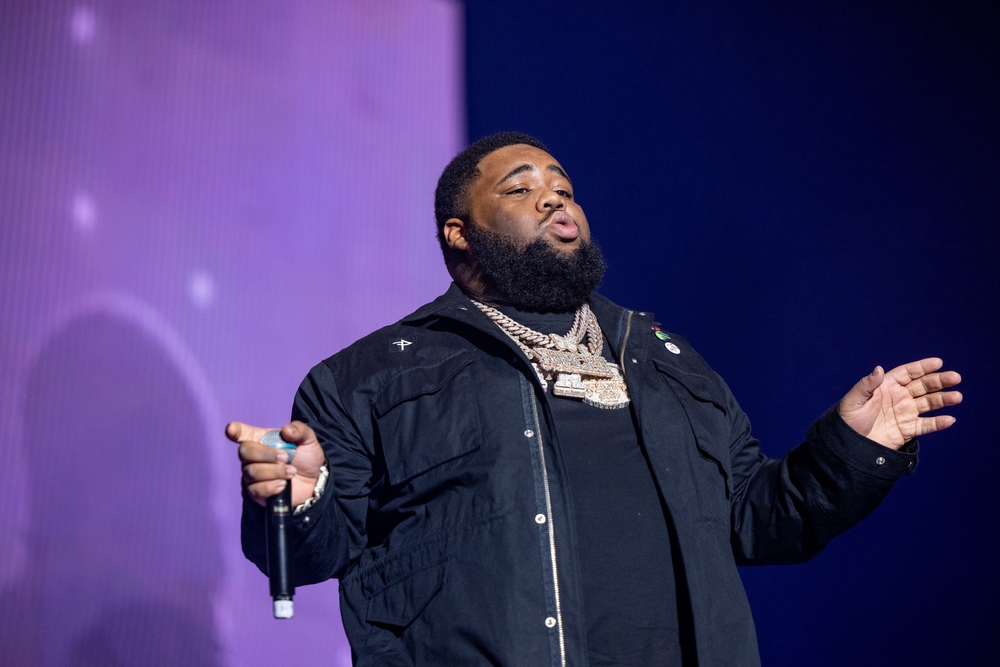
Rod Wave has been indicted in Fulton County, Georgia, on felony drug and weapons possession charges tied to a November 2025 traffic stop in Atlanta, Rolling Stone reported Wednesday, Nov. 18. The indictment says the 28-year-old rapper, whose legal name is Rodarius Green, unlawfully possessed oxycodone and had a gun within arm’s reach when police pulled him over. It was returned Oct. 30 and unsealed this month.
The news landed as Rod Wave played two sold-out shows at Atlanta’s State Farm Arena, the same city where he was arrested. His lawyers call the indictment baseless and say they plan to fight both the charges and the police unit behind the stop.
What does the Rod Wave indictment allege?
Prosecutors say Green was driving at least 15 mph over the speed limit and ignored a traffic control device in a highly residential area along Defoor Avenue on Nov. 7, 2025. He was booked on reckless driving, drug and gun charges and released the next day, according to online jail records. Atlanta News First reported that he allegedly had a black .40 caliber Glock with a high capacity magazine in his waistband when he was taken into custody.
The arrest came on what should have been one of the best days of his career. That same day, Green earned his first Grammy nomination, for Best Song Written for Visual Media, with Sinners from Ryan Coogler’s 2025 film Sinners. He and the other nominees lost to Golden from KPop Demon Hunters at the February ceremony.
What are Rod Wave’s lawyers saying?
Attorneys Drew Findling, Marissa Goldberg and Zack Findling told Rolling Stone the indictment is only a formal charging document for an incident from a year ago. They pointed out that Green has since released an album that debuted at No. 1 and sold out a national tour, and they argued the charges are no more valid now than they were then. They promised to challenge what they call clear violations of his rights.
When he was first arrested, the same legal team said Green was unjustly profiled. They said the arresting officer belonged to the Atlanta Police Department’s Crime Suppression Unit, which they described as aggressive and focused on arrest numbers over public safety. They called it a quota-driven approach that damages community trust. Those are the defense’s claims. Atlanta police have not publicly responded to them in the reports reviewed.
Why does the crime suppression unit claim matter?
This is the piece most coverage glosses over. Crime suppression units have drawn national scrutiny since the 2023 beating death of Tyre Nichols in Memphis, which involved officers from that city’s SCORPION unit. After Nichols’ death, the Fulton County Sheriff’s Office renamed its own crime suppression unit, and years earlier, Atlanta police dismantled a similar squad known as REDDOG.
City leaders point to results. Atlanta’s police chief said homicides have dropped 43% since 2022 and that targeting repeat offenders is a 2026 priority. For many Black men, though, a traffic stop by a specialized unit carries a weight that numbers do not erase. Green’s lawyers are betting that context will matter in court. He is presumed innocent, and none of the charges has been proven.
What happens next in the Rod Wave case?
The case moves back into Fulton County court, where his defense is expected to challenge the stop itself. Meanwhile, Green keeps working. The St. Petersburg, Florida, rapper has long been one of rap’s most reliable sellers, with SoulFly, Beautiful Mind and Nostalgia all reaching No. 1 on the Billboard 200. On stage in Atlanta this week, the crowd showed up. In court, the city will get its own say.
