


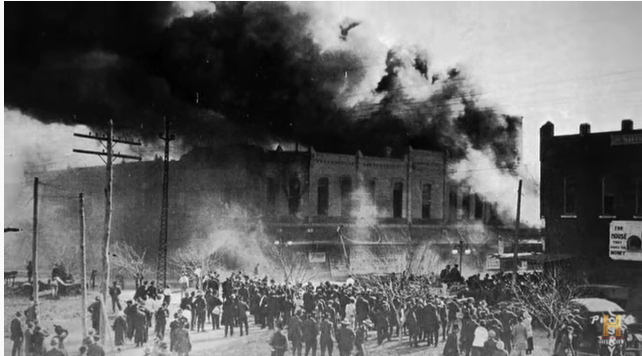
The U.S. Department of Justice has announced a civil rights review of the Tulsa Race Massacre, a tragic event that occurred in 1921 when a white mob targeted and destroyed the prosperous Black community of Greenwood in Tulsa, Oklahoma. This review has been described as long overdue by many advocates and historians who have fought for recognition and justice for the victims and their descendants.
The Tulsa Race Massacre is one of the most devastating incidents of racial violence in American history. Over the course of two days, from May 31 to June 1, 1921, a white mob attacked the Greenwood District, known as “Black Wall Street” for its thriving Black-owned businesses. The violence resulted in the deaths of hundreds of Black residents, the destruction of thousands of homes and the erasure of a vibrant community.
Despite its significance, the massacre was largely omitted from history books for decades, and survivors received little to no compensation for their losses. The recent announcement by the DOJ signifies a potential shift in acknowledging this dark chapter in American history.
The DOJ’s review aims to investigate the federal government’s role in the events surrounding the massacre and to assess the impact of systemic racism that allowed such violence to occur. This initiative is part of a broader effort to address racial injustices and to ensure accountability for historical wrongs.
Advocates for justice have long called for a thorough investigation into the massacre, emphasizing the need for reparations and acknowledgment of the trauma experienced by the descendants of the victims. The review could pave the way for reparative measures that honor the legacy of those who suffered and lost their lives during the massacre.
The announcement has been met with mixed emotions. Many community leaders and descendants of the victims express hope that this review will lead to meaningful change and acknowledgment of the past. However, there are also concerns about the potential for the review to be merely symbolic without concrete actions following its findings.
As the DOJ embarks on this review, it is essential for the community and advocates to remain engaged and vocal about their demands for justice. The review’s outcomes should not only focus on historical accountability but also address current systemic issues that continue to affect Black communities across the nation.
The Tulsa Race Massacre occurred during a period of heightened racial tensions in the United States. The early 20th century saw a resurgence of white supremacist ideologies and increased violence against Black communities. The prosperity of Greenwood, often referred to as “Black Wall Street,” stood in stark contrast to the prevailing narratives of Black inferiority, making it a target for racial resentment.
The massacre began with an alleged incident between a young Black man and a white woman in an elevator. Rumors and sensationalized newspaper reports inflamed tensions, leading to a confrontation between armed white and Black groups. The situation quickly escalated, resulting in widespread violence and destruction.
In the aftermath of the massacre, local authorities not only failed to protect Black residents but also actively participated in the cover-up of the events. Insurance claims were denied, and many survivors were left destitute. The trauma of the massacre reverberated through generations, affecting the economic and social fabric of Tulsa’s Black community for decades to come.
The DOJ’s review comes at a time of increased national attention on racial justice issues. Recent events, including the Black Lives Matter protests and the centennial commemoration of the massacre in 2021, have reignited discussions about historical racial violence and its lasting impacts.
The review process is expected to involve extensive research into historical records, interviews with descendants and community members, and analysis of the legal and social context of the time. The findings could potentially lead to recommendations for reparations, educational initiatives or other forms of redress.
Critics of the review argue that it comes too late, with most direct survivors of the massacre having passed away. They question whether any actions resulting from the review can truly compensate for a century of neglect and injustice. Supporters, however, see it as a crucial step in acknowledging the truth and setting a precedent for addressing other instances of historical racial violence.
The impact of the Tulsa Race Massacre extends beyond the immediate loss of life and property. It represents a broader pattern of racial violence and economic suppression that has shaped the experiences of Black Americans throughout history. The destruction of Greenwood not only erased a thriving community but also severed generational wealth and economic opportunities for countless families.
As the DOJ’s review progresses, it will likely spark renewed conversations about racial reconciliation, reparations and the role of government in addressing historical injustices. The outcomes of this review could have far-reaching implications for how the nation grapples with its history of racial violence and discrimination.
The legacy of the Tulsa Race Massacre serves as a stark reminder of the ongoing struggle for racial equality and justice in America. As the nation confronts this painful chapter of its past, the hope is that meaningful steps toward healing and reconciliation can be taken, ensuring that the sacrifices and suffering of those affected by the massacre are never forgotten.
