


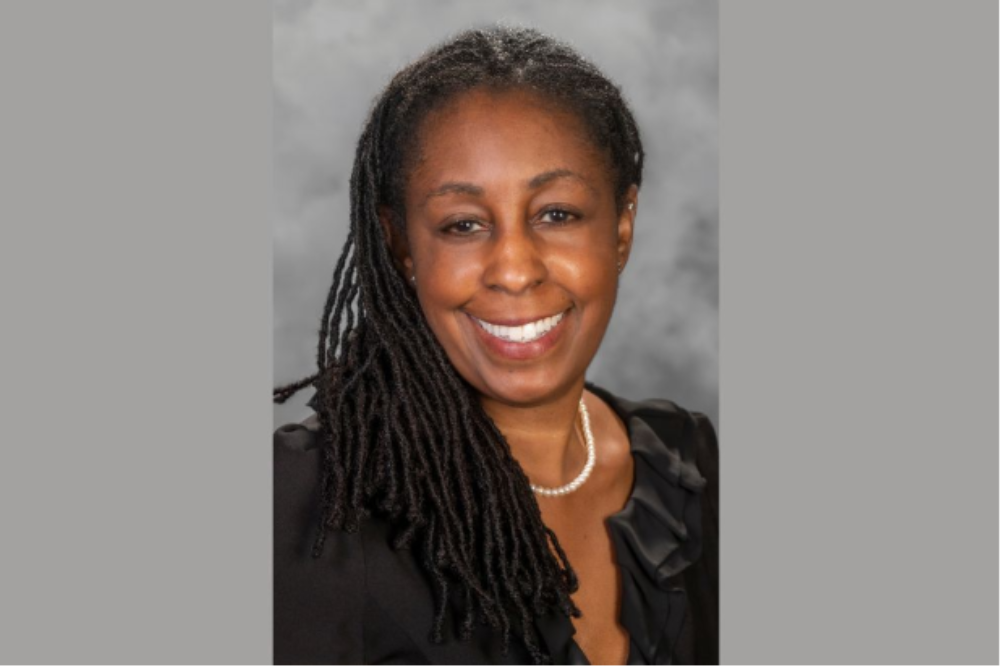
Dr. Tamara New has spent more than 20 years making sure children with sickle cell disease get the care they need before the system loses track of them. As director of the Sickle Cell Disease Program at Johns Hopkins All Children’s Cancer and Blood Disorders Institute in St. Petersburg, Florida, she leads a team focused entirely on that mission.
Her background runs deep. A graduate of Mount Sinai School of Medicine with fellowship training at Columbia University, she previously served as clinical director of the Egleston Sickle Cell Program at Children’s Healthcare of Atlanta and as associate professor of pediatrics at Emory Pediatric Institute. She brings that weight of experience to every family that walks through her door.
Sickle cell disease is a genetic blood disorder that disrupts the hemoglobin protein responsible for carrying oxygen through the body. It occurs when both parents carry a form of sickle cell trait, and it disproportionately affects people of African American and Latin American descent, as well as populations from the Mediterranean, India, Tanzania, the Democratic Republic of the Congo and Brazil.
What New says early intervention actually changed
In the United States, every newborn is tested for sickle cell through the standard heel prick performed at birth. That practice, added to newborn screening in the early 1980s, transformed survival rates. Before widespread screening, many children were not diagnosed until they were already seriously ill.
Now, when a baby tests positive in Florida, Dr. New’s team is required to contact the family within 72 hours. They confirm the diagnosis through a follow-up blood test, begin educating parents immediately and start infants on twice-daily penicillin to guard against infection. Parents learn that fever is a medical emergency, how to check for spleen enlargement and why staying current on vaccinations matters.
Those steps alone, early identification, preventive antibiotics and parental education, are why the majority of children with sickle cell now survive into adulthood.
The gaps that sickle cell care still cannot close
Despite that progress, Dr. New is direct about what is missing. There are currently only three FDA-approved medications for sickle cell in the United States. A fourth was pulled from the market due to complications. For context, conditions like diabetes or high blood pressure have many more treatment options available to patients.
The shortage of adult physicians trained in sickle cell care is another pressure point. As the pediatric population ages out of her program at 21, there are not enough providers prepared to take them on. The American Society of Hematology has begun addressing this through certificate programs that give adult medicine physicians focused training in sickle cell, but the gap remains wide.
A cure exists through bone marrow transplant, but donor matching limits who can access it. Gene therapy addresses that barrier by allowing the patient to serve as their own donor, though it is still new and not yet available at every treatment center. Globally, the picture is more difficult. The majority of people living with sickle cell reside in countries where healthcare is neither affordable nor accessible.
New’s approach to keeping Black families in the room
Dr. New describes her approach to health equity as starting with education. The goal is not simply to inform families about treatment options but to make them active participants in every decision. The main FDA-approved disease-modifying therapy is hydroxyurea, and she discusses it with every family early, regardless of whether they ultimately choose it.
That partnership extends into preparing families for the transition to adult care. She begins those conversations from the very beginning of a child’s treatment, well before the transition becomes immediate. She wants young adults to know their own health baselines well enough to ask the right questions when a new provider tells them their numbers look fine.
For Black children specifically, she believes that seeing a physician who looks like them shifts something. She cannot quantify it, but she holds to it. Her patients come in laughing, joking and talking about futures in medicine, nursing and social work despite everything their bodies have been through. That, she says, is where her hope lives.
