


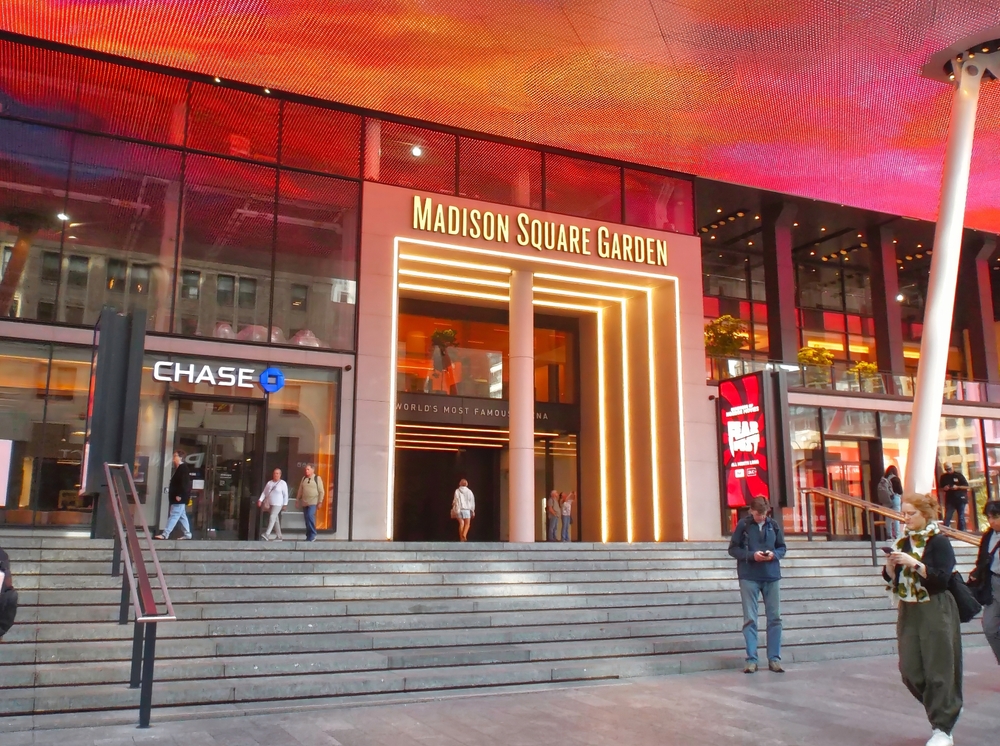
New York Knicks owner James Dolan made clear on Wednesday that he will not allow the franchise to cross into the NBA’s second apron luxury tax threshold this offseason, a financial boundary he described as one that no team should approach, even after the Knicks captured their first championship since 1973.
The declaration sets up a complicated offseason for a franchise that entered the summer as one of the most celebrated teams in basketball but now faces real constraints on its ability to keep the group intact. Dolan indicated he was willing to spend significantly, but that crossing the second apron represented a category of financial commitment he was not prepared to make under any circumstances, including defending a title.
What the second apron means and why it matters
The second apron is the NBA’s most punitive salary threshold, carrying restrictions that go well beyond the standard luxury tax. Teams that exceed it lose access to key roster-building mechanisms. They cannot send cash in trades, cannot use the full mid-level exception on free agent signings, cannot aggregate salaries in trade packages, and are restricted from using more than the value of a traded player’s contract in subsequent deals. Draft pick restrictions apply as well, with first-round selections potentially moved to the end of the round for teams that repeatedly exceed the threshold.
Only a handful of teams have operated above the second apron since it was introduced in the 2023 collective bargaining agreement. The Knicks came within $200,000 of crossing it this past season, meaning even modest additions this summer could push them over without careful management.
The roster decisions ahead
The Knicks’ starting five is under contract for next season, which provides a stable foundation. The complications arise in the supporting cast. Several rotation players are free agents, and at least one more has until Monday to decide whether to exercise a player option for next season. Bringing back those contributors while staying below the second apron will require precise financial maneuvering.
The most significant open item involves All-Star center Karl-Anthony Towns, who did not sign an extension before last season began. Towns was a central figure in the Knicks’ record 13-game playoff winning streak and represents one of the highest-value decisions the front office will make this summer. Negotiations can resume now, and the financial structure of any Towns deal will directly shape what else the team can do in free agency.
Dolan said personnel decisions would rest with team president Leon Rose, framing his own role as providing financial resources up to the limits he has set rather than making roster calls directly.
The tension between ambition and constraint
The gap between where the Knicks want to be and what the second apron allows is real and growing. A championship roster that returns intact would make New York one of the favorites to reach the Finals again next season. But keeping that roster together requires either operating dangerously close to the threshold or making trades and buyouts to create room, both of which carry their own risks.
Dolan’s position is that the long-term consequences of crossing the second apron, particularly the draft pick penalties and trade restrictions that compound over multiple seasons, make it a trade-off he is not willing to accept regardless of the short-term benefit. That view is defensible as a matter of franchise strategy, but it means the championship version of this Knicks team may not be intact when the next season tips off
