


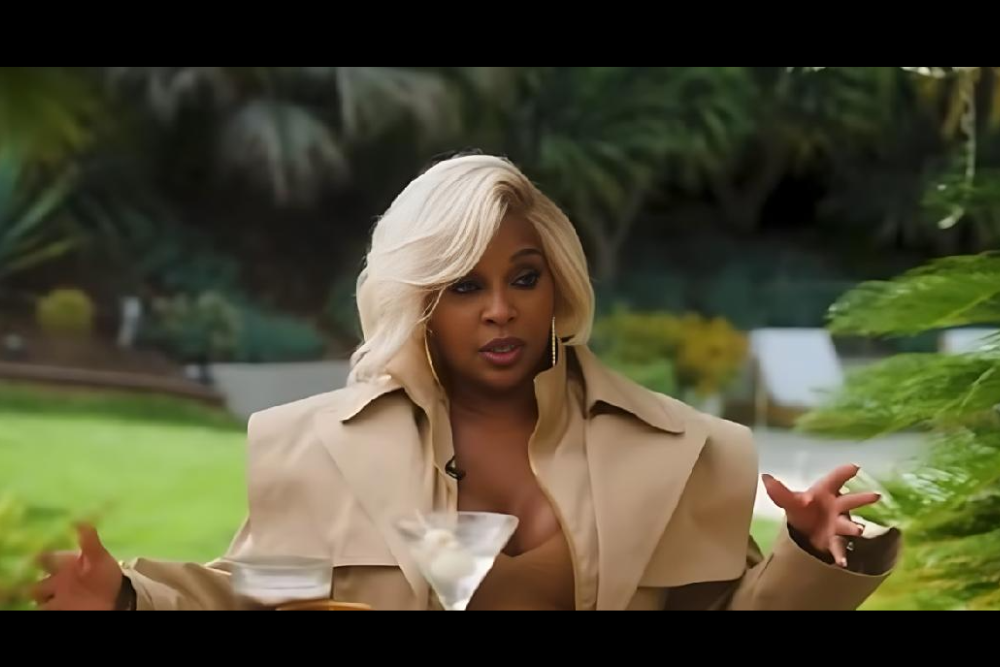
A video of Mary J. Blige reflecting on her early behavior has resurfaced online, and the conversation it sparked did not go in the direction most people expected. In the clip, Blige describes her past self in unsparing terms, saying she used to be a monster. She follows that admission with an account of deliberately reaching out to people she had wronged and apologizing to each of them. She traces that turning point to the No More Drama era, describing it as a moment when she felt a spiritual push toward accountability that she could not ignore.
For many fans, the clip confirmed something they already believed about Blige’s personal evolution. For journalist Touré, it landed differently.
What Touré says Mary J. Blige never did
Touré, who has written extensively about music and culture and hosts The Touré Show, went public with a direct challenge to Blige’s narrative. On a recent episode of his show, he described an assignment he received in the 1990s to profile Blige for The New York Times. What was supposed to be a day of access turned into something else entirely. Touré said he was largely ignored, excluded from interactions he had been promised, and at one point verbally confronted. He came away from the experience feeling dismissed in a way that stayed with him.
His point was not complicated. Blige has publicly said she apologized to everyone she wronged. Touré is saying she did not apologize to him. The gap between those two things is exactly where the online debate opened up.
The exchange raises a question that public apologies routinely sidestep: what happens when the apology is sincere and general but the people most affected by specific incidents never receive a direct acknowledgment? Blige’s framing suggests she did the work. Touré’s account suggests the work did not reach him.
The Burger King commercial and why it still matters to Mary J. Blige
The resurfaced clip also revisited a separate controversy that Blige has never fully put behind her. In 2012, she appeared in a Burger King commercial that drew immediate criticism for relying on racial stereotypes. The ad was pulled after public backlash, and Blige has been open about how the situation affected her. She has said the way it unfolded was wrong and has attributed the decision to poor management and inadequate representation at the time.
What stands out in her current comments is that she is not treating the incident as something she has moved on from. She has said explicitly that it is still not a laughing matter. That honesty keeps the conversation grounded. She is not asking for the incident to be forgotten, only to be understood in context.
What the Mary J. Blige accountability conversation is actually about
Blige‘s willingness to describe her past behavior in harsh terms, without softening the language or offering immediate justification, is part of why the clip spread. It does not read like reputation management. It reads like someone who has spent real time with their own history.
But Touré’s response complicates the tidy arc. Public growth and private harm do not always resolve on the same timeline. Someone can genuinely transform and still leave specific people without the direct acknowledgment they needed. Both things can be true, and in this case, both appear to be.
No More Drama was released in 2001 and remains one of the defining albums of Blige’s career. The era it represents, creatively and personally, is the pivot point she keeps returning to when she talks about who she was and who she decided to become. The album’s title was not incidental. She meant it. Whether everyone in her orbit received that memo is a different conversation, and Touré just made sure it was a public one.
