


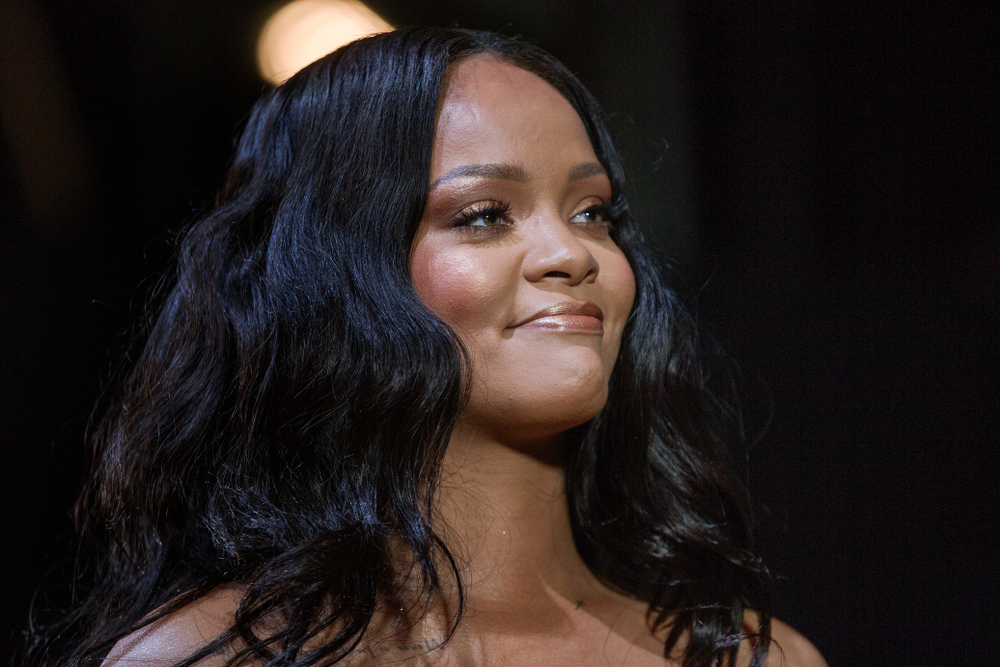
Rihanna has done it again. As of April 15, the Barbadian superstar became the first woman in history to surpass 200 million singles certifications from the Recording Industry Association of America, a milestone that places her firmly among the most certified recording artists of all time. Her current total of 200.5 million units puts her third on the all-time RIAA rankings, behind Morgan Wallen at 215 million and Drake at 277.5 million, making her presence on that list all the more remarkable given that she has not released a full studio album in nearly a decade.
This is not the first time Rihanna has stood alone at the top of a milestone like this. In 2015, she became the first woman to cross 100 million certified song units on the RIAA’s all-time list, a record that already felt extraordinary at the time. The fact that she has now doubled that figure without a single new album release in the years since speaks to the enduring commercial power of a catalog that continues to generate streams, downloads, and sales long after its most recent additions.
A decade of silence that only deepened the legend
Rihanna’s last studio album, Anti, arrived in 2016 and quickly became one of the most critically praised projects of her career. Since then, she has contributed individual songs to major film projects, including a track for the Marvel film Black Panther: Wakanda Forever and most recently a song for the 2025 animated feature The Smurfs, but a proper album has remained conspicuously absent. For her fans, the wait has been an exercise in patience stretched across years of rumors, near-announcements, and carefully worded non-answers.
What has changed recently is the tone of the conversation around her next project. In a 2025 interview with Harper’s Bazaar, Rihanna was notably more open and more certain than she had been in previous years. She described feeling genuinely good about the direction the music was heading and framed the long gap not as indecision but as a deliberate pursuit of something that matched where she was as an artist. She spoke about resisting the pull of genre constraints, explaining that she had passed on material repeatedly because it did not feel true to her growth.
The worth in the wait
Perhaps the most revealing thing Rihanna shared was the standard she has set for herself heading into the next chapter. She made clear that the length of her absence had raised the stakes in a way she took seriously, describing her next release as something that needed to justify the time fans had spent waiting for it. Mediocrity, she suggested, was simply not an option.
That kind of self-imposed pressure is not unusual for artists at her level, but the way she articulated it carried a quiet urgency. She was not apologizing for the wait or explaining it away. She was framing it as part of the work, as if the years of silence had been a form of curation rather than absence.
What the numbers really mean
The RIAA milestone is significant not just as a statistic but as a reminder of what Rihanna’s catalog actually represents. Songs like Umbrella, We Found Love, Diamonds, and dozens of others have maintained a cultural presence that most artists cannot sustain even with constant new releases. The fact that she continues to accumulate certifications at this scale without active promotion or new material is a testament to the depth of a body of work that her fans clearly have no intention of letting go.
When new music does finally arrive, it will enter a landscape that has been waiting for it for a very long time.
