


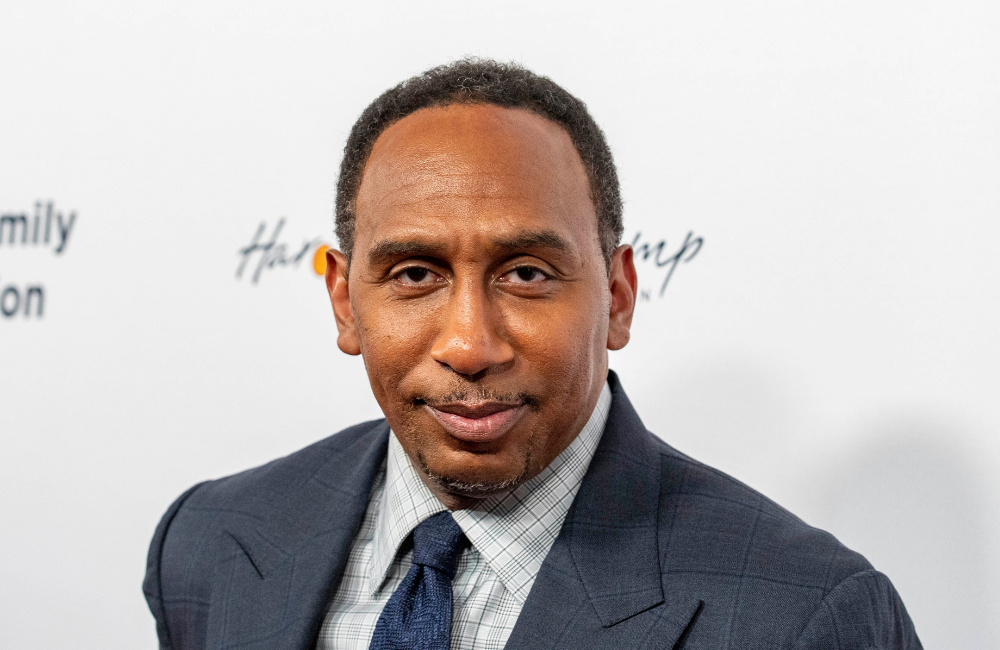
Stephen A. Smith has spent decades building one of the loudest and most recognizable voices in sports media. But 2026, by his own account, has been one of the hardest stretches of his career and his public life. The ESPN personality is not hiding from that reality anymore.
Smith, a central figure on the long-running sports debate program First Take, has faced mounting criticism from multiple directions this year. His increasing involvement in political commentary and his willingness to weigh in on social and economic issues have made him a target from both sides of the conversation. Within the Black community in particular, the scrutiny has intensified, and a very public moment at a Netflix roast recently brought all of it to a head.
The Kevin Hart moment that landed differently
During Kevin Hart’s Netflix roast special, Hart placed Smith on a list he framed as a cultural commentary. The inclusion stung Smith not because of the roast format itself but because of who was delivering the line. Smith and Hart had a relationship, or at least Smith believed they did, and being singled out by someone he considered a familiar face in his world felt like a different kind of criticism than what comes from strangers online.
Smith made clear that the joke’s content was not the issue. What troubled him was its source. For someone who has consistently maintained that his positions come from a place of genuine advocacy for his community, being publicly grouped with figures widely criticized for racially insensitive behavior by someone from within that same community was a different kind of wound.
A year of pressure from every direction
Smith has been candid about the professional and personal toll of the past several months. He acknowledged that securing his financial future at both ESPN and SiriusXM represented a level of success he had not fully anticipated. But alongside those achievements has come a level of public backlash that has been difficult to absorb.
He described feeling targeted by political forces that he believes have actively sought to limit his platform and his voice, despite what he characterizes as a lifelong alignment with Democratic values and consistent support for progressive causes. The disconnect between how he sees himself and how he is being portrayed publicly has clearly taken a toll.
Smith has spent years presenting himself as a fighter for his community, someone whose career has been built on amplifying voices and speaking uncomfortable truths in spaces that did not always welcome them. Watching that identity be challenged, by strangers and by people he knows, has made this an unusually draining chapter.
What comes next for Smith
Smith is not someone who typically retreats from controversy. His entire brand is built on engaging directly, saying what others will not and standing by his positions even when the response is hostile. That instinct has not disappeared.
But there is something different in how he is talking about this period. The acknowledgment that it has been genuinely hard, that the criticism has found its way past the armor, suggests a man who is recalibrating without necessarily knowing yet what that looks like on the other side.
His platform remains enormous. His voice remains one of the most prominent in sports media. But the ease with which he once seemed to absorb attacks appears, at least for now, to have given way to something more human and considerably more vulnerable.
Whether that vulnerability translates into a shift in how Smith engages with the cultural and political debates he has waded into remains to be seen. For the moment, he is simply being honest about where he stands, and where he stands is somewhere more complicated than his public persona has traditionally let on.
