


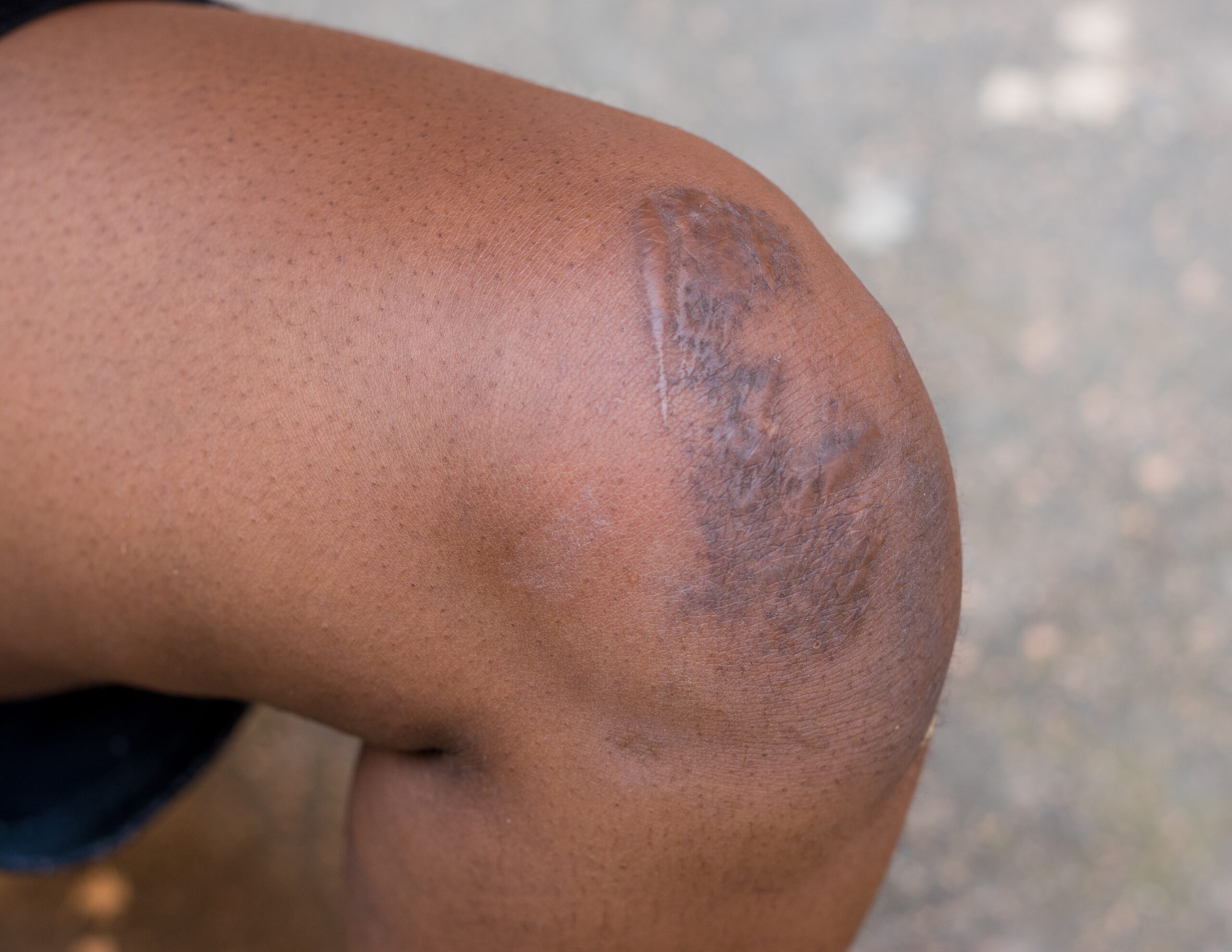
Scars have a way of staying with us. A childhood fall, a kitchen accident, a surgery from years ago — the marks they leave tend to outlast the memory of how they got there. For many people, that permanence raises a natural question. If the body is capable of healing itself, why does it never fully erase the evidence?
The answer lies not in a limitation of biology but in a deliberate set of priorities. The skin is the body’s first and most essential line of defense against the outside world, and when it is broken, the body’s goal is not cosmetic restoration. It is survival.
Scars and the skin they are trying to save
The skin is made up of three layers. The outermost layer, the epidermis, handles daily exposure to the environment. Beneath it sits the dermis, and below that is a layer of fat known as the hypodermis. When an injury damages only the epidermis, the skin typically heals without leaving a mark. But when the damage goes deeper, reaching into the dermis or beyond, a scar will form.
The reason is straightforward. The body needs to restore the skin’s protective function as quickly as possible. A wound left open is an invitation to infection. Speed matters far more than appearance, and the biological process that kicks in reflects that priority completely.
Scars form through a carefully staged biological response
The moment the skin is broken, a rapid sequence of events begins. The body forms a blood clot to stop the bleeding, which eventually dries into a scab. Immune cells flood the area to fight off any microbes that may have entered through the wound, releasing chemical signals that alert surrounding tissue to begin the repair process.
In response, specialized skin cells called fibroblasts get to work. They begin producing collagen, a long fibrous protein that forms the structural scaffolding of the scar. This collagen is dense and tough, designed to restore the skin’s strength rather than its original texture. The visible wound may close within days, but the deeper process of rebuilding the skin’s layers can continue for months or even years.
The collagen that fills a scar is not arranged the way it is in normal skin. It bundles together in a less organized pattern, which is part of why scarred skin looks and feels different even after it has fully healed. There are no sweat glands or hair follicles in scar tissue, and the cells within it are renewed far less frequently than those in the surrounding skin.
Scars can grow beyond what the injury required
Sometimes the body overshoots. In its urgency to close a wound, it produces more collagen than necessary. This excess can result in raised, red scars that remain confined to the original injury site, a condition known as hypertrophic scarring. In other cases the scar tissue spreads beyond the boundaries of the wound entirely, forming what are called keloid scars.
Keloids can become itchy or painful and may restrict movement if they develop near a joint. Attempts to remove them surgically can sometimes cause them to return even larger than before, making management a careful and ongoing process.
Scars fade but never fully go away
Over time, scars can become less prominent. The initial disorganized collagen is gradually replaced by flatter, more structured layers, and the redness tends to diminish. Certain cosmetic procedures can reduce discoloration or alter the depth of a scar, and steroids can help with persistent redness. Keeping a wound clean and properly covered during the healing process remains the most effective way to minimize long-term scarring.
But even with all of that, scars do not disappear. The collagen that built them is built to last.
There is something worth sitting with in that permanence. Scars are a physical record of experiences the body survived. They are not evidence of failure. They are proof that the repair worked.
