


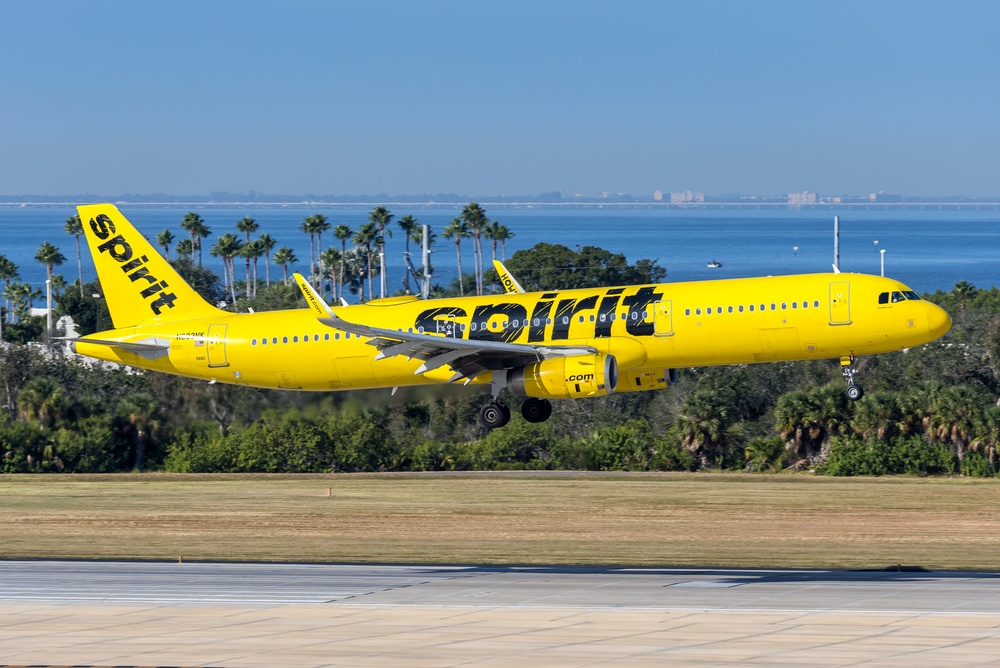
Terminal A at LaGuardia Airport was unusually quiet Saturday morning. No lines. No staff. Just a sheet of paper taped over a cardboard sign notifying passengers that Spirit Airlines had ceased global operations and that all flights had been cancelled. Above it, a departures board showed nine Spirit flights bound for cities across Texas, Florida, Michigan, and the Carolinas. Every one of them was marked cancelled.
Spirit Airlines officially ended operations at 3 a.m. Eastern Time on May 2, becoming the first major U.S. carrier in 25 years to go out of business due to financial failure. The shutdown came after the airline, already in its second bankruptcy, was unable to secure a last-minute rescue deal. Passengers were told not to come to the airport and directed online for refund information.
For many travelers, the warning came too late.
Passengers caught off guard
Several travelers arrived at LaGuardia Saturday morning with no idea what had happened. One woman and her elderly mother showed up for a flight to Charlotte for a family funeral, having received no notification. Another passenger had arrived for a flight to Orlando where he was scheduled to attend his MBA graduation ceremony, only to find the check-in kiosks directing him to agents who were no longer there.
A traveler who had planned a Mother’s Day trip to Florida said she only learned the airline had shut down from other passengers standing outside the terminal. She was left trying to rebook through a third-party travel app on the sidewalk.
In Orlando, families leaving Walt Disney World rerouted entirely, with at least one group choosing to drive 17 hours home to Michigan rather than wait for an available flight.
Spirit Airlines: a brief history
Spirit operated for 34 years on a bare-fare model that stripped flights down to their most basic elements and passed the savings to passengers through unusually low base prices. At its peak in the mid-2010s, the airline was valued at roughly $6 billion and was considered one of the most profitable carriers in the country relative to its size.
The pandemic changed its trajectory. Revenue collapsed, costs surged, and the airline never fully recovered. A proposed merger with JetBlue was blocked by federal antitrust regulators. A subsequent deal with Frontier Airlines also fell apart. Spirit filed for bankruptcy for the first time in 2024 and had been trying to restructure ever since.
Rising jet fuel costs, pressure from geopolitical tensions including the conflict with Iran, and the inability to secure new financing ultimately forced the wind-down. Spirit’s president and chief executive Dave Davis acknowledged that sustaining operations would have required hundreds of millions of dollars the company could not obtain.
Industry response
Transportation Secretary Sean Duffy moved quickly Saturday to coordinate relief for both passengers and employees. Major carriers including United, Delta, American, JetBlue, Southwest, and Frontier announced capped rescue fares of around $200 on Spirit routes to help stranded travelers rebook. American and United also opened dedicated job portals for Spirit employees, and most major airlines extended travel privileges to Spirit’s pilots, flight attendants, and ground staff.
Spirit announced it would automatically process refunds for tickets purchased directly through the airline. Passengers who booked through travel agents were directed to request refunds separately. Duffy also advised travelers to consider credit card chargebacks and travel insurance claims where applicable.
The Association of Flight Attendants told its members in an early morning message that Spirit would cease operations at 3 a.m. and that flights and hotels would be covered to get crew members home. The union described the moment as devastating while honoring the community its members had built.
Spirit Airlines shutdown and what comes next
Industry analysts expect Spirit’s routes, airport slots, and aircraft to be acquired in pieces through the bankruptcy process rather than through a single buyer. Frontier, JetBlue, Breeze Airways, and Southwest have all been mentioned as potential bidders for parts of the operation.
For the millions of passengers who relied on Spirit for deeply discounted travel, the response online captured a complicated mix of frustration and affection. Many recalled fares as low as $11 to $13 on routes they could not have otherwise afforded. Former frequent flyers described the airline as a genuine lifeline, particularly during the pandemic years when Spirit sometimes offered the only accessible prices on the board.
The budget travel space it occupied will not stay empty for long. But the carrier that first made that space possible is gone.
