


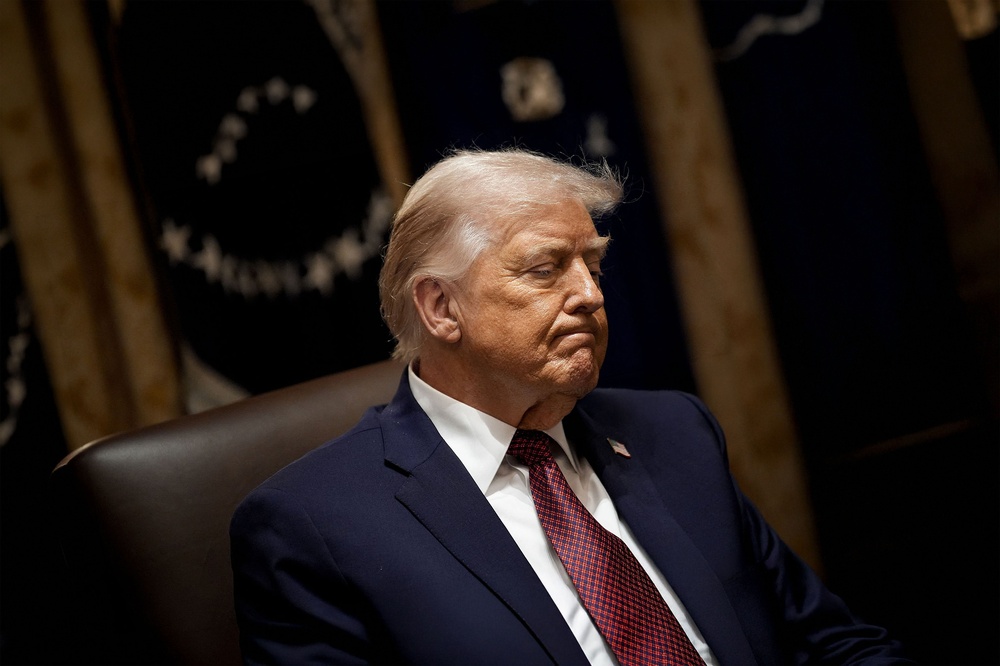
With the Iran conflict still unresolved and his foreign policy record under mounting scrutiny, President Donald Trump has turned his attention to Cuba, escalating pressure on the communist island in ways that have raised the specter of military action. The administration’s approach combines economic strangulation, legal maneuvers, and pointed threats, a formula that produced results in Venezuela but has so far failed to break Iran.
At the center of this latest escalation is a federal indictment of 94-year-old former Cuban President Raúl Castro, unsealed on Cuban Independence Day, charging him with murder and conspiracy in connection with the 1996 downing of two civilian aircraft that killed four people including three Americans. The timing was not accidental. The indictment arrived alongside an intensifying U.S. oil blockade that has triggered a severe humanitarian crisis on the island and a set of demands personally delivered in Havana by CIA Director John Ratcliffe.
Trump has been direct about his ambitions. He has told reporters he can do whatever he wants with Cuba, suggested he may have the honor of taking the country, and framed the current pressure campaign as an effort to help ordinary Cubans trapped under a failing government.
The risks of another escalation
Analysts watching the situation closely are skeptical that the indictment will produce the concessions the administration appears to be seeking. Rather than creating divisions within the Cuban leadership, the legal pressure may have the opposite effect, hardening the government’s resistance and producing a rally around the flag response that makes any negotiated outcome less likely.
Cuba presents a different challenge than Venezuela, where the swift removal of President Nicolás Maduro was made possible in part by cooperation from figures within the regime itself. Cuba’s government has spent decades cultivating a culture of collective defense, and its defensive doctrine calls for the entire population to respond in the event of a foreign invasion. Any U.S. military operation, even a targeted one, would risk casualties on both sides and could trigger a refugee crisis that would send waves of people toward American shores, a politically combustible outcome for an administration that has made border security a defining priority.
There is currently no large-scale military buildup visible near Cuba of the kind that preceded action in Venezuela and Iran. But U.S. military intelligence flights off the Cuban coast have increased noticeably, a pattern that observers note preceded both of those earlier operations.
A president who needs a win
The push on Cuba cannot be separated from the broader context of Trump’s foreign policy standing. His approval ratings have fallen significantly, driven in part by public opposition to the Iran conflict, which polls suggest a majority of Americans now oppose. The war has not delivered the swift resolution Trump’s team anticipated, and voters who are struggling with housing costs, grocery prices, and healthcare expenses have grown increasingly skeptical of foreign military adventures.
Cuba offers Trump something Iran has not, the chance to claim a historic victory. No American president since the Cuban Revolution has managed to bring down the Castro government, a goal that has consumed U.S. policy for nearly seven decades. Trump’s Secretary of State Marco Rubio, himself the son of Cuban immigrants, has spent much of his career working toward exactly this outcome. The prospect of dismantling what remains of the Castro regime would be a defining achievement for both men.
The human cost of the blockade
While the administration frames its actions as support for the Cuban people, the immediate effects of the oil blockade have been devastating for ordinary citizens. The energy shortage has disrupted electricity generation, water systems, hospitals, transportation, and food production across the island. International health and humanitarian bodies have warned that the blockade is threatening systems that sustain basic life.
Cuban President Miguel Díaz-Canel has rejected the indictment and the broader pressure campaign as imperial arrogance, and the government shows no sign of fracturing. The pattern echoes Iran, where a similar approach has inflicted enormous suffering on civilians without toppling the government.
Trump’s record on rapid regime change is now complicated enough that another military venture carries enormous risk, politically, militarily, and humanly. The question is whether that calculus will slow him down or whether the pull of a historic prize proves too strong to resist.
