


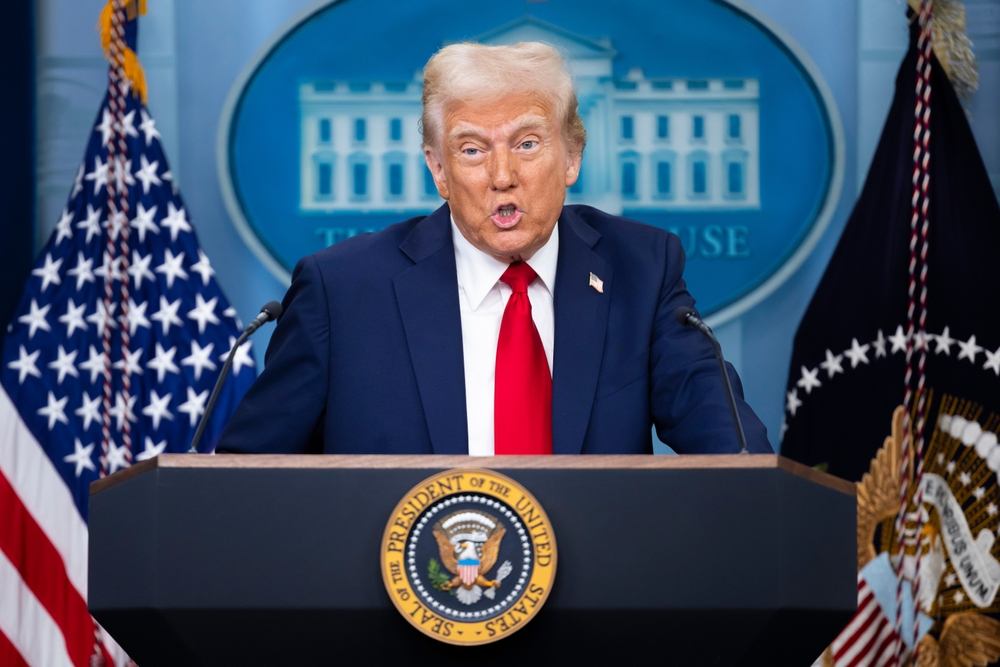
A proposal unlike anything previously attempted in American legal and political history is quietly taking shape inside the Trump administration. Officials are in active discussions about establishing a fund of nearly $1.8 billion designed to compensate individuals who believe they were unfairly investigated by the federal government under prior administrations. The talks are ongoing and no final decisions have been made, but people familiar with the discussions say an announcement could come as soon as this week.
The idea emerged from negotiations between President Donald Trump’s personal legal team and the Department of Justice over a potential resolution to the president’s $10 billion lawsuit against the Internal Revenue Service. That lawsuit, filed in January in federal court in Florida, accused the agency of allowing the unauthorized disclosure of Trump’s private tax returns to media outlets during his first administration. Trump filed the suit personally alongside his sons Donald Trump Jr. and Eric Trump, not in his official capacity as president.
What the proposed fund would do and who it would cover
According to sources familiar with the discussions, the fund would be framed as a remedy for those who were wrongly targeted through what supporters of the proposal describe as the political weaponization of federal law enforcement. One source characterized the intent as compensating people harmed by what they viewed as a partisan misuse of investigative power under the previous administration.
However, two additional sources indicated the fund would not necessarily be limited to actions taken under former President Joe Biden. The broader framing, as described by those sources, would extend potential eligibility to anyone who was unfairly investigated under any administration, a scope that would make the fund significantly more expansive in theory than its origins in the IRS lawsuit might suggest.
The proposed fund is expected to carry the name the President Donald J. Trump Truth and Justice Commission. The figure of $1.776 billion is not coincidental. The amount is a deliberate reference to the year of the nation’s founding, timed to align with the approaching America 250 celebration marking two and a half centuries of American independence.
The ethical constraints shaping the negotiations
One of the more complex aspects of the settlement discussions involves ensuring that the president himself does not directly benefit financially from a fund administered by his own Justice Department. Sources familiar with the terms being negotiated say the settlement is expected to include provisions that prevent any payments from flowing directly to Trump, a guardrail designed to head off the ethical conflicts that would arise from such an arrangement.
Even with those provisions in place, legal scholars and government watchdog groups are expected to challenge the fund aggressively if it moves forward. The precise agency from which the funds would be drawn has not been determined, and officials at the DOJ, IRS and White House have all been involved in the talks to varying degrees.
The origins of the lawsuit driving the talks
The lawsuit at the center of the negotiations stems from a genuine breach of taxpayer privacy that resulted in criminal prosecution. A former government contractor working for a major consulting firm illegally obtained and disclosed Trump’s confidential tax returns to several media outlets. The contractor was subsequently convicted and sentenced to five years in federal prison.
Trump’s legal team has argued consistently that the government’s failure to protect that information caused significant harm and that accountability for the breach remains incomplete. The $10 billion figure in the original lawsuit reflected the legal team’s assessment of damages, though the settlement discussions represent a significant departure from that initial demand in terms of structure and scope.
Separately, discussions about the IRS settlement have also touched on a potential provision that would lead the agency to drop ongoing audits of Trump, members of his family and associated business entities, though those elements of the negotiation remain fluid.
What comes next
The administration appears to be moving toward some form of resolution in the near term, with sources indicating that the broad strokes of a deal could be ready for announcement within days. What remains uncertain is whether the fund will survive the legal challenges that are virtually certain to follow its establishment, how the specific eligibility criteria will be defined and which federal agency will ultimately bear the financial responsibility.
For the administration, the fund represents an opportunity to deliver on long-standing rhetoric about correcting what it characterizes as politically motivated abuses of federal power. For critics, it raises fundamental questions about the separation between the executive branch and the justice system it oversees.
