


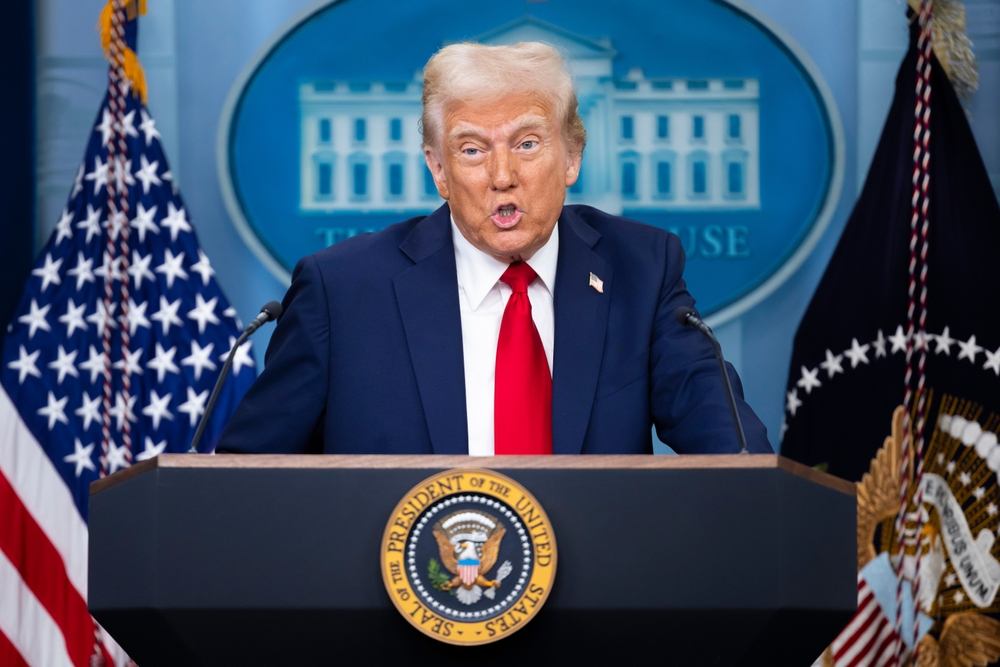
The case traces back to Charles Littlejohn, a former government contractor who stole and leaked confidential tax records belonging to Donald Trump and dozens of other high-profile Americans, including Jeff Bezos and Elon Musk. Littlejohn pleaded guilty and was sentenced to five years in prison in 2024. The IRS publicly described his conduct as unacceptable.
Trump responded by filing a $10 billion lawsuit against the IRS and the Treasury Department, arguing that both agencies failed to adequately protect his financial records from unauthorized disclosure. His sons, Donald Trump Jr. and Eric Trump, and the Trump Organization are named as co-plaintiffs.
The 90-day pause
In a joint court filing, attorneys for Trump and the IRS asked a federal judge to pause proceedings for 90 days. Both sides framed the request as an opportunity to explore whether the matter could be resolved without prolonged litigation.
The IRS has not commented publicly on where those talks stand. The pause buys time, but it also leaves the public with little to go on as one of the more unusual legal standoffs in recent memory plays out behind closed doors.
What the lawsuit actually claims
The complaint argues that the leak caused measurable harm to Trump and his family, both financially and to their reputations. It draws a direct line between Littlejohn’s disclosure and the widespread reporting that followed, including coverage revealing that Trump paid $750 in federal income taxes in 2016 and again in 2017.
Whether that exposure translates into $10 billion in damages is a question a court has not yet been asked to answer, and may never be if the two sides reach an agreement first.
Democrats push back with legislation
The possibility of a federal settlement landing money in Trump’s pocket has drawn sharp opposition from Democratic lawmakers. A group of senators has introduced legislation that would prohibit the president, vice president, and their immediate family members from receiving settlement payments from the federal government.
Senator Elizabeth Warren of Massachusetts, one of the bill’s co-sponsors, argued that allowing a sitting or former president to collect a government payout of this scale would represent a misuse of power and an unfair burden on American taxpayers. The bill is framed as a structural fix rather than a response to Trump specifically, though the timing makes the connection difficult to ignore.
Trump says he would donate the money
Trump has said publicly that any money he receives from the lawsuit would go to charity. That pledge has done little to quiet critics, who point out that regardless of where the funds end up, the source would be the American public.
The ethical questions surrounding that arrangement are precisely what Warren and her colleagues say they are trying to foreclose. A settlement involving a sitting president, paid out by a federal agency he oversees, sets a precedent that the legislation’s sponsors argue Congress has an obligation to prevent.
What comes next
The 90-day window gives both sides room to negotiate away from the courtroom, but it does not guarantee a resolution. If talks collapse, the case moves forward, and with it the prospect of extensive discovery into how the IRS handled Trump’s tax documents and what safeguards were or were not in place.
For now, the legal machinery is idling. The outcome will shape not only how much, if anything, Trump collects, but also how future administrations handle the intersection of personal legal claims and the government agencies they control.
