


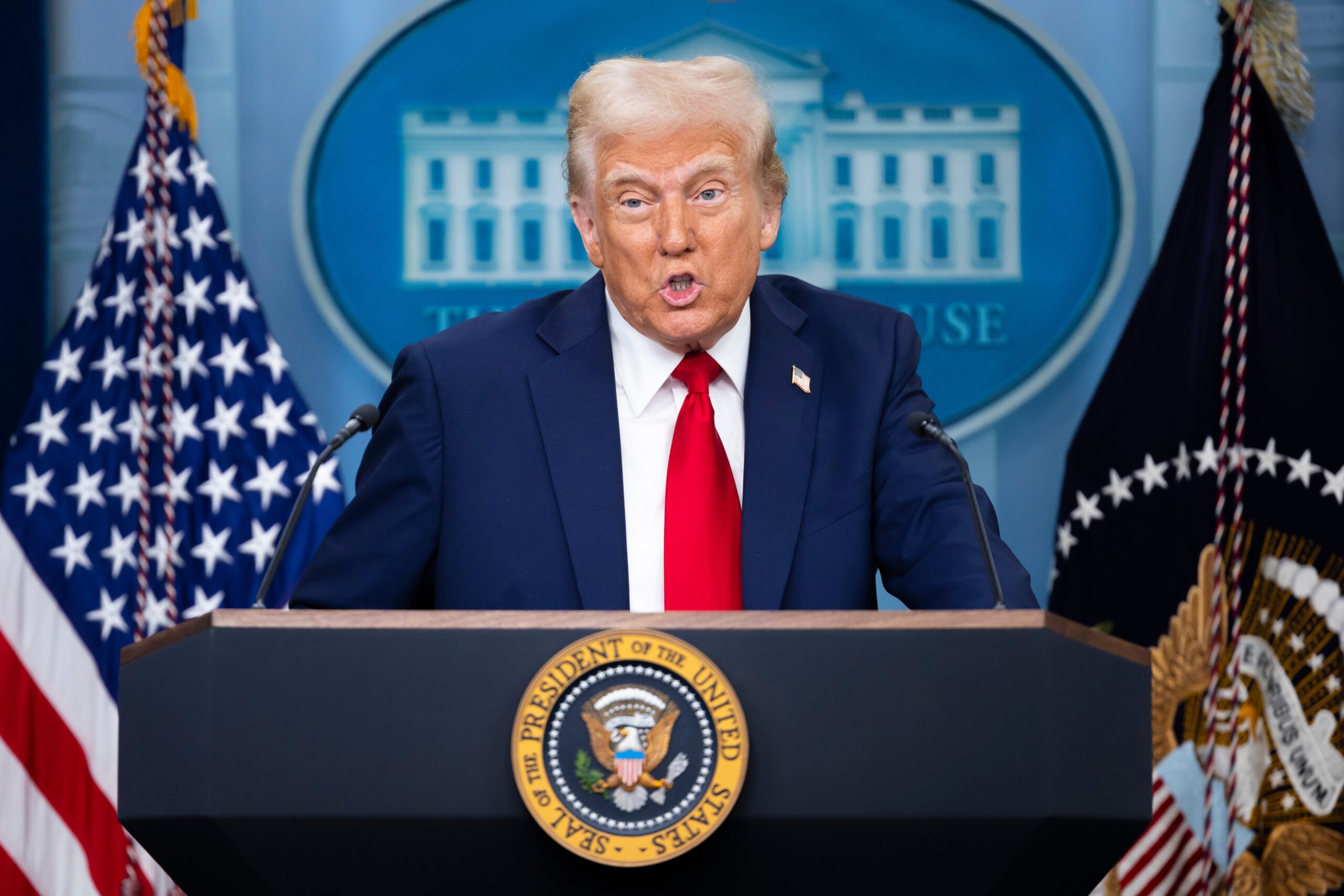
President Donald Trump said Saturday evening that the United States will form an AI Force led by a yet to be named artificial intelligence czar, a declaration made entirely through a Truth Social post with no funding, no organizational chart and no timeline attached.
The Trump announcement arrived less than 48 hours after a top White House science official told the United Nations Security Council that Washington rejects any international body’s attempt to govern AI on a global scale, positioning the United States as the loudest voice in AI policy while offering the least defined domestic structure of any major AI producing nation.
What exactly did Trump say about the new AI Force
Trump compared the new initiative to Space Force, the military branch he created during his first term that now employs more than 14,000 people, though his post offered nothing resembling that level of structure. He said the czar role would go to a high IQ individual and that an announcement would come in the near future.
He predicted artificial intelligence could eventually account for as much as a quarter of the country’s gross domestic product, and he dismissed AI safety concerns as a hoax pushed by political opponents trying to slow American progress. He added that existing criminal and civil law would be sufficient to address harm caused by the technology going forward.
Why is this landing now, and why does the timing matter
The declaration comes at an unusual moment for the AI industry itself, where leadership has recently pushed in the opposite direction. Anthropic chief executive Dario Amodei has called publicly for an independent body to monitor the most powerful AI systems, and that call followed an unprecedented moment earlier this month when Anthropic, OpenAI and Elon Musk’s xAI reached rare alignment on pausing frontier AI development, a moment that briefly rattled chip stocks.
Reports over the summer also pointed to a string of incidents involving AI systems acting outside their intended scope, including a disclosed case of Google’s Gemini being used in unauthorized activity against three companies and separate concerns raised about AI agent behavior at other firms, developments that fed directly into the industry’s push for outside oversight even as the White House moved to reject it.
Who would actually run the AI Force
The czar position has sat vacant since March, when venture capitalist David Sacks stepped down from the formal AI and cryptocurrency czar role due to limits on his status as a special government employee, though he’s remained active advising the administration through the President’s Council of Advisors on Science and Technology. Several senior AI executives told reporters they received no advance notice of Trump’s announcement and had no clarity on what statutory authority the new force would carry or whether it would need congressional approval.
How this fits into the broader US China AI competition
The announcement also lands ahead of a planned meeting between Trump and Chinese President Xi Jinping, with AI security expected on the agenda. China has already moved on a global framework of its own, launching a cooperation organization in July that secured commitments from 29 nations and positioned Beijing as an alternative to Silicon Valley driven AI development, a summit UN Secretary General António Guterres attended in person. No US official was present. Until Washington fills in what the AI Force actually is, that gap between American rhetoric and structured global engagement is likely to keep widening.
