


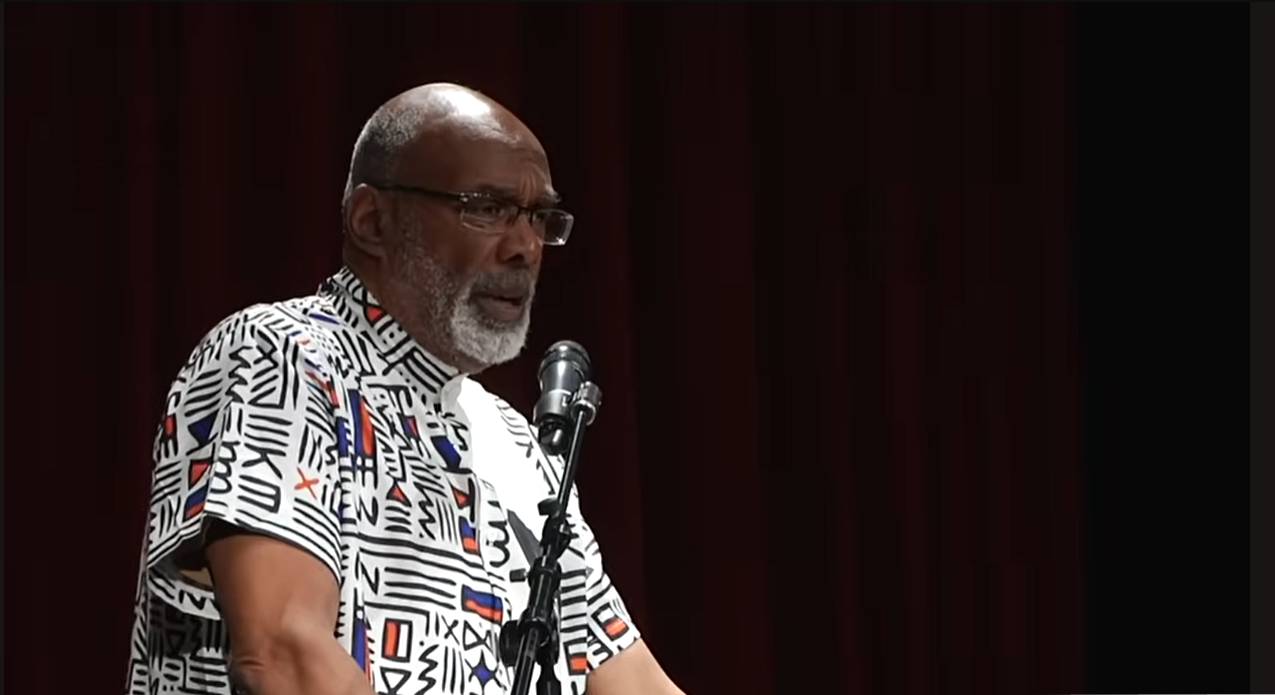
In less than five years, nine African-American leaders have left the Sierra Club and its foundation — a statistic that Aaron Mair, the organization’s first Black president, says is not a coincidence.
Mair, who led the Sierra Club from 2015 to 2017 after years of grassroots environmental work in Albany, N.Y., is now speaking publicly about what he describes as a systemic problem inside one of the country’s most recognized environmental organizations. His concerns center on a pattern he believes has repeated itself too many times to be dismissed: Black leaders are brought in, given prominent roles and then pushed out when they begin to challenge how things have always been done.
His voice is one of several now drawing attention to the organization’s internal dynamics. A formal complaint filed by Pedro da Silva, a former director of the Sierra Club Foundation, alleges discrimination and retaliation and points to what he describes as an institutional culture that elevates Black leaders as symbols without giving them real authority or support.
What Mair’s open letter was really about
When Mair wrote an open letter addressing the Sierra Club’s treatment of Ben Jealous, the organization’s former executive director, he was not simply defending a colleague. He was, by his own account, trying to name something much larger a tension between what the Sierra Club presents to the public and what actually happens inside its walls.
Jealous, who came to the role with a background rooted in both conservation and civil rights, faced significant resistance during his tenure. Mair argues that much of that resistance came because Jealous was making difficult but necessary financial decisions to stabilize an organization that was in serious fiscal trouble. Being unpopular for doing hard things, Mair suggests, is not the same as being wrong.
The Sierra Club did not respond to a request for comment before this article’s publication.
Environmental justice is not a side issue
Central to Mair’s argument is the idea that environmental justice the disproportionate impact of pollution, toxic waste and land use decisions on Black and low income communities is not a subcategory of environmentalism. It is, he insists, the very heart of it.
Mair traces his own path in this work to a successful campaign against a polluting incinerator in Albany, an experience that shaped his understanding of how environmental harm lands differently depending on race and zip code. Issues like childhood asthma rates, the placement of waste facilities, and access to clean water are not abstract policy debates for Black communities they are daily realities.
He argues that the Sierra Club has long struggled to reconcile its identity as a traditional conservation organization, historically rooted in white, middle class outdoor culture, with the urgent and community driven demands of environmental justice. That tension, he believes, is part of what makes Black leaders inside the organization so vulnerable.
Power has shifted and not for the better
Mair also points to a governance problem that he says has been building for years. The balance of power within the Sierra Club, he argues, has shifted significantly away from local chapters and volunteer driven leadership toward a more centralized structure dominated by staff and politically aligned labor interests.
That shift matters because the grassroots chapter model was historically one of the organization’s defining strengths and a space where independent voices could shape policy from the ground up. As that model has weakened, Mair argues, so has the ability of leaders who challenge institutional thinking to find any real footing.
A call for something real
What Mair is asking for is not complicated in theory, even if it has proven difficult in practice. He wants the Sierra Club to treat racial justice as a core operating principle embedded in how decisions are made, how power is shared and how leaders are supported rather than as a branding opportunity.
The departures of nine Black leaders in five years, he suggests, are not a public relations problem. They are a governance problem, and one the organization will need to face honestly if it wants its stated commitments to diversity and environmental justice to mean anything at all.
