


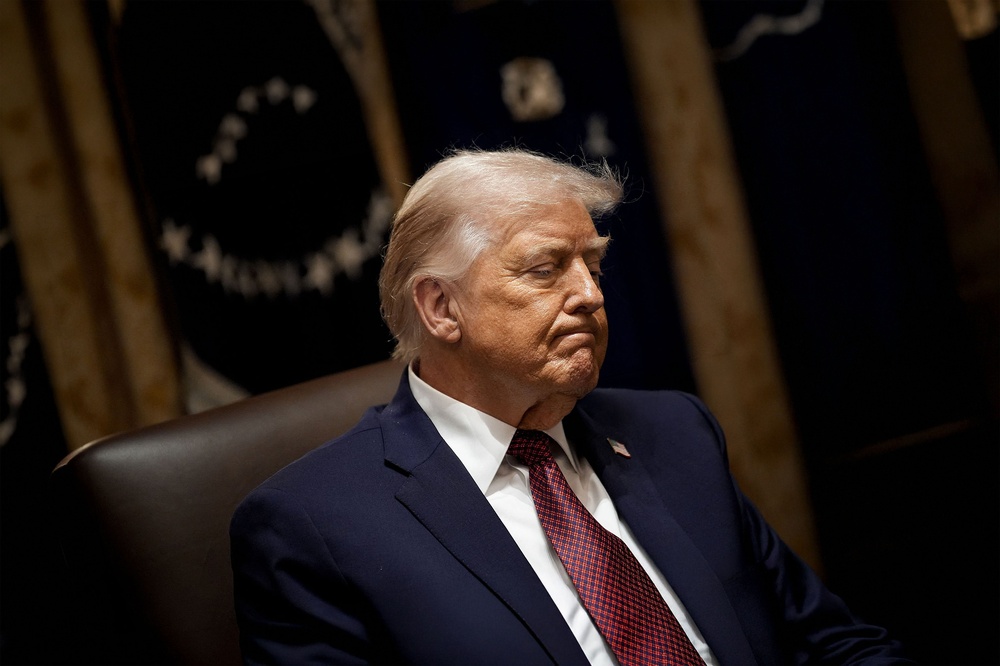
Donald Trump set off a wave of political and medical debate after video from an Oval Office event circulated online and within hours moved well beyond social media and into the halls of Congress. Critics questioned the president’s alertness. Lawmakers called for explanations. And at least one elected official used the moment to renew a push for constitutional action.
The footage showed Trump appearing to close his eyes for an extended period while others in the room were speaking, a scene that observers said went beyond a momentary lapse in attention.
Lawmakers respond to Donald Trump with urgency
The political reaction was swift and pointed. A congresswoman from Arizona was among the first to go public, arguing that what the video showed was not an isolated incident but part of a pattern she framed as a matter of national security. She called for the invocation of the 25th Amendment, the constitutional provision that allows for the removal of a president deemed unable to carry out the duties of the office. Her position was direct and she did not soften it.
A congressman from California echoed similar concerns, zeroing in on what he described as an inability to remain alert during critical White House functions including cabinet meetings. He also raised questions about hospital visits and the ongoing use of cognitive testing, suggesting the public deserves more transparency about the president’s medical condition and what those evaluations have shown.
A medical voice joins the Donald Trump debate
The conversation extended beyond politics. A physician known for public medical commentary weighed in, pointing to what he described as a glaring absence in the president’s most recent physical examination. He argued that a sleep related condition had not been addressed in the official health report and that the omission was itself significant. His position was that what the public has been watching does not fall within the range of normal behavior for someone in the president’s position.
The White House has not directly addressed the medical framing of the situation.
Other moments from the same event
The drowsiness clip was not the only thing drawing attention from the Oval Office appearance. During the same event the president made several remarks that critics flagged separately. He suggested that he would have carried all fifty states in the most recent presidential election had the process been conducted differently, a claim that runs counter to the certified results which showed him winning thirty one states.
He also discussed a proposed pedestrian pathway near a prominent Washington landmark, describing public interest in naming it after himself. Neither remark generated the same volume of reaction as the video clip but both added to the overall tenor of the coverage that followed.
A pattern that keeps compounding
What makes this moment different from previous instances is the speed at which institutional voices are now joining the conversation. Earlier episodes drew mockery and online commentary. This one drew elected officials invoking constitutional language and medical professionals questioning the completeness of official health disclosures.
The White House has consistently pushed back against the framing, describing the president in strong terms each time the subject arises. But the consistency of that pushback has done little to quiet the questions, and each new clip seems to generate a slightly louder round of them.
Whether the 25th Amendment calls gain any serious traction remains unlikely given the current political makeup of Congress. But the fact that the language is being used at all by sitting lawmakers marks a shift in how publicly and directly some members of the opposition are willing to challenge the narrative around the president’s fitness.
The debate is no longer just online. It has moved into official spaces and it does not appear to be going anywhere soon.
