


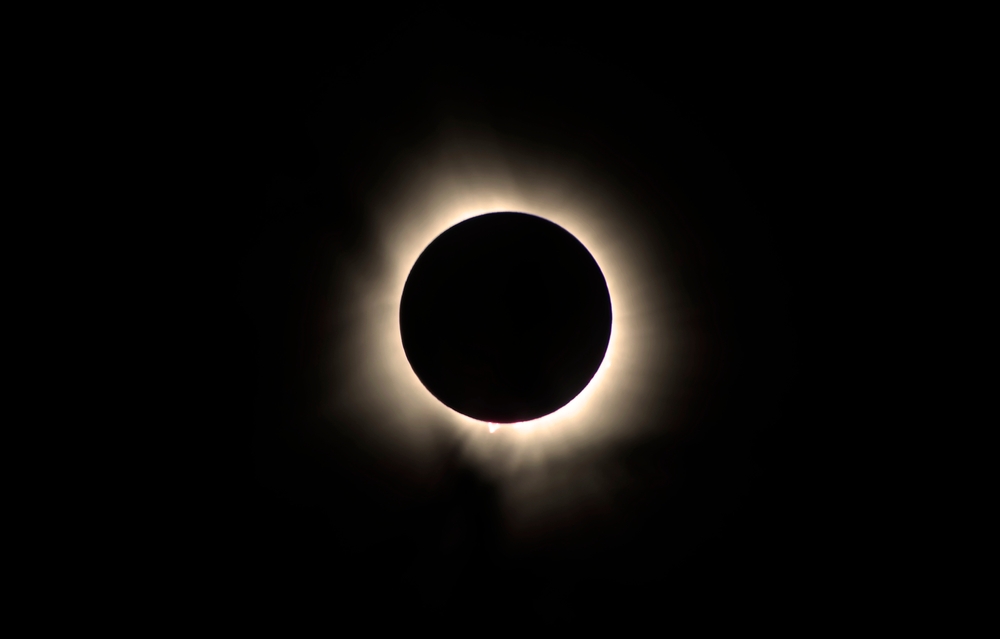
A solar eclipse sweeping across the top of the globe this Wednesday will do more than dim the daylight. As the moon slides in front of the sun and drags its shadow from the Arctic down toward western Europe, temperatures, wind and humidity will all shift in real time. The change can be sudden and, in the right conditions, surprisingly steep.
The mechanics are simple. When the moon blocks the sun, it cuts the flow of solar radiation — the sunlight and energy that reach the ground. Less radiation means less warmth, and the more of it that gets blocked, however brief the moment, the sharper the swing. The effect mirrors the way a shaded sidewalk feels far cooler than the pavement baking a few steps away in full sun.
How far a solar eclipse can drop the temperature
Not every darkening cools the air the same way. The size of the temperature drop depends on cloud cover, the season and how high the sun sits in the sky. The steepest declines tend to arrive on clear summer afternoons, when a high sun angle drives intense sunshine and warm readings that have the most room to fall.
In dry air, that plunge can reach 8 to 14 degrees Fahrenheit, figures from the National Oceanic and Atmospheric Administration show.
The cooldown also lags behind the shadow. Temperatures ease lower as the solar eclipse begins, but they keep sliding and bottom out only after totality ends, because the air responds a step behind the loss of radiation. During the 2017 crossing over the lower Ohio Valley, readings did not hit their floor until roughly 5 to 10 minutes after totality passed.
What Wednesday’s path will actually look like
This week’s solar eclipse will blot out the sun entirely along a slim corridor, and a handful of regions sit directly beneath its darkest track.
- Northern Russia
- Parts of Greenland
- Iceland
- Portugal
- Spain
Timing will shape how much each place feels. In Iceland and Greenland the solar eclipse arrives in the afternoon, yet the thick cloud cover common to those latitudes may blunt the cooldown, since clouds already screen out a share of the sun’s energy. In Portugal and Spain, totality lands just before sunset, so the air may cool a touch faster than usual as the light fades, though the drop is unlikely to feel as dramatic as one earlier in the day.
A solar eclipse changes more than heat
Fading radiation and falling temperatures ripple outward into wind, clouds and humidity. The quick chill briefly strips heat from the atmosphere, and heat is what forces air to rise and turn restless. With less of it, the sky calms, storms lose their engine and the breeze eases off.
Measurements taken in Wyoming and New York during the 2017 solar eclipse recorded wind speeds falling by an average of 6 mph as the shadow passed.
Cloud cover can thin, too. Over parts of northern Texas during the 2024 event, clouds dissolved as they lost their fuel — the rising warm air that builds them in the first place.
Humidity plays a quieter trick. How muggy the air feels tracks closely with temperature, because humidity climbs as the reading and the dew point — a gauge of moisture in the air — draw closer together. When a solar eclipse nudges temperatures down, the gap narrows and the air can feel a bit stickier, even for a few fleeting minutes.
When the next solar eclipse arrives
Skywatchers chasing this rhythm will not wait long. The next total solar eclipse falls on August 2, 2027, carving through southern Spain, northern Africa, Saudi Arabia and Yemen. After that, the next totality overhead in the far north will not arrive until Alaska on March 30, 2033.
Until then, Wednesday offers a brief, sweeping preview of how quickly a solar eclipse can rearrange the weather beneath it — a few minutes of shadow that the sky spends far longer trying to shake off.
