


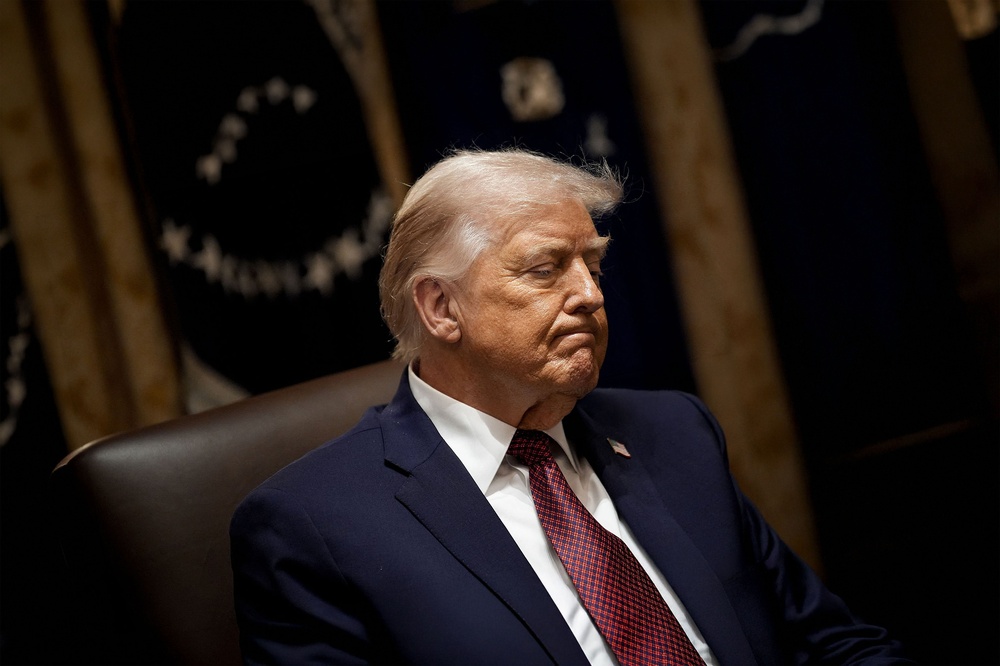
Monday night at Madison Square Garden was already one of the most anticipated events in New York sports in decades. Then Donald Trump walked in and made it something else entirely. The president became the first sitting commander in chief to attend an NBA Finals game when he arrived at the arena before tipoff of Game 3 between the New York Knicks and the San Antonio Spurs, adding a layer of political theater to a night that was already carrying the weight of 27 years of Knicks postseason longing.
Trump arrived nearly an hour before the opening tip, settling into a suite in the lower bowl that had been outfitted with protective glass and surrounded by a substantially expanded security presence. He was accompanied by Knicks owner James Dolan, several members of his cabinet and his granddaughter. He stayed until the final buzzer, watching the Spurs pull out a 115-111 victory that gave San Antonio new life in the series.
The reception was complicated
When Trump appeared briefly on the arena’s video board during the national anthem, the response from the crowd was audible and not uniformly welcoming. He had stood and saluted the flag during the anthem while dressed in a dark suit. After the game, before departing on Air Force One back to Washington, Trump told reporters the reception had been enthusiastic and largely positive. Those who were inside the building heard something more divided.
The journey to the arena had its own texture. Marine One brought the president from his New Jersey residence to lower Manhattan, where the motorcade made its way uptown to the Garden. Along the route, some onlookers expressed their displeasure openly. Inside the building, fans, media and arena staff all passed through additional security checkpoints and magnetometers to get to their seats.
Security, logistics and a packed house
The operational footprint of a presidential visit to a major sporting event is significant, and Monday night was no exception. Secret Service personnel and law enforcement were stationed throughout the surrounding blocks, and the additional screening procedures added time to the entry process for everyone in attendance. Players on both teams were aware of the logistical shift, with at least one Spurs player noting his team had planned to arrive earlier than usual to clear the extra security layers without disrupting their preparation.
NBA commissioner Adam Silver addressed the night’s unusual atmosphere directly, describing Trump as a genuine fan of the home team and framing the moment as an opportunity rather than a complication. Silver suggested that sports, at their best, provide common ground in moments of division and that a full arena of people sharing the same experience represents exactly that.
Both coaches kept their public comments grounded in basketball. The Knicks coach noted his pregame routine was largely unaffected and that his focus remained entirely on the game itself. His counterpart on the Spurs bench said he had felt no inconvenience from the presidential presence and was simply grateful to be part of a memorable night.
A crowd full of names
Trump was far from the only recognizable face in the building. New York City’s mayor was there, as were Yankees legend Derek Jeter, director Spike Lee and a collection of actors and entertainers who have become regular fixtures at Knicks playoff games this postseason. Former Knicks guard Jeremy Lin also attended, adding to a guest list that reflected the full spectrum of New York celebrity culture on the grandest basketball stage the city has hosted in a generation.
The Spurs won the game. The president made history. New York went home with a lot to process.
