


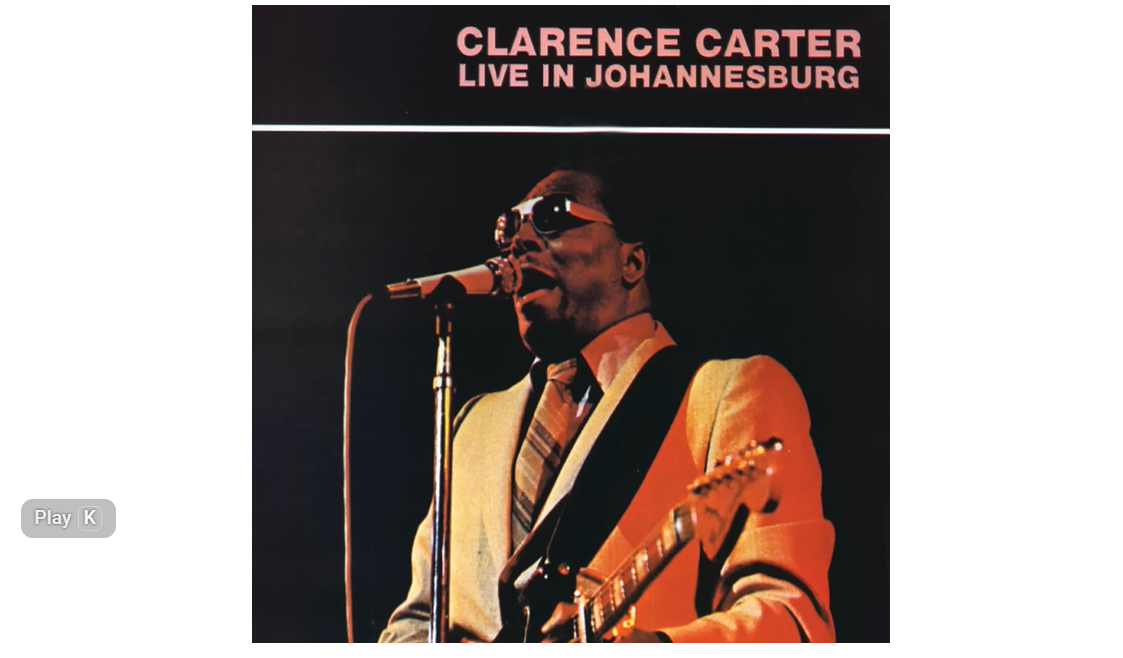
The unmistakable voice of Southern soul has gone silent.
Clarence Carter, the blind Alabama born singer whose gritty storytelling and emotionally charged performances powered classics like Patches, Slip Away and Strokin’, has died at the age of 90. His management confirmed that Carter died Wednesday following complications from pneumonia, closing the chapter on one of soul music’s longest and most influential careers.
For generations of fans, Carter represented the raw honesty and emotional weight that defined classic Southern soul. His music blended blues, gospel and country influences into records that felt lived in rather than polished. Whether he was singing about heartbreak, temptation or survival, his performances carried a rough edged sincerity that made his songs unforgettable.
Clarence built his sound in Alabama
Born in Montgomery, Alabama in 1936, Carter was blind from birth. Music quickly became both his creative outlet and his path forward. After studying music at Alabama State University, he began recording alongside fellow blind musician Calvin Scott in a duo first known as Clarence and Calvin before later becoming the C and C Boys.
Their partnership ended after Scott suffered serious injuries in a car accident, pushing Carter toward a solo career that would eventually shape the sound of Southern soul during the late 1960s and early 1970s.
His breakthrough came in 1967 with Tell Daddy, a self written track that earned attention across the R&B world and later inspired Tell Mama by Etta James. Carter’s career accelerated from there after he joined the legendary FAME Studios scene in Muscle Shoals, Alabama.
Clarence Carter created timeless soul classics
In 1968, Carter released Slip Away, the aching ballad that became his signature song. Built around longing and quiet desperation, the record climbed near the top of the R&B charts and crossed into mainstream pop success. Decades later, the song remains a fixture in film soundtracks and soul playlists, introducing new listeners to Carter’s deeply expressive voice.
That same period also produced Too Weak to Fight and the holiday cult favorite Back Door Santa. The latter mixed humor and swagger into a bluesy Christmas track that later found new life through sampling in hip hop, most famously in Christmas in Hollis by Run DMC.
Carter’s biggest commercial success arrived in 1970 with Patches, a dramatic story song centered on hardship and resilience. His emotionally heavy performance pushed the single into the upper tier of both pop and R&B charts in the United States and the United Kingdom.
The song became one of the defining records of its era and helped cement Carter as a crossover star during soul music’s golden years.
Clarence Carter remained a force beyond his peak
During the early 1970s, Carter was also closely tied to fellow soul icon Candi Staton, whom he married in 1970. The pair collaborated creatively during a period when both artists were ascending inside the Southern soul movement.
Though the marriage later ended, Carter remained a constant touring and recording presence even after disco reshaped the music industry and pushed many traditional soul artists out of the spotlight.
He experienced an unexpected late career resurgence in 1988 with Strokin’, a sexually charged anthem that became both a jukebox staple and a defining Southern soul party record. The song introduced Him to a younger audience and gave him another signature hit nearly two decades after his commercial peak.
Clarence leaves behind a lasting soul legacy
Across more than six decades in music, Carter earned a reputation as one of soul’s most authentic voices. His songs carried emotional bruises, humor and hard earned wisdom without sounding overly theatrical. That honesty helped his records endure long after radio trends changed.
He was inducted into the Alabama Music Hall of Fame in 2003 and remained celebrated within soul and blues circles well into his later years.
For many listeners, Clarence Carter represented a disappearing era of soul music rooted in live instrumentation, emotional directness and storytelling that felt deeply personal.
Even now, his records still sound human in a way that refuses to age.
