


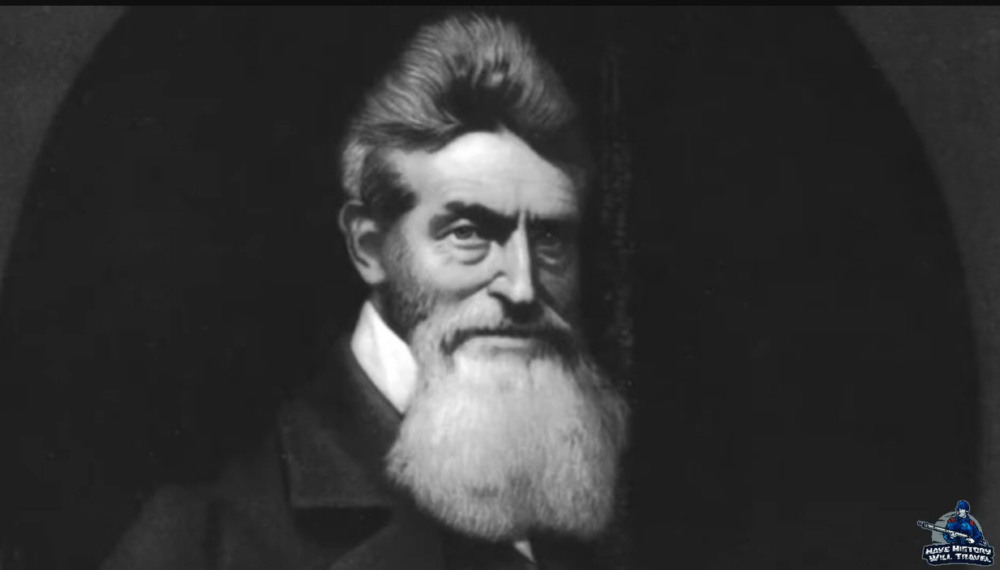
For generations, John Brown has occupied an uneasy place in the American imagination. History textbooks painted him as unstable, even dangerous a wild-eyed zealot whose violent methods disqualified him from being taken seriously as a moral figure. But that portrait is being reconsidered, and the reassessment is long overdue.
A new generation, shaped in part by social media conversations and fresh cultural portrayals like Ethan Hawke’s layered performance in The Good Lord Bird, is encountering a different version of Brown entirely one that looks less like a madman and more like a man who understood, with painful clarity, what the moment demanded. Historians, activists and cultural commentators are increasingly framing him as one of the most committed white allies the abolitionist movement ever produced, someone willing to give up everything, including his life, in the fight for Black liberation.
Shaped by faith and an early encounter with cruelty
Brown was born on May 9, 1800, in Torrington, Connecticut, into a deeply religious household where antislavery convictions were foundational, not peripheral. His father instilled in him both a reverence for scripture and a belief that slavery was a moral abomination that demanded a response.
A formative encounter during his youth witnessing the brutal beating of a young enslaved boy transformed those inherited beliefs into something personal and permanent. From that point forward, the cause of abolition was not an abstract principle for Brown. It was a calling.
From the Underground Railroad to open rebellion
Long before he became a revolutionary, Brown was doing the quieter, more dangerous work of the abolitionist movement. As a young man, he worked alongside his father on the Underground Railroad in Hudson, Ohio, helping enslaved people find passage to Cleveland and offering refuge in their home. That early labor rooted him in the movement at its most human level not as theory but as individual lives at stake.
Business failures followed him through adulthood. By the early 1840s he was bankrupt, and the losses that might have broken another man seemed only to deepen his sense of mission. He came to believe he was operating under a divine mandate, and that conviction would shape everything that followed.
A friendship with Frederick Douglass
In 1847, Brown met Frederick Douglass, and the two men developed a relationship grounded in mutual respect and shared urgency. Douglass, already one of the most prominent voices in the abolitionist movement, was struck by Brown’s ferocity of commitment. He later acknowledged in his autobiography that Brown’s influence pushed him toward a harder reckoning with the question of whether peaceful resistance alone could ever be sufficient against a system as violent and entrenched as slavery.
Kansas, Harriet Tubman and the road to Harpers Ferry
In 1849, Brown relocated to North Elba, New York, where abolitionist Gerrit Smith was working to provide land to formerly enslaved people. Brown took on a role as teacher and advisor, helping new landowners develop the farming skills they needed to sustain themselves. It was a period of relative quiet but it did not last.
In 1856, letters from his sons in Kansas described escalating pro-slavery violence in the territory. Brown traveled west and led the Pottawatomie Creek raid, in which five pro-slavery settlers were killed. The act was brutal and deliberate, and it announced to the country that Brown had crossed a threshold from activist to insurgent.
Planning for what would become the Harpers Ferry raid, Brown sought out Harriet Tubman in Canada, recognizing that her knowledge of Southern geography and networks would be essential. Tubman, deeply supportive of his aims, fell ill before the raid could begin and was unable to join him.
Harpers Ferry and the making of a martyr
In October 1859, Brown led a raid on the federal armory at Harpers Ferry, Virginia, intending to seize weapons and ignite a broader rebellion among enslaved people across the South. The plan stalled. The support he anticipated did not materialize, and within days he was captured by U.S. Marines under the command of Col. Robert E. Lee.
Brown was tried, convicted and sentenced to death. He faced his execution without recantation, framing his actions not as crimes but as moral obligations. His death made him a martyr and his trial a flashpoint, one that deepened the national rupture over slavery and accelerated the country toward civil war.
A legacy that civil rights leaders never forgot
Frederick Douglass and W.E.B. Du Bois both wrote with reverence about Brown’s life and sacrifice. Malcolm X once said the only white allies he would accept were those cut from Brown’s cloth. Dick Gregory called him the finest human being America had ever produced.
Those are not small endorsements. They reflect something that the sanitized, dismissive version of Brown’s story has always obscured that the people fighting hardest for their own liberation recognized in him a rare and genuine commitment, one that cost him everything and never wavered.
