


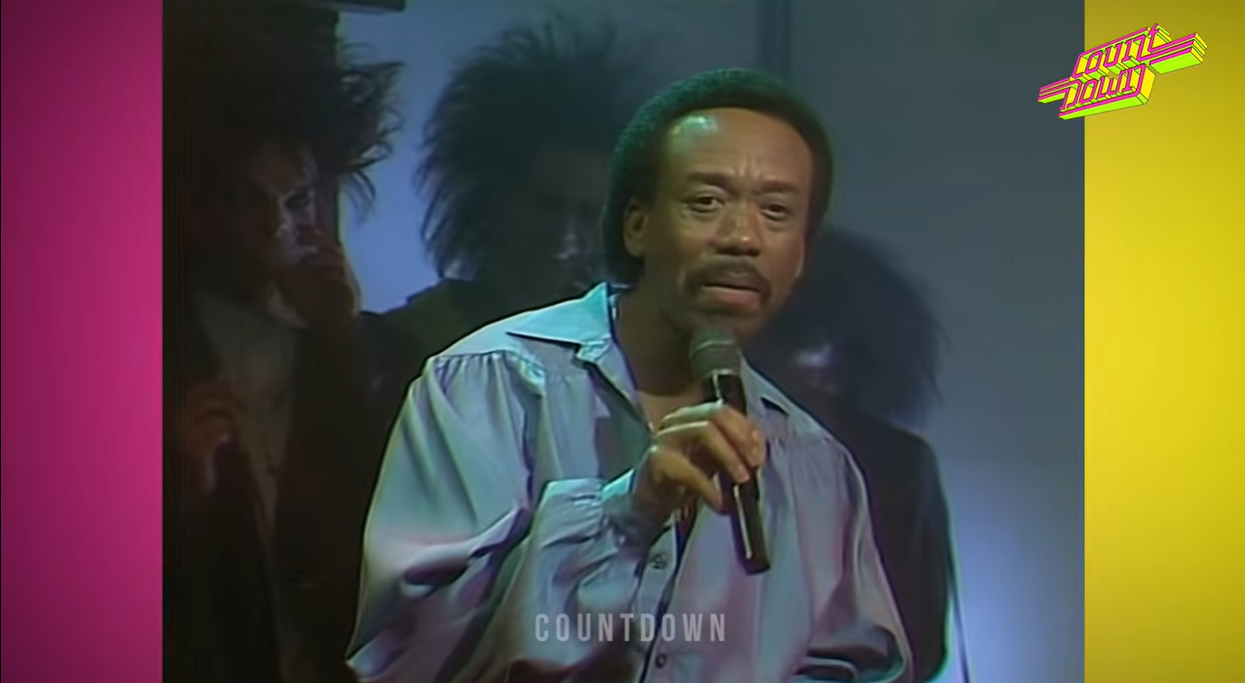
Maurice White built one of the most celebrated catalogs in American music history. But behind the horn arrangements, the spiritual lyrics and the relentless optimism that defined Earth, Wind & Fire, there was a man quietly carrying wounds that never fully healed. A new HBO documentary from Questlove the Grammy winning drummer, filmmaker and cultural chronicler sets out to tell that fuller story, and what it uncovers is as moving as anything the band ever recorded.
The documentary, titled Earth, Wind & Fire (To Be Celestial vs. That’s the Weight of the World), premiered at the Tribeca Festival before its HBO debut, and it arrives as both a tribute and an act of genuine excavation. Questlove has made clear that his goal was not simply to celebrate the band’s hits but to understand the human being who made them possible.
A childhood defined by abandonment and an art built from the wreckage
White grew up in the segregated South, and among the earliest and most formative experiences of his life was being left by his mother when he was still a young child. She eventually returned when he was 18, but the years in between left marks that, according to Questlove’s documentary, White never fully processed. The emotional distance he kept from others even as he poured warmth and uplift into his music reflected a man who had learned early that vulnerability could cost him something precious.
What makes White’s story remarkable is not that he transcended that pain cleanly, but that he alchemized it. The documentary frames his journey as that of a child who encountered profound loss and somehow found in music, metaphysics and collective creativity a way to build something larger than himself. He became, in many ways, the emotional anchor for an entire band and an entire era while quietly struggling to anchor himself.
From Chess Records to global phenomenon and the risks in between
Before Earth, Wind & Fire became a fixture on stages worldwide, White had already established serious credibility in the industry. His work alongside pianist Ramsey Lewis and his time at Chess Records gave him a foundation that most musicians would have been content to build upon. Instead, he walked away from that stability to pursue something he could not yet fully name, a creative risk that Questlove clearly regards as one of the defining acts of White’s artistic life.
That gamble produced a band whose sound weaving together soul, funk, jazz, Afrofuturism and spiritual philosophy was unlike anything else on the radio. Earth, Wind & Fire did not just chart; they reshaped what popular music could aspire to be.
Booed in Philadelphia and what happened next
The documentary does not shy away from the band’s early struggles. One sequence that has drawn particular attention involves a performance in Philadelphia where Earth, Wind & Fire, then still finding their footing, opened for Parliament Funkadelic and were met with a hostile crowd. Rather than retreating or recalibrating toward something safer, the band pushed through a moment Questlove holds up as emblematic of the group’s foundational stubbornness in the best sense of the word.
Their influence, even during the years when their commercial momentum slowed in the 1980s, continued to ripple outward. Artists who rose to prominence in that era and beyond drew directly from what Earth, Wind & Fire had built, a lineage the documentary traces with care.
A personal full circle moment for Questlove
The Tribeca premiere carried an added emotional weight for Questlove himself. Following the screening, he performed alongside Earth, Wind & Fire at New York’s Beacon Theatre the same venue where he first sat behind a drum kit as a child. For a filmmaker whose work consistently explores the gap between a legend’s public image and private reality, the moment held particular resonance.
Questlove has spoken about his reluctance to make a similar documentary about Prince, an artist to whom he feels too personally close. With Maurice White, he found the necessary distance and in doing so, produced what may be his most emotionally complete work yet, a portrait of a man whose greatest gift to the world was built on ground he never fully steadied beneath his own feet.
