


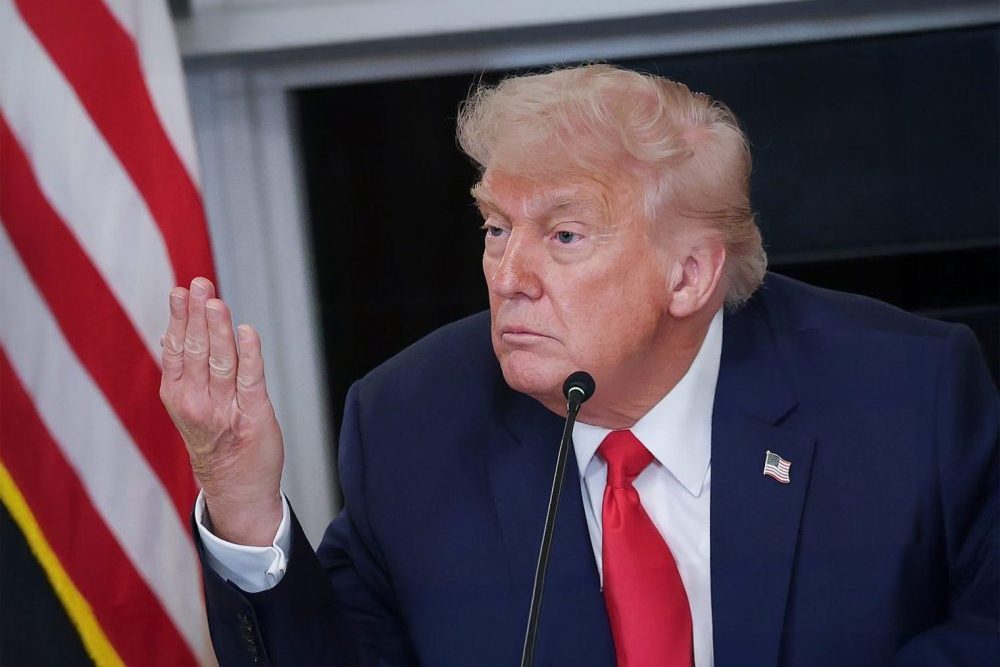
President Trump entered Virginia’s redistricting fight on Monday evening, joining House Speaker Mike Johnson on a telerally call to urge voters to reject a ballot measure that both men argued would hand Democrats a sweeping advantage in the state’s congressional delegation. The call came one day before Virginians were set to vote on the referendum, and the urgency of the appeal underscored how much both parties have invested in the outcome.
Trump described the measure as an unprecedented partisan maneuver, arguing that its passage would effectively eliminate meaningful Republican representation in Virginia’s congressional delegation. He called on voters to go to the polls and cast a no vote, framing the decision in stark terms as a choice between fair representation and a politically engineered outcome.
Johnson echoed the message, speaking in his capacity as Speaker and ticking through the names of Virginia’s five Republican House members, each of whom he described as central to the party’s legislative agenda on issues including cost of living and border security. He argued that protecting their seats was directly tied to the national Republican agenda heading into the fall.
What Trump’s targeted referendum would actually do
Virginia is holding a special referendum asking voters whether Democratic lawmakers should be permitted to adopt a new congressional map ahead of the 2030 census, more than four years before the standard redistricting cycle. The measure, if passed, would be temporary and would install a map giving Democrats a 10-to-1 edge in the state’s congressional delegation.
Virginia’s current House delegation gives Democrats a narrow 6-to-5 advantage. The proposed map would dramatically expand that margin, potentially creating as many as four new Democratic pickup opportunities in a midterm environment that analysts have been comparing to the 2018 elections, which proved costly for Republicans.
Democrats have framed the move as a response to redistricting actions taken by Republican-controlled legislatures in other states. Texas and Missouri have both seen mid-cycle map redraws pushed by GOP lawmakers looking to add House seats ahead of November. Democratic backers of the Virginia measure argue they are leveling a playing field that Republicans began tilting first.
The money and the messaging
Nearly 100 million dollars has flowed into the Virginia referendum campaign from both sides, much of it through dark money organizations whose donors are not required to disclose publicly. The scale of outside spending reflects the broader strategic significance of the vote. Virginia represents the last state where Democrats have a realistic path to redrawing a congressional map before the fall elections, making Tuesday’s result consequential well beyond state borders.
The campaign backing the redistricting measure pushed back sharply against the White House’s involvement, arguing that Trump and Johnson’s intervention revealed the referendum’s true stakes. Supporters of the yes campaign contended that national Republican pressure on Virginia voters was itself evidence of a coordinated effort to shape midterm outcomes through redistricting rather than competition at the ballot box.
Republicans disputed that framing, pointing to Democratic redistricting efforts in other states as evidence that both parties approach map-drawing as a tool of political strategy. The argument over which side is acting in bad faith has defined much of the public debate around the referendum.
Florida’s Republican-controlled legislature is scheduled to convene for a special session next week that is expected to include redistricting on its agenda, though some GOP members have voiced concern that an aggressive map could generate a backlash in competitive districts come November.
