


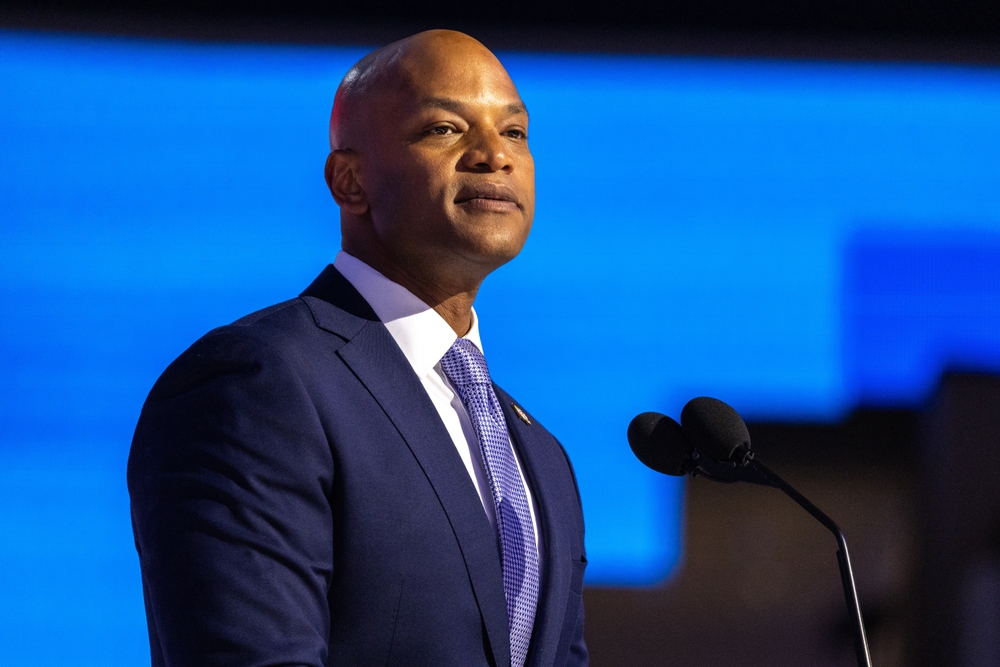
Maryland Governor Wes Moore used his Fourth of July address in Annapolis to push Americans toward a more searching version of patriotism, one that weighs the cost of war alongside the celebration of freedom. Rather than treating the country’s 250th anniversary as simply another year to mark with fireworks and parades, Moore framed the milestone as an opportunity for the country to look inward.
Questioning how the country goes to war
A central part of Moore’s message focused on how the United States enters and exits military conflicts. He argued that launching a war without a clear purpose does not qualify as genuine patriotism, and that ending one without real accomplishment cannot be called a victory. Moore pointed to growing public skepticism toward military engagements that lack defined goals, describing that skepticism as neither baseless nor unpatriotic.
He framed this sentiment as a sign of a widening gap between the military and the citizens it serves, one he said political leaders have a responsibility to address through greater honesty about the human and financial toll of war.
A call for reflection alongside reverence
Moore pushed back on the idea that Independence Day should be reserved solely for celebration, describing it instead as a day that demands both reverence and reflection. He tied that framing to the nation’s founders, arguing that they understood the country remained unfinished even at its founding.
To illustrate the point, Moore shared a personal family story, recounting how his grandfather fled South Carolina as a child after facing violence connected to the Ku Klux Klan. He used the account to underscore the historical struggles endured by Black Americans and the work still remaining more than two centuries after the country’s founding.
Unity as the core of Moore’s message
Much of Moore’s address centered on the idea that inclusion, rather than exclusion, defines American strength. He argued that the country would be incomplete without the full participation of all its people, describing that principle as the version of patriotism his grandfather passed down to him.
Moore cautioned against narrow definitions of patriotism that leave out entire groups of Americans, calling instead for an approach that recognizes the full range of experiences that have shaped the nation. He framed diversity as a source of strength rather than division, a message he delivered amid a broader climate of political polarization.
Extreme heat disrupted celebrations nationwide
Moore’s address came the same day that record breaking heat disrupted Independence Day festivities in several major cities. Washington, D.C., Baltimore and Richmond, Virginia, all recorded dangerously high temperatures that led officials to cancel planned parades and fireworks displays. An estimated 150 million people across the country were placed under heat alerts as the milestone anniversary unfolded, with officials urging residents to stay hydrated and limit time outdoors.
The disruptions created a notable contrast with the scale of celebration many had anticipated for the country’s 250th birthday, underscoring how extreme weather increasingly intersects with large public gatherings.
A milestone framed as a turning point
Moore closed his remarks by describing the anniversary as a turning point rather than an endpoint, encouraging Americans to treat the milestone as motivation to continue working toward the country’s founding ideals rather than a signal that the work has been completed.
His address arrives amid ongoing national debate over how the country balances military commitments abroad with accountability at home, alongside broader conversations about inclusion and historical memory. By connecting his grandfather’s personal history to a broader call for unity, Moore positioned the 250th anniversary as a moment to acknowledge both the progress made and the distance still left to travel.
