


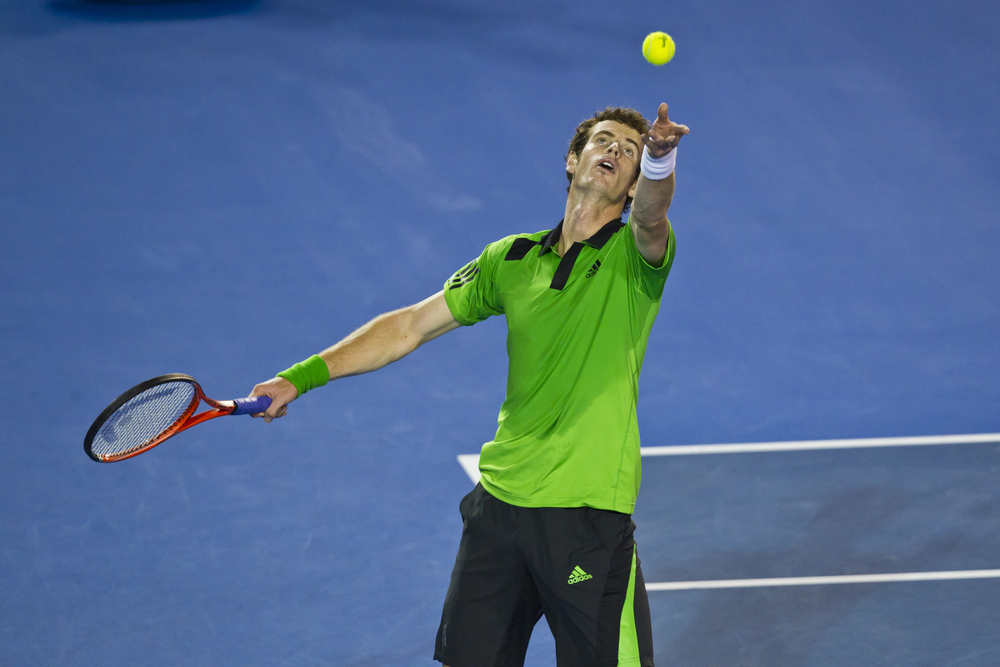
Arthur Fery, a British wild card ranked 114th in the world who grew up approximately a mile from the All England Club, reached the Wimbledon semifinals on Wednesday with a 6-4, 7-6, 6-0 victory over ninth-seeded Flavio Cobolli on Centre Court, delivering one of the most improbable runs in the tournament’s recent history with Queen Camilla watching from the royal box.
The 23-year-old former Stanford All-American becomes only the fourth wild card to reach the semifinals at any Grand Slam in the open era, joining three men whose names appear in tennis history for similarly unlikely achievements. He is the fifth British man to reach the Wimbledon semifinals in the open era, and the first unseeded British player, man or woman, to do so.
How the match was won
Cobolli had entered the quarterfinal having dispatched Australia’s fifth seed in the previous round and carried the ranking and pedigree of a genuine title contender. What unfolded bore little resemblance to that billing. The Italian made 41 unforced errors compared to Fery’s 15, a disparity that reflected both Fery’s exceptional level and Cobolli’s inability to find anything like his best tennis.
Fery won the first set to a standing ovation from a crowd that understood exactly what was happening and wanted to be part of it. The second-set tiebreaker was decided with a roar audible inside the adjacent stadium, where another quarterfinal was simultaneously underway. The third set produced a 6-0 scoreline that completed a performance of a kind Fery had never previously delivered on any stage. He sealed it with an ace, fell onto his back on the grass, and absorbed the noise of the crowd with his eyes closed.
He said afterward that he has not experienced emotions like those in the final game before, in any match, at any level.
A fairy tale with royal acknowledgment
The occasion carried a dimension beyond the tennis. Camilla met Fery and Cobolli in the hallway moments before they walked onto Centre Court, introducing herself to both players in a gesture that Fery described as an honor and a moment he was not expecting. After the match she was waiting for him again, offering congratulations and encouragement. Fery told her his birthday falls on the day of the men’s final and said he hoped he might be playing on Sunday.
Princess Catherine also acknowledged the achievement with a public message praising his run and noting the inspiration it carried. The occasion of a Briton who grew up adjacent to the tournament reaching the final four attracted the kind of national attention that transcends normal sports coverage.
A career defined by this fortnight
Before this Wimbledon, Fery had played 21 sets across his entire Grand Slam career across four starts. He has now played 25 sets in this tournament alone. The statistical gap between his previous Grand Slam experience and what he has produced over the past two weeks captures the scale of the achievement better than any ranking comparison.
He needed a wild card to enter the tournament, which Wimbledon‘s organizers awarded based on their assessment of his potential and his local connection to the grounds. His projected ranking following this run will place him well inside the top 40 in the world, a transformation achieved in two weeks.
His semifinal opponent, the second-seeded German who also eliminated the American fourth seed in straight sets, will be a different challenge than any he has previously faced. Fery’s trajectory through the draw has been one of consistently rising levels, and he arrives at the final four having not yet shown any sign of the pressure landing on him in ways that affect his tennis.
The other semifinal will see the defending champion face a seven-time former champion, the two most credentialed men remaining in the draw. Fery faces a path to the final that, if taken, would rank among the most extraordinary in the tournament’s history.
