


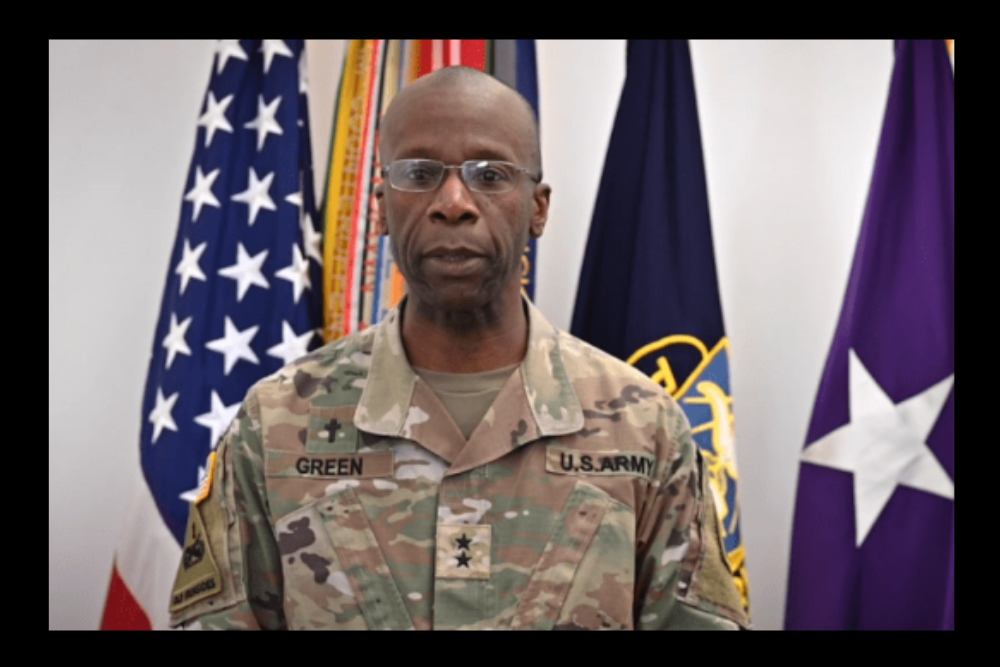
Defense Secretary Pete Hegseth dismissed Maj. Gen. William Green Jr., the Army’s chief of chaplains, in early April on the same day he asked Army Chief of Staff Gen. Randy George to step down and immediately retire. Two other senior officials were removed the same day. The four departures happening simultaneously turned what might have appeared to be routine military leadership movement into something historians, lawmakers, and Green’s own religious denomination have since treated as anything but.
William Green had served as Army chief of chaplains since December 2023, appointed during the Biden administration. The position carries a four-year term and has historically continued across presidential transitions without interruption. Ronit Stahl, a professor at the University of California, Berkeley, and the author of a book on the history of the military chaplaincy in American life, described the dismissal as extraordinarily odd, noting that past gaps in the chief of chaplains position have typically come from pre-planned retirements, not abrupt removals.
What the Army chaplaincy actually does
The chief of chaplains is not a symbolic post. The role is the institutional foundation that connects service members with pastoral care, faith resources, and religious freedom protections across one of the most diverse organizations in the country. Jonathan Shaw, a retired colonel who spent nearly 40 years in the Army Chaplain Corps and served as its director of operations at the time of his retirement in 2020, described the work as ensuring religious freedom and pastoral care for those willing to put their lives on the line.
Shaw said chaplains carry a particular tension in their work. They operate as both government employees and ordained faith leaders, they are expected to serve across a wide range of religious traditions simultaneously, and they work in environments where service members regularly face moral weight that most civilians will never encounter. The absence of a permanent chief, Shaw said, leaves an enormous gap. The Corps can continue operating under its current structure for a time, but that stability has limits in what he called a very dynamic profession.
The Army confirmed that religious support operations are continuing under Deputy Chief of Chaplains Col. Rich West, an ordained Anglican priest. No public explanation for William Green’s removal has been offered, and no timeline for naming a permanent replacement has been announced.
A pattern emerging under Hegseth’s leadership
William Green‘s firing did not arrive without context. In December, Hegseth discarded the Army’s spiritual fitness guide, criticizing it for emphasizing broad spirituality rather than making explicit references to God. In March, he announced the Pentagon would reduce the number of recognized religious affiliation codes used to match troops with faith resources. He also announced that chaplains would no longer display rank insignia on their uniforms, though they would retain their rank. Hegseth framed these changes as restoring the esteemed standing of chaplains and elevating their divine calling. Critics have read the same moves as narrowing the institutional structure meant to serve a religiously diverse force.
The Military Religious Freedom Foundation, founded by retired Air Force officer Mikey Weinstein, reported receiving dozens of complaints from service members angered byWilliam Green’s removal. Weinstein has been among the most vocal critics of what he describes as Christian nationalism expanding its footprint inside the military under Hegseth.
Green’s denomination and Congress both push back
The congressional response crossed party lines. Rep. Rosa DeLauro of Connecticut condemned the firing and connected it to the ongoing war in Iran, framing the removal as silencing a voice of conscience at a moment of particular moral gravity. Sen. Chris Coons of Delaware accused the Trump administration of removing senior officers without valid cause. Rep. Don Bacon of Nebraska, a retired Air Force brigadier general, acknowledged Hegseth’s authority to make the decision but called it neither morally right nor wise.
William Green, who became an Army chaplain in 1994, was endorsed by the National Baptist Convention USA, the oldest and largest Black Baptist denomination in the country. The denomination’s president, Boise Kimber, said Green’s removal raises serious and troubling questions, warning that partisan considerations must not be allowed to compromise institutions built on merit, sacrifice, and service.
The Army has offered no answer to those questions, and the position remains empty.
VideoCredit:Youtube:U.S. Army Chaplain Corps
