


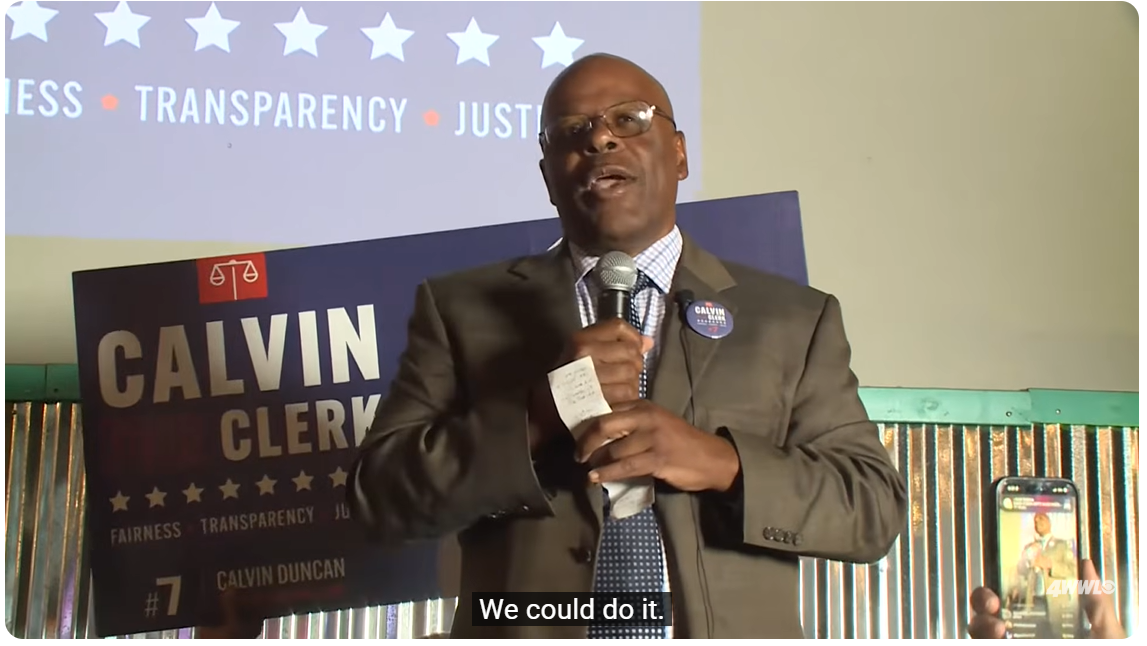
Calvin Duncan spent nearly 28 years in a Louisiana prison for a murder he did not commit. After his exoneration, he ran for clerk of criminal court in Orleans Parish and won with 68% of the vote. He has not yet taken office. The Louisiana Legislature may make sure he never does.
The Louisiana House of Representatives passed Senate Bill 256 by a vote of 63 to 28, approving a measure that would consolidate the Orleans Parish Criminal and Civil Court clerks’ offices into a single position. The effect is straightforward. Duncan’s office disappears. His election result becomes irrelevant. Governor Jeff Landry has signaled his intention to sign the bill into law.
Who Calvin Duncan is and how he got here
Duncan was convicted in 1981 for the fatal shooting of a man in New Orleans, a charge he consistently denied. He spent decades incarcerated before accepting a plea deal for manslaughter in 2011, still maintaining his innocence. A 2021 Louisiana law opened a new path for people who had pleaded guilty to seek exoneration if new evidence emerged. Duncan pursued that path and was ultimately cleared.
After his release, he did not step away from the justice system. He moved toward it. Duncan ran for clerk of criminal court with a specific goal of making court documents more accessible, particularly for people navigating wrongful conviction claims. His own experience gave him a precise understanding of how difficult that access can be.
What opponents of the bill are saying
Democratic legislators raised objections to both the substance and the timing of the consolidation. One representative argued that changing the structure of an elected office after voters have already cast ballots sets a troubling precedent and risks disenfranchising the people who participated in that election.
Another representative challenged the pace of the process, noting that previous consolidations of New Orleans government offices, including the merging of tax assessor and sheriff functions, took roughly four years to complete. The timeline attached to Senate Bill 256 is considerably shorter, raising concerns that the consolidation could disrupt court operations and create delays that affect defendants’ rights to a timely resolution of their cases.
Critics have been direct in their assessment. They argue the bill is not primarily about government efficiency. It is about preventing a specific person from assuming a specific office.
What supporters say in response
Backers of the bill have pushed back against the characterization that the legislation targets Duncan personally. The Republican senator who sponsored the measure described the consolidation as a practical step toward reducing the size and cost of government. He acknowledged Duncan’s path from wrongful conviction to elected office as notable but maintained that the policy decision stands on its own merits regardless of who currently holds the position.
That argument has not satisfied critics, who point to the timing as difficult to explain on neutral grounds. Duncan won his election. The bill to eliminate his office advanced through the legislature shortly after that result became known.
What is at stake beyond one office
The broader question raised by the bill is what recourse voters have when a legislative body moves to restructure an office after an election has already produced a result. Duncan’s case sits at the intersection of several contested issues in Louisiana politics, including wrongful conviction reform, the accessibility of court records and the responsiveness of elected government to voters in Orleans Parish.
Duncan has not commented publicly on whether he plans to challenge the bill in court. With the governor’s signature expected, that may become the next step in a legal and political fight that began long before Duncan ever appeared on a ballot.
