


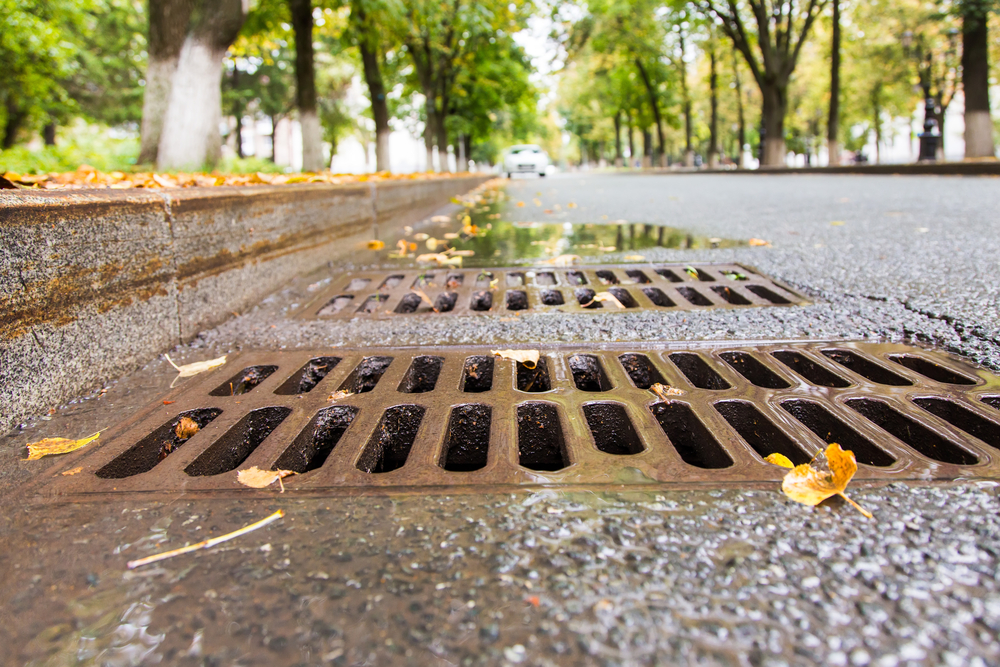
On a Wednesday morning in South Los Angeles, a routine sealing operation stopped before it started. A worker in a reflective yellow vest peered into a storm drain at West 88th Street and South Grand Avenue and spotted movement in the dark below. Seconds later, a man in his late 20s climbed out carrying a pink polka dot roller suitcase. He walked away. Minutes after that, a welding gun sealed the opening shut behind him.
It was not an isolated incident. Crews working in the Broadway-Manchester neighborhood discovered that multiple people had been living inside the storm drain system running near the 110 Freeway, in tunnels that were built to carry rainwater, not shelter human beings.
A neighborhood that stopped being surprised
Denise Evans lives a few houses from the intersection where city crews, firefighters and police gathered that morning. She said she had been calling 311 for years, reporting fires, trash and eventually people disappearing into the drains beneath the street. Each call documented a situation that kept getting worse. Nothing changed until this week.
The strip of land between her block and the freeway had been a gathering point for encampments until residents complained loudly enough that the city installed fencing and placed boulders along the soundwall. The people living there did not leave the neighborhood. They moved their tents elsewhere or, as Evans came to understand, went underground.
Her reaction to watching the city finally act was not relief. It was a question that the response did not answer: why did it take a year?
The dangers no one needs to explain
Storm drains are not passive spaces. They are engineered to move large volumes of water as fast as possible, and even a moderate rainstorm can turn a tunnel from a dry corridor into a death trap within minutes. The confined passages, often only a few feet wide, carry additional risks beyond flooding. Poor ventilation leads to toxic air buildup. Many drains connect to sewage infrastructure, exposing anyone inside to bacteria and waste. The conditions are immediately dangerous in ways that do not require a storm to materialize.
The Broadway-Manchester drains are accessible through storm drains and street-level openings. For people with nowhere else to go, that accessibility is the point.
The city’s response and what it did not include
Mayor Karen Bass’ office confirmed it had mobilized a response to two locations on Grand Avenue, including the West 88th Street site, stating that both locations were cleaned and that people were offered resources. City sanitation crews fitted reinforced covers and heavy-duty lids over the access points.
Advocates for unhoused residents have noted a consistent problem with this approach. Sealing an entry point does not change the conditions that drove someone into it. When shelters are overcrowded, perceived as unsafe or come with restrictions that make them inaccessible to some residents, people make other calculations. The choice to sleep in a storm drain is not made lightly. It is made when every other option has already been exhausted.
A pattern that goes beyond Los Angeles
South Los Angeles is not the only place this has happened. In Las Vegas, unhoused individuals have lived for years in flood tunnels running beneath the Strip, a situation that received national attention but no permanent resolution. The pattern points to something structural. When affordable housing is scarce and shelter capacity falls short of demand, people find the spaces the city forgot to close off.
Los Angeles has faced its housing crisis for long enough that the storm drain situation reads less like an emergency and more like an endpoint, the place a person lands after running out of other options above ground.
What comes next
The storm drains are welded shut. The man with the roller suitcase walked away to somewhere. Where that somewhere is remains the unanswered part of the story, and the part that determines whether what happened on West 88th Street this week was a response or just a relocation.
