


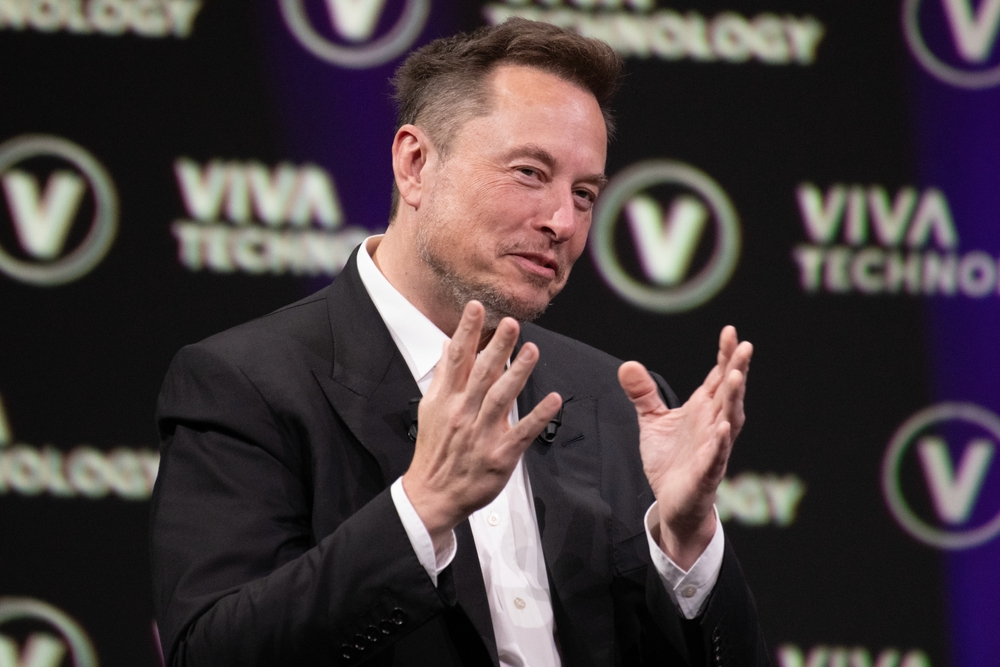
Elon Musk has a message for anyone anxiously calculating how much they need to save before they can retire. Stop worrying about it. The Tesla and SpaceX chief executive made a sweeping prediction on a widely followed entrepreneurship podcast that the rapid advancement of artificial intelligence and robotics will render traditional retirement savings irrelevant within the next one to two decades. He described what is coming as a supersonic tsunami of technological progress that will produce a level of abundance the world has never seen.
The claim puts Musk squarely at odds with nearly every mainstream financial professional, who continue to advise Americans to build and protect retirement savings aggressively given that fewer than half of surveyed adults say they could cover an unexpected expense of two thousand dollars or more from savings alone.
What Elon Musk actually predicts about AI and the economy
The core of the argument rests on a timeline Musk believes is approaching faster than most people realize. By 2030, he has predicted that artificial intelligence will surpass the combined intelligence of all humans. Humanoid robots, he argues, will eventually outnumber people on Earth, and the displacement of jobs will proceed from white-collar work outward. In his view, AI is already capable of performing half or more of the tasks that currently constitute knowledge-based employment.
The downstream effect, as Musk describes it, would be a productivity explosion so large that scarcity itself becomes functionally obsolete. He envisions a future in which the link between individual wages, personal savings, and access to goods and services no longer applies in any meaningful way. Rather than a conventional universal basic income, he imagines something closer to universal access, a world where anyone can have essentially whatever they need without the traditional economic constraints that currently make retirement planning necessary.
Within five years, he has claimed, AI will deliver better medical care than what most people can access today. Educational opportunities and the availability of goods and services, he argues, will face no meaningful ceiling in the world he foresees.
Elon Musk acknowledges the risks of a post-work society
The vision is not without complications that even its proponent acknowledges. Musk has spoken openly about the possibility that a society no longer organized around the need to earn a living could produce widespread social unrest. When material abundance removes the survival motivation from work, a deeper crisis of meaning may follow for large portions of the population.
He has previously compared future work to the way people currently approach hobbies like gardening, something people do because they enjoy it rather than because they need to, and has framed employment in that future as optional rather than obligatory.
The reality facing most Americans in the present is considerably less comfortable. Only about 55 percent of adults report having three months of emergency savings, down from a recent high of 59 percent several years ago. Surveys consistently find that a large share of the population is significantly behind on retirement savings or has nothing set aside at all, a picture shaped by persistent inflation and sluggish wage growth that has made saving increasingly difficult for a wide cross-section of households.
Whether the future Musk describes arrives on his timeline or at all remains an open question. In the meantime, the gap between his long-term optimism and the short-term financial reality facing most Americans is difficult to ignore.
