


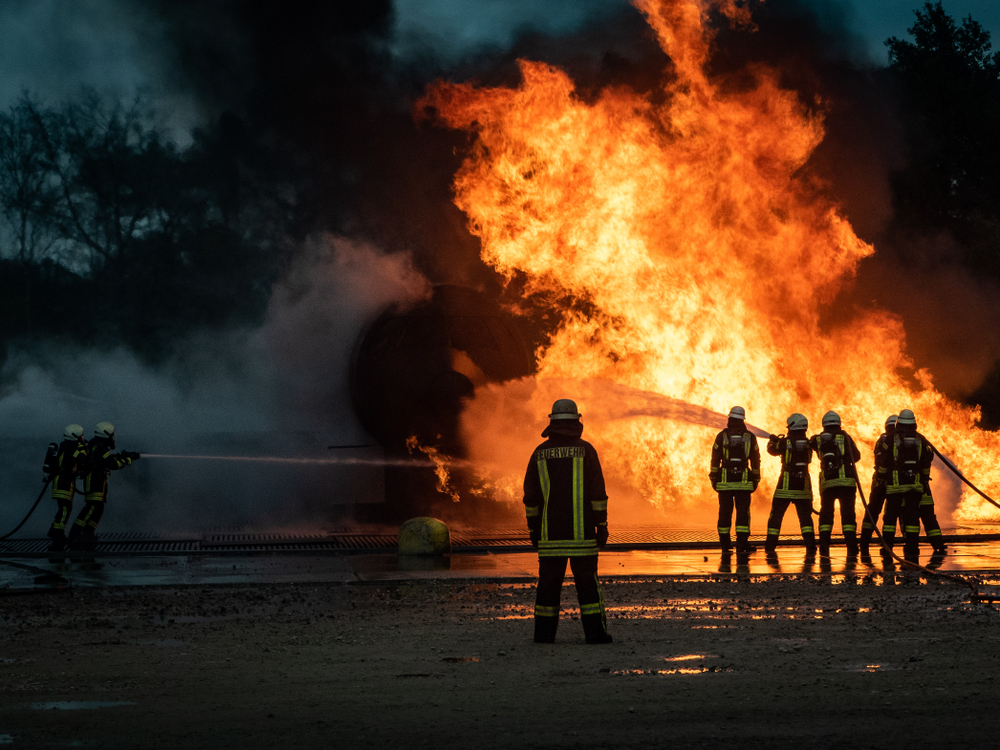
When a cold storage warehouse in the Boyle Heights neighborhood of Los Angeles caught fire on a Wednesday afternoon, crews from the Los Angeles Fire Department expected to knock it out within hours. Four days later, they were still at it, fighting a blaze buried so deep inside 500,000 square feet of steel, foam insulation, and reinforced panels that going in remained too dangerous to attempt.
By Saturday, the situation had grown serious enough that Mayor Karen Bass declared a local state of emergency, followed hours later by a separate proclamation from Governor Gavin Newsom covering all of Los Angeles County. Together, the declarations activated emergency response structures, cleared the way for faster state contracting, and formally requested additional resources to support firefighting and community recovery.
Bass made clear that containment was only part of what officials were racing against. The city, she said, was doing everything possible to put the fire out and protect public health, with a particular focus on preventing what could become a major environmental disaster.
What is actually burning and why it matters
The facility is operated by Lineage Logistics, a cold storage company that believes the fire started when a third-party contractor was testing a solar array on the roof. An ammonia refrigeration line was breached in the opening hours of the blaze and addressed within the first day, but by then the fire had worked its way through the building’s dense insulation, making it nearly impossible for firefighters to see inside, let alone move around.
Fire Chief Jaime Moore described the challenge plainly. With zero visibility and 85 million pounds of frozen food stored on pallets throughout the facility, crews could not safely enter to fight the fire from within. Instead, helicopters dropped water from above while ladder trucks worked from the perimeter.
Progress was made in keeping the fire from spreading to an adjacent cold storage building and to homes to the north, which officials called a meaningful step. Still, flare-ups continued through Saturday, and the smoke column over Boyle Heights remained visible across a wide stretch of the region.
The air quality problem spreading east
The smoke traveled. Residents in communities as far east as Ontario and La Verne reported the smell, and air quality monitors across the San Gabriel Valley recorded fine particulate matter, known as PM2.5, at levels ranging from unhealthy for sensitive groups to very unhealthy on the federal Air Quality Index. South Pasadena, San Marino, Pasadena, and Highland Park all fell within the affected zone.
The South Coast Air Quality Management District extended its particle pollution advisory through midday Sunday, and residents across the region were advised to stay indoors with windows and doors closed, use air purifiers or air conditioning set to recirculate, and avoid bringing in outside air through whole-house fans or swamp coolers. Anyone who had to be outside was urged to wear a properly fitted N95 or KN95 mask.
A biohazard problem still taking shape
Even as the fire fight continued, officials were already thinking about what comes next. With refrigeration knocked out, the warehouse’s contents, a mix of poultry, beef, bread, and other frozen goods, had begun to warm and spoil. Moore said interior temperatures were holding around 45 degrees as of Saturday, but that would not last.
Bass compared the situation to food rotting during a prolonged power outage, noting that decomposing food produces gases that present their own health risks. Authorities are preparing for a large-scale cleanup effort once the fire is extinguished, involving the removal and disposal of thousands of tons of spoiled food.
The state response
Newsom’s emergency proclamation directed the California Governor’s Office of Emergency Services and other state agencies to support the local effort. The state pre-positioned 5.5 million N95 masks, commercial air purifiers, bottled water, and enhanced monitoring equipment, and deployed hazardous materials specialists with warehouse fire experience. As of Saturday evening, local officials had not yet formally requested those supplies, but they were ready.
No injuries have been reported. The cause of the fire remains under investigation.
