


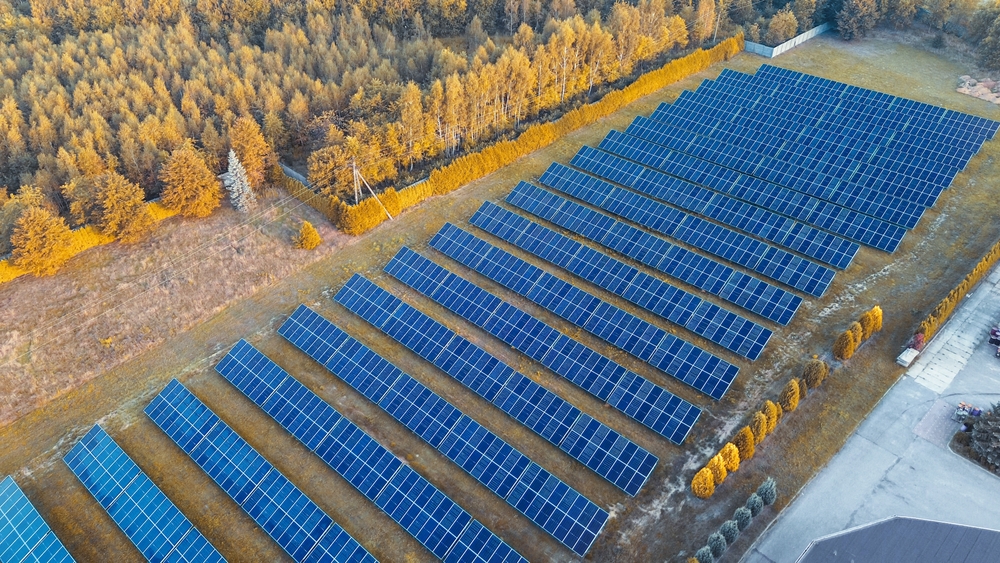
Despite the White House pushing hard for a coal revival, solar energy quietly crossed a threshold that energy analysts say could reshape the nation’s power grid for decades to come.
Solar Crosses a Historic Threshold
For the first time in U.S. history, solar energy generated more electricity than coal in a single month. According to data released Wednesday by Ember, a global energy think tank, solar accounted for 12.8% of the nation’s electricity supply in May — edging past coal’s 12.2%, which marked the fourth-lowest monthly share coal has ever recorded. In April, coal generation hit an all-time monthly low before rebounding only modestly in May, creating the opening solar needed to move ahead.
That milestone also elevated solar to the third-largest source of electricity in the country, trailing only natural gas and nuclear — a standing that would have seemed improbable just a decade ago, when coal still dominated the American power landscape.
Ember senior energy and data analyst Nicolas Fulghum noted that solar’s rise in the U.S. electricity mix has been years in the making, mirroring coal’s steady loss of dominance — first as the nation’s top power source, then falling further with each passing year.
A Industry Still Building Through Political Headwinds
The milestone arrives at a complicated political moment. President Donald Trump has made reviving the American coal industry a centerpiece of his energy agenda, announcing last week a plan to spend nearly $700 million to support coal-fired power plants and coal exports. At a White House event, Trump praised coal as both a strong business and a superior power source.
Yet the market appears unmoved. Martin Pochtaruk, CEO and founder of Canadian solar panel manufacturer Heliene, argued that investors follow returns — and for power generation, solar consistently delivers the strongest ones. A White House spokeswoman defended the administration’s energy policies as focused on national security, citing the prevention of more than 17 gigawatts of power plant retirements and the preservation of the coal workforce.
Meanwhile, data from the Solar Energy Industries Association and analytics firm Wood Mackenzie shows solar has been the leading source of new power capacity for five years running. In the first quarter of 2026, solar and battery storage together made up 91% of all new generating capacity being built — making them virtually the only energy resources actively coming online.
Federal Pushback Has Not Slowed Solar’s Momentum
The Trump administration has moved aggressively against clean energy on multiple fronts — canceling solar and wind projects, slowing permitting and development, and terminating $7 billion in funding earmarked for affordable solar programs. Last week, a district court dismissed a lawsuit filed by several groups over the cancellation of the Solar for All program, citing a lack of jurisdiction. A separate filing remains pending in the Court of Federal Claims.
Yet in a countervailing ruling on Saturday, a federal judge struck down Internal Revenue Service guidance that had sought to restrict tax credits for wind and solar projects — a significant legal win for the clean energy sector.
SEIA’s interim president and CEO Darren Van’t Hof warned that political interference with the fastest-growing power sector carries real costs for consumers, arguing that blocking the only sector actively building new power is a reckless gamble that will ultimately push electricity bills higher.
Solar Is a Red-State Story, Too
One of the more striking details buried in Wednesday’s data: states that voted for Trump in 2024 accounted for 74% of all solar capacity installed in the first quarter of 2026. Texas, Florida, Ohio, Indiana, Michigan, Arizona and Mississippi all ranked among the top 10 states for new solar additions. The U.S. now surpasses 6 million total solar installations nationwide, spanning large-scale arrays, commercial projects, community solar and residential rooftop systems.
Johanna Neumann, senior director of a campaign for 100% renewable energy at the Environment America Research and Policy Center, pushed back on the widespread assumption that clean energy is a coastal or liberal-city phenomenon — pointing to booming growth in Florida, Arkansas and Mississippi as evidence that renewable energy is, in reality, a 50-state story.
The Bigger Picture: Solar’s Long Game
Analysts expect May’s milestone to become increasingly routine. Fulghum projected that more months of solar outpacing coal are likely before solar surpasses coal on an annual basis within the next few years. Globally, the trajectory is even sharper: renewables are on track to become the world’s largest electricity source by 2030, supplying nearly 45% of global generation, according to the International Energy Agency.
The economics are difficult to argue with. Solar is now widely regarded as the most affordable energy source available, and its scalability and abundance make it resilient to political resistance. Neumann summed it up simply — it is hard to suppress a good idea when the financial case for it keeps getting stronger.
Source: AP News
