


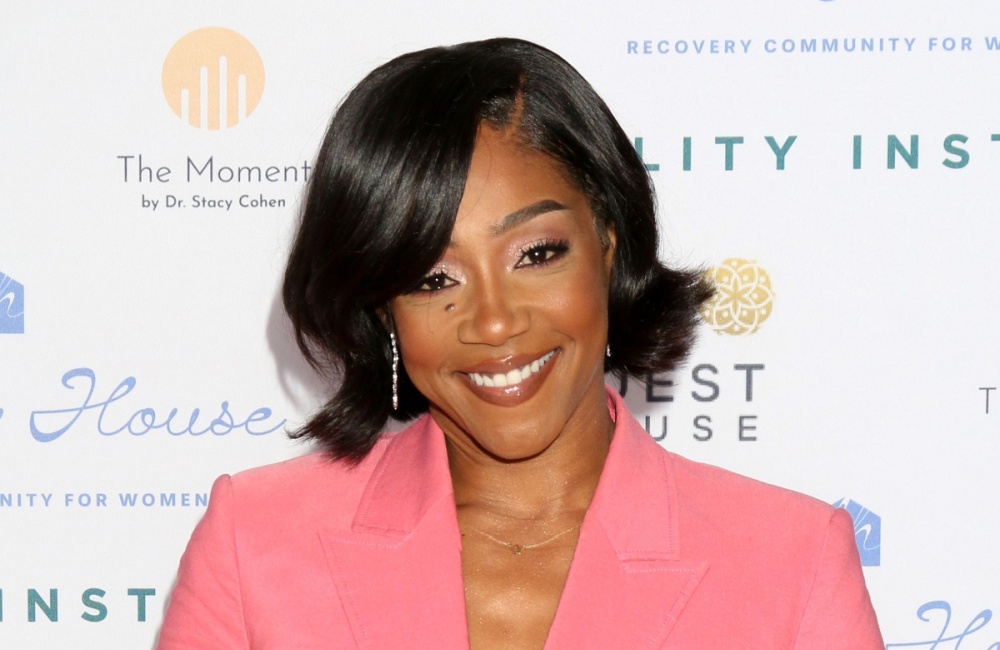
Tiffany Haddish has been carrying this dream for a long time. Long before the comedy specials and the film roles, she was a track and field athlete with a vision of herself on the cover of a major magazine. That image never fully left her, even when life pushed her in a completely different direction. Now, at 46, she has landed on the cover of the 2026 Sports Illustrated Swimsuit issue, and the road that got her there is anything but a straight line.
When Haddish pivoted to standup comedy, she let go of the modeling ambition, tucking it away as one of those things that simply was not meant for her. Then came a serious physical setback. While shooting her 2019 comedy special Black Mitzvah, she tore both menisci in her knees, an injury that slowed her down considerably and led to significant weight gain. For a while, the cover felt further away than ever.
A physical comeback that changed everything
The turning point came through her connection with Al Joyner, an Olympic gold medalist who stepped in to help her rehabilitate her knees and rebuild her fitness. As her body responded to the work, something shifted in her thinking too. The idea of appearing in Sports Illustrated Swimsuit stopped feeling like a closed door and started feeling like a target. She committed to it mentally, put the intention out into the world and eventually got the call.
The shoot itself took place in Loreto, Baja California Sur, Mexico, where she was photographed by James Macari in an orange and yellow bikini that put her physique front and center. The experience was physically demanding in ways she had not anticipated. She scraped her knee on lava rocks and left the shoot with a renewed respect for the profession. The ocean, she noted with characteristic humor, was not especially cooperative either, with waves doing what waves tend to do to carefully arranged swimwear.
Despite the challenges, the shoot gave her something she was not expecting: a deeper connection to her own body. Moving through the shoot, she drew on the same mental discipline she had used as an athlete, repeating affirmations to herself between shots, thinking of herself as someone powerful and capable. The approach worked. Her body, in her words, showed up and delivered.
What Haddish hopes other women take away
Haddish walked away from the experience with a sense of pride that she is eager to pass on. She has spoken about the shoot as a moment of genuine alignment between where she had been physically and where she had arrived, a proof of concept for what consistent effort and self-belief can produce.
She wants other women, particularly those who feel like certain opportunities have aged out for them, to look at her cover and reconsider that assumption. The message she is sending is not about having a particular body type or fitting a conventional mold. It is about the willingness to transform, to keep moving through setbacks and to claim space in arenas that may not have historically made room for you.
The cover is shot. The magazine is out. And Tiffany Haddish, who once watched that dream slip away on a comedy stage and again on a physical therapy table, is exactly where she always imagined she would be.
