


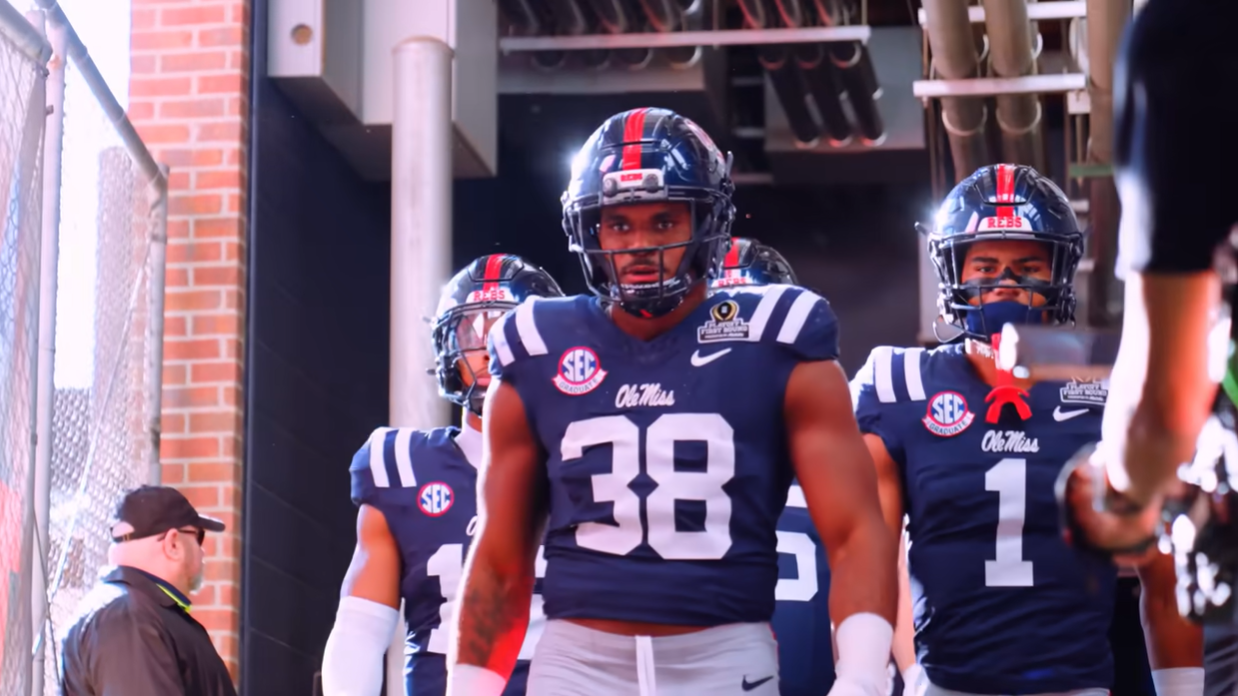
Ole Miss enters the 2026 season with one of the stronger offensive line rooms in the SEC, returning starters like center Brycen Sanders and guards Patrick Kutas and Delano Townsend, while also adding transfer reinforcements in Carius Curne from LSU and Tommy Kinsler IV from Miami. The unit was central to the Rebels’ deep playoff run in 2025 and figures to be even more formidable this fall.
But the defense will face its own steep test. The 2026 schedule puts Ole Miss across from several programs boasting legitimate, high caliber groups up front. Here is a look at the five toughest offensive lines the Rebels are set to encounter.
No. 5 — Missouri Tigers
Missouri has retooled its offense in a meaningful way ahead of 2026. Head coach Eli Drinkwitz added former Ole Miss quarterback Austin Simmons and wide receiver Cayden Lee to an offense that also retained several experienced blockers.
The Tigers bring back All SEC left tackle Cayden Green, along with veteran linemen Connor Tollison, and Dominick Giudice, providing continuity up front. With a new offensive scheme and established pieces along the line, Missouri has a credible case as one of the more underestimated teams in the SEC heading into the season.
No. 4 — LSU Tigers
Lane Kiffin’s arrival in Baton Rouge, along with offensive coordinator Charlie Weis Jr., signals a significant philosophical shift for LSU’s offense. The program made an aggressive move in the transfer portal, landing Jordan Seaton, from Colorado the No. 4 rated available lineman to help compensate for the departure of Curne to Ole Miss.
Returning contributors Weston Davis, and Braelin Moore, add depth and experience to what is shaping up as a rebuilt but talented group. The Tigers struggled in the run game in 2025, and how quickly this new look line coheres will be one of the more closely watched developments in the SEC West.
No. 3 — Florida Gators
Florida enters 2026 looking considerably different on offense following the transfer of quarterback DJ Lagway to Baylor. The Gators responded with a wave of portal additions, and while the talent level up front is not in question, the ability of a largely new offensive line to develop chemistry in a short offseason window is the central concern.
Running back Jadan Baugh, 1, one of the more gifted backs in the conference, will be counting on that group to carve out running lanes. How the Gators new offensive line comes together or doesn’t could define Florida’s 2026 season before it really begins.
No. 2 — Texas Longhorns
Left tackle Trevor Goosby, is widely regarded as one of the premier players at his position in the country entering 2026, and he anchors an offensive line group that also includes Connor Robertson, Brandon Baker, and Dylan Sikorski, 4. On paper, this is a unit built to support a program with genuine national title ambitions.
That said, the Longhorns carry real questions into the season. Texas was inconsistent in pass protection in 2025, and quarterback Arch Manning absorbed too many sacks as a result. Addressing that tendency while building around Goosby’s elite play will be a priority for the coaching staff.
No. 1 — Georgia Bulldogs
Year after year, Georgia fields one of the most reliable and physically imposing offensive lines in college football, and the 2026 group is no different. Head coach Kirby Smart’s program has made recruiting and developing offensive linemen a defining feature of the Bulldogs sustained success.
Veterans Drew Bobo, Earnest Greene, Donnie Glover, and Juan Gaston, all return for another season, with Bobo serving as the vocal anchor of the group. Despite replacing two starters, Georgia’s depth and development infrastructure give the Bulldogs a significant advantage over most programs in the country.
If Ole Miss is going to make another deep playoff run in 2026, slowing down this Georgia front will likely be the most demanding challenge standing in the way.
