


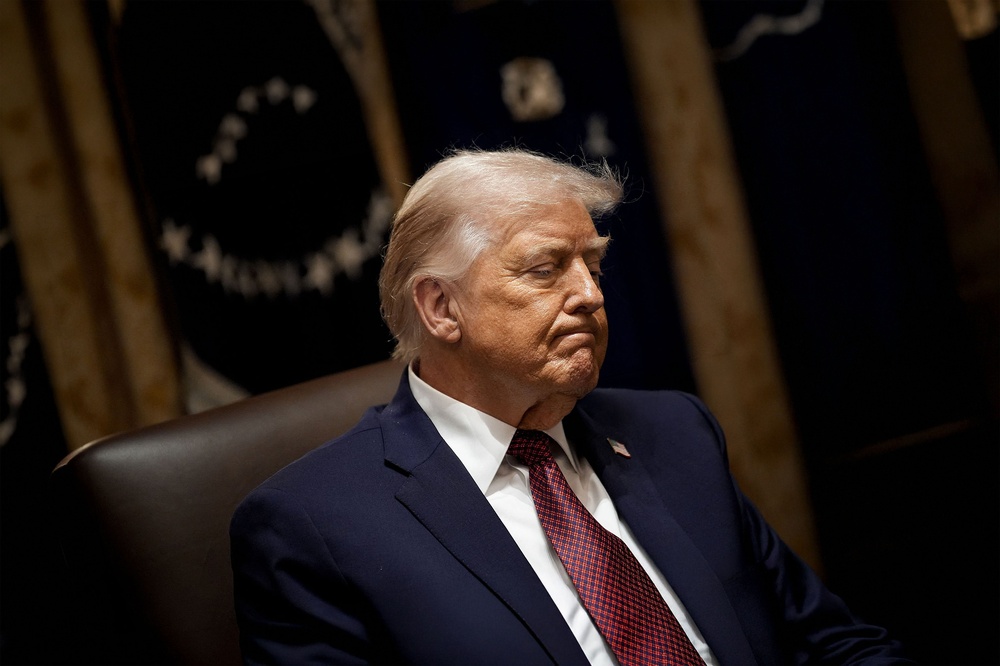
A Politico analysis of more than 10,000 federal court rulings found that judges sided against the Trump administration’s immigration detention and deportation policies at an overwhelming rate.
When the numbers are this lopsided, they tend to speak for themselves. A Politico analysis of more than 10,000 federal court rulings tied to the Trump administration’s immigration enforcement policies found that judges determined the detentions in question were illegal more than 90% of the time a record that cuts to the heart of one of the most contested domestic policy fights of the past decade.
The cases, which piled up throughout Donald Trump’s presidency, centered overwhelmingly on unlawful detentions and deportations carried out under the administration’s sweeping immigration crackdown. Court after court rejected the government’s approach, and the pattern that emerged from those rulings painted a picture of an enforcement strategy that repeatedly ran up against the limits of the law.
What the rulings actually found
The legal defeats were not marginal. Across thousands of individual cases, federal judges found that the people being detained had been held without lawful basis often without any meaningful opportunity to challenge their circumstances before a judge. That denial of due process was a central thread running through the rulings, and it extended well beyond undocumented individuals to people with legal status who were caught up in enforcement sweeps.
The breadth of the judicial pushback also revealed how widely the administration’s policies were applied. Many of those detained had no criminal record, a finding that directly undercut the administration’s public argument that its crackdown was focused on dangerous individuals. Judges, repeatedly reviewing the actual facts of individual cases, found that reality did not match the framing.
ICE conduct drew repeated rebukes from the bench
Beyond the detention statistics, specific conduct by Immigration and Customs Enforcement (ICE) agents and Border Patrol drew sharp criticism from the courts. In Chicago, federal judges reviewed video footage that showed federal agents had misrepresented their interactions with protesters in legal filings a finding that went to the credibility of the government’s own accounts of its enforcement actions.
In separate instances, judges had to intervene to block the targeting of documented immigrants who had no legal basis for removal. The administration’s labeling of anti ICE demonstrators as domestic terrorists also drew scrutiny, particularly as evidence in multiple cases showed that agents had frequently been the initiating parties in confrontations. Those findings did not come from political opponents they came from the evidentiary record reviewed by appointed federal judges.
The human cost behind the statistics
Numbers at this scale can flatten what are, in each instance, individual lives. The people at the center of these 10,000 plus cases included parents, workers, and long term residents many of them with U.S. citizen family members. Each unlawful detention meant time lost, jobs disrupted, families separated and, in some cases, deportations that occurred before courts could intervene.
Even after rulings were issued in their favor, many individuals faced the challenge of rebuilding what had been dismantled during their detention. The legal system provided a remedy, but it could not always restore what had already been lost.
A divide that the courts alone cannot close
Despite the volume and consistency of the rulings, legal outcomes have done little to shift opinion among the administration’s core supporters, many of whom have characterized the judicial findings as the product of a biased court system rather than a genuine accounting of facts. That disconnect between what courts found and what a significant portion of the public chose to believe has become one of the more durable features of the immigration debate.
The courts have a defined role, to evaluate whether government actions comply with the law. On that question, the record across more than 10,000 cases is not ambiguous. What remains an open question is how that record factors into a broader political conversation that has often moved independently of legal findings.
The rulings are part of the public record. Whether they become part of the reckoning is another matter entirely.
