


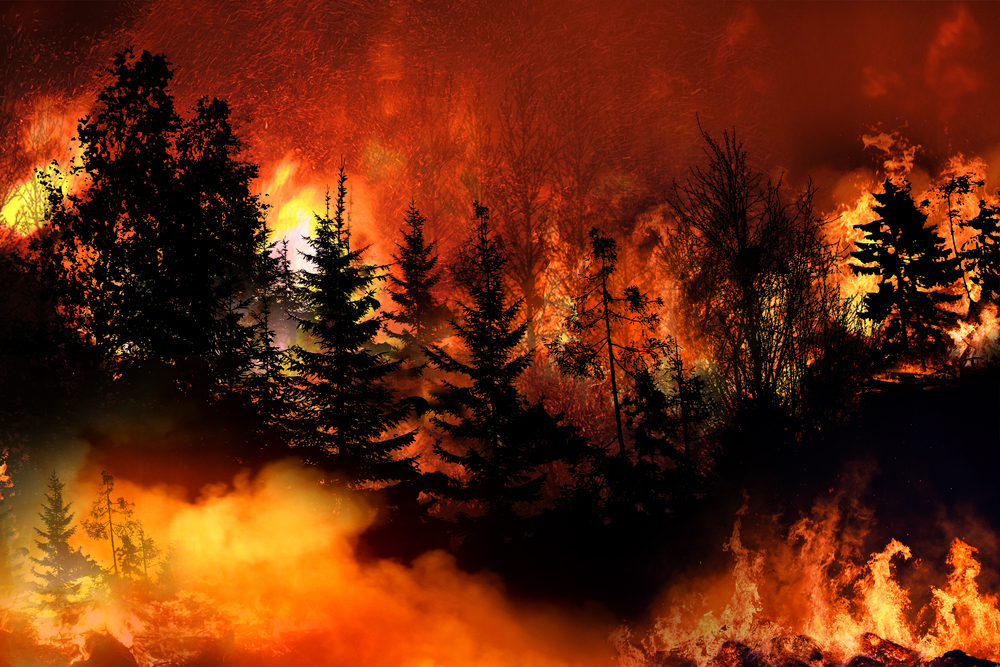
Thousands of acres are burning across southern Georgia and northern Florida this week, driven by a combination of severe drought, high winds, and dried vegetation that has turned large stretches of the region into a wildfire landscape. The crisis has moved fast. A significant fire in Atkinson County, Georgia, has destroyed approximately 90 homes since igniting earlier this week, and multiple counties have responded by implementing burn bans that mark the first such restrictions in Georgia’s recorded history.
Georgia Governor Brian Kemp declared a state of emergency for 91 counties, a figure that reflects how broadly the conditions have spread rather than how concentrated the damage has been in any single area.
How hurricane debris became wildfire fuel
The drought gripping the Southeast is the primary engine behind the wildfires, but the destruction left behind by past hurricanes has made a bad situation considerably worse. When Hurricane Helene struck Florida’s Big Bend region in 2024 as a Category 4 storm, it knocked down enormous quantities of trees and deposited debris across a wide area. That material has since dried out in the sun and become highly flammable.
Kaitlyn Trudeau, a climate scientist at Climate Central, described the dynamic in practical terms, explaining that the storm essentially scattered downed trees across the landscape, which then spent months drying out under direct sunlight. Certain tree species with higher oil content become particularly combustible once they lose their moisture, accelerating the spread of any fire that reaches them.
This layering of factors, drought on top of hurricane debris on top of an already warming region, is what has made the current situation so difficult to contain.
The drought numbers behind the fires
The scale of the dry conditions across both states helps explain why firefighting efforts have been so challenging. According to the U.S. Drought Monitor, the entire state of Florida is currently under some form of drought, with much of the Panhandle classified as experiencing extreme or exceptional conditions. In Georgia, 71% of the state is under extreme or exceptional drought.
Wildfires need two things to take hold: weather conditions that support ignition and spread, and sufficient fuel. Dry air, lightning, and wind provide the first. Dead trees, dried leaves, and desiccated vegetation provide the second. Both are currently present across the region in significant quantities.
Why the Southeast is no longer insulated from this kind of fire activity
The western United States has long been associated with large-scale wildfire seasons, but the assumption that the Southeast’s humidity provides meaningful protection is being revised. Trudeau noted that parts of the region have been experiencing drought conditions that would not have been typical in previous decades, and that climate change is altering the atmosphere’s capacity to pull moisture from soil and vegetation even in areas where rainfall totals remain relatively high.
As temperatures rise, the atmosphere draws moisture out of trees and ground cover more aggressively, creating drier fuels even when precipitation has not dramatically declined which could cause a wildfire . That dynamic means the Southeast faces a growing fire risk that is structurally different from what the region has historically encountered.
What the current fires signal about the years ahead
The fires burning through Georgia and Florida this week are not an isolated weather event. Scientists studying wildfire patterns have documented a consistent trend toward more frequent and more destructive blazes as global temperatures increase, and the Southeast is increasingly part of that story rather than an exception to it.
The conditions that produced this week’s fires, drought, post-hurricane debris, heat, and wind, are likely to recur. Communities in both states are managing an immediate crisis, but the underlying factors that created it are not temporary.
