


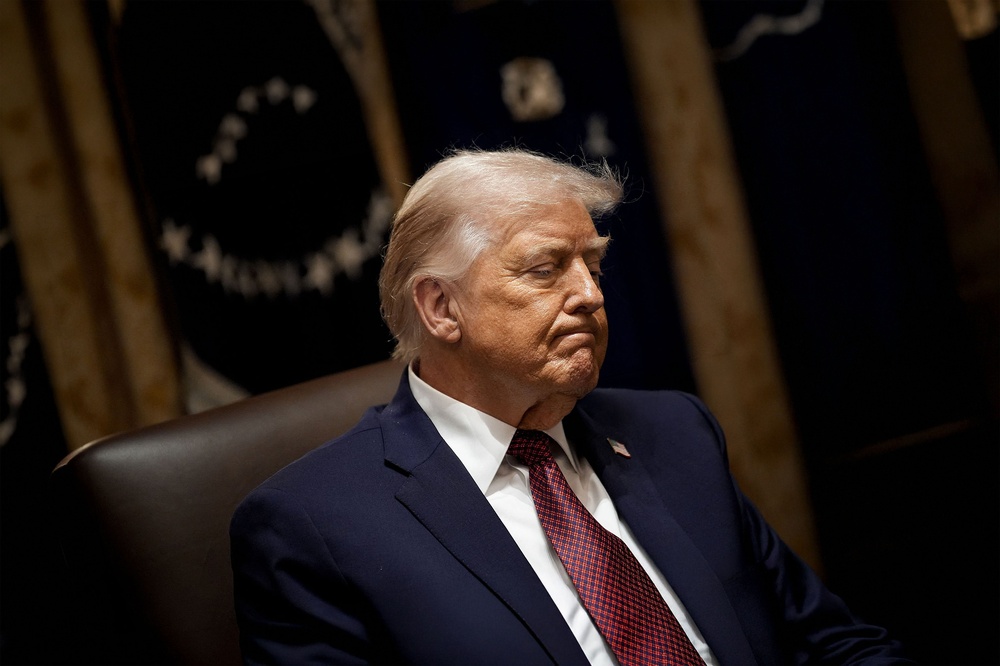
A group of House Democrats has unveiled new legislation aimed at examining whether Donald Trump is fit to continue serving as president under the framework of the 25th Amendment to the United States Constitution. The move reflects mounting concern among some lawmakers about presidential capacity and accountability.
The proposal arrives at a time of heightened political tension, with public debate intensifying over leadership, governance, and constitutional safeguards. While the measure has drawn attention across Washington, its path forward remains uncertain.
Understanding the 25th Amendment
At the center of the proposal is the 25th Amendment, which outlines procedures for addressing a president’s inability to perform official duties. The amendment allows the vice president and members of the Cabinet to declare a president unfit, transferring power on an interim basis.
However, the process is intentionally complex. It requires coordination among top executive officials, making it difficult to implement without broad agreement an administration. This structure has historically limited its use to extreme or clearly defined circumstances.
Details of the proposed commission
The legislation, led by Jamie Raskin, calls for the creation of a 17-member commission tasked with evaluating presidential fitness. The panel would be authorized under Section 4 of the amendment, which permits Congress to designate an alternative body to participate in such determinations.
Supporters of the bill argue that a formal, independent commission could provide a more structured and transparent way to assess concerns about presidential capacity. The proposal has attracted backing from dozens of Democratic lawmakers in both the House and Senate.
Even with that support, the commission would not have unilateral authority. Any determination would still require action from the vice president and Cabinet, reinforcing the layered nature of the process.
Political barriers to passage
Despite the attention surrounding the proposal, significant political obstacles stand in the way. The legislation would need approval from Congress, where partisan divisions remain deeply entrenched.
Republican lawmakers are widely expected to oppose the measure, making it difficult for the bill to advance. Without bipartisan support, the chances of establishing the commission are limited.
Beyond Congress, the proposal also faces challenges within the executive branch. The 25th Amendment ultimately depends on cooperation from administration officials, many of whom are seen as aligned with the president. This dynamic complicates any effort to invoke its provisions.
Growing debate around leadership and accountability
The introduction of the bill has fueled broader discussions about presidential fitness and the mechanisms available to address concerns. While some lawmakers view the proposal as a necessary step toward accountability, others see it as a politically charged effort unlikely to succeed.
The debate also highlights the tension between constitutional safeguards and political realities. Even when frameworks exist, their implementation often depends on consensus that can be difficult to achieve in a polarized environment.
Public reaction has mirrored this divide, with conversations unfolding across media platforms and political circles. The issue has become part of a larger national dialogue about leadership standards and institutional checks.
What comes next
As the legislation moves through the early stages of consideration, its future remains unclear. The current political climate suggests a challenging road ahead, particularly given the level of cooperation required for such a measure to take effect.
Even if the proposal does not advance, it underscores the ongoing concerns among some lawmakers and the willingness to explore constitutional options. The conversation surrounding presidential fitness is likely to continue, especially as political stakes remain high.
For now, the bill stands as a reflection of the broader divisions shaping Washington. Whether it leads to concrete action or remains symbolic, it adds another layer to the evolving discussion about governance and accountability in the United States.
