


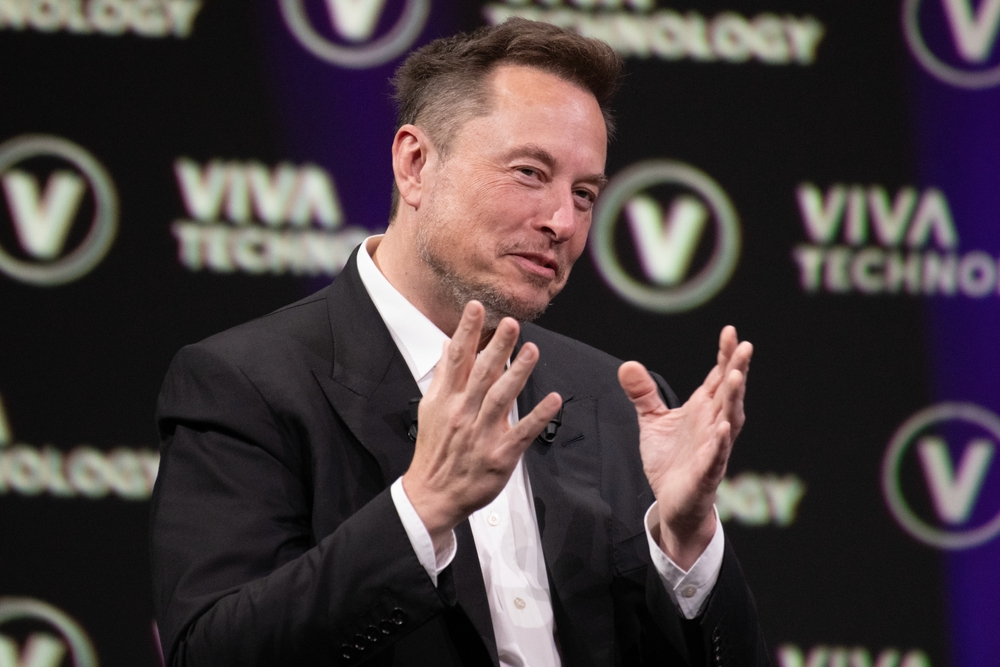
The world’s richest man has long kept a complicated relationship with generosity, and for years, the public has watched and wondered what he plans to do with a fortune that has crossed the trillion-dollar threshold. Now, a challenge from one of the most respected economists alive appears to have cracked something open, and the response Musk gave is turning heads across the internet.
Daron Acemoglu, a Nobel Prize-winning economist, took to X this week with a pointed and very public proposal directed at Musk. His argument was straightforward. If Musk genuinely believes, as he has said publicly, that money will one day become irrelevant because of artificial intelligence, then putting that belief on record should not be difficult. Acemoglu suggested Musk pledge to donate his entire fortune of roughly one trillion dollars to charity no later than 2036, with recipients vetted by an impartial body to ensure the giving is effective and free from ideological motivation.
The response nobody predicted
What happened next surprised many who have followed Musk’s often dismissive stance toward organized philanthropy. Musk responded directly to the economist’s post and indicated that he was already moving in that direction. He offered no further detail, no timeline and no specifics, but the acknowledgment alone marked a significant departure from his usual posture on the subject.
For context, Musk has previously described philanthropy as genuinely difficult, not in a deflective way but as a philosophical position. He has expressed skepticism about whether large-scale charitable giving actually produces the outcomes donors intend. That framing has frustrated critics who point to peers like MacKenzie Scott, the former spouse of Amazon founder Jeff Bezos, who has distributed more than 26 billion dollars and remains one of the most consequential donors of her generation.
Musk’s complicated giving history
A closer look at Musk’s philanthropic record reveals a pattern that critics find difficult to reconcile with the scale of his wealth. His foundation, valued at roughly 14 billion dollars at the close of 2025, has directed the bulk of its giving toward organizations that align closely with his own business interests. In 2024 alone, nearly three quarters of his total charitable output went to a single nonprofit in Texas run by a top aide, an organization that operates a school near the cluster of companies Musk controls.
That pattern has drawn sustained criticism and raised questions about whether his giving constitutes genuine philanthropy or a more self-serving form of wealth management.
His views on Scott’s donations have also attracted attention. When a post celebrating Scott’s giving circulated on X, Musk aligned himself with a commenter who suggested her efforts were making the world worse rather than better. The moment landed poorly with many observers and intensified the contrast between his words and his actions on charitable giving.
What the challenge actually reveals
Acemoglu’s proposal does more than put Musk on the spot. It exposes a tension that sits at the center of the billionaire philanthropy debate. When someone publicly argues that money will soon lose its meaning due to technological transformation, holding onto a trillion dollars becomes harder to justify in silence.
Whether Musk’s reply translates into something concrete remains entirely unclear. He has made sweeping statements before that did not materialize into action, and his track record on giving suggests caution is warranted. But the fact that he engaged with the challenge at all, on his own platform, in full public view, has shifted the conversation in a way that will be difficult to walk back.
The world is now watching to see whether the man who owns the platform will honor what he wrote on it.
