


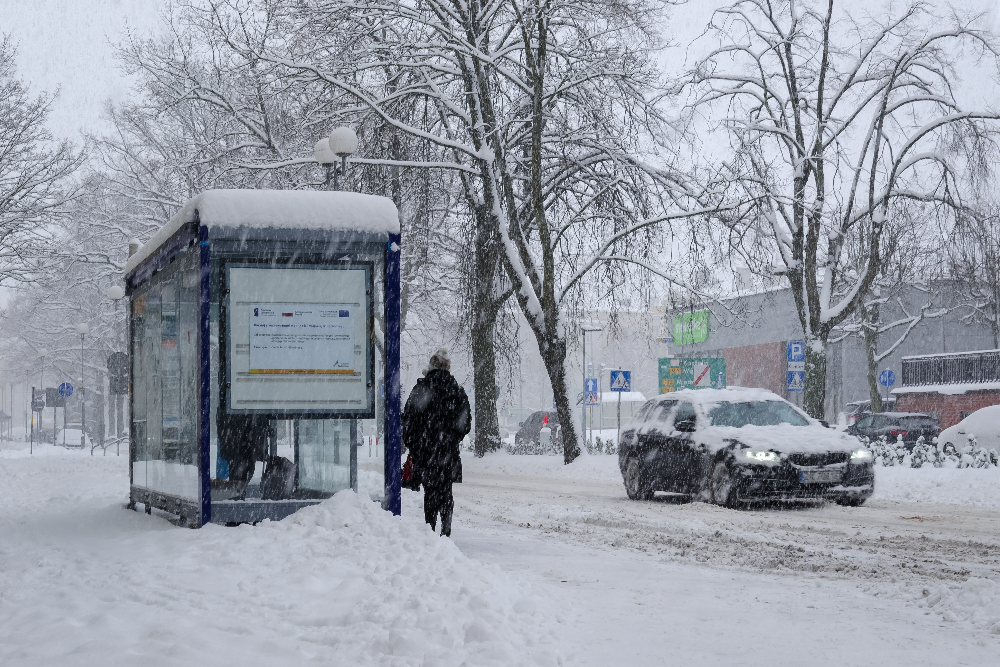
For the second time this month, winter is asserting itself across the Rocky Mountain region. A cold storm system is spreading snow through high terrain from Montana down through Colorado and Wyoming, arriving at a time of year when accumulating snow is supposed to be increasingly rare. For some communities, this marks the second significant snowstorm of May, and forecasters say it will behave differently from the one that rolled through earlier in the month.
How this storm differs from the last one
The storm that hit during the first week of May had a broader footprint, landing heavily on Colorado’s Front Range, foothills, and the adjacent High Plains, while also hitting southern Wyoming hard. Denver picked up 5.8 inches during that system, its second-largest snowfall of the winter. Cheyenne, Wyoming, saw nearly 9 inches.
This weekend’s storm is tracking farther north and concentrating its energy at higher elevations. Denver is not expected to see accumulation, and Colorado Springs and Pueblo are expected to stay all rain. Some wet snow may mix with rain showers in Denver from late Sunday night into Monday, but forecasters do not anticipate any meaningful accumulation in the city or at the airport.
Where the snow will be heaviest
The primary targets are the higher elevations across the Colorado Rockies and Wyoming’s Bighorn and Teton ranges, where 6 to 12 inches of snow are forecast, with locally higher totals on the tallest peaks. Laramie and Rawlins in Wyoming could see 3 to 6 inches, while Cheyenne is looking at an additional 1 to 3 inches on top of what it received earlier this month.
In Montana, the picture is more widespread. A trough of low pressure is pushing cooler temperatures and moisture across the region, with snow expected above roughly 4,500 feet Saturday evening. Overnight, that snow level will drop further, potentially reaching valley floors by Sunday morning. Higher elevation valleys in southwest Montana, including Butte, could see modest accumulation.
The heaviest totals in Montana are expected along the Continental Divide and in the Bitterroot, Mission, and Anaconda-Pintler ranges, where storm total snow of 4 to 12 inches is possible through Monday morning. Several Winter Weather Advisories are in effect across the region, covering areas including Homestake Pass, Lolo Pass, MacDonald Pass, Georgetown Lake, and the higher terrain of Glacier National Park. Wind gusts of up to 40 mph are possible in some of the advisory zones.
A Frost Advisory is also in effect from 8 p.m. Sunday through 9 a.m. Monday for the Flathead and Mission Valleys and the Missoula and Bitterroot Valleys, where temperatures could drop to around 30 degrees. Residents with sensitive vegetation are encouraged to take precautions before Sunday evening.
Travel hazards to expect
Motorists on two of the West’s busiest travel corridors should prepare for significantly different conditions depending on where they are. Along Interstate 80 in Wyoming, slushy and slippery stretches are possible, particularly between Cheyenne and Laramie, where the highway climbs to around 8,600 feet in elevation. Along Interstate 70 in Colorado, similar issues are expected near the Eisenhower-Johnson tunnels roughly 60 miles west of Denver, where elevations approach 11,000 feet. Those traveling above 5,000 feet anywhere in the region should be ready for winter-like road conditions.
Even where snow totals remain modest, the heavy and wet nature of this system raises concerns beyond the roads. Clingy snow can weigh down tree limbs and power lines, creating the potential for localized outages even in areas that do not see significant accumulation.
Why this moisture matters
The storm arrives against a backdrop of serious drought across much of the region. Snowfall totals across Colorado and Utah over the past six months have come in at only 25% to 50% of the historical average, a deficit that carries real consequences for water resources heading into summer. Cheyenne’s snowfall this season, even after combining both May storms, may finish at only about half of its 30-year average.
Any precipitation in this environment counts. The North American monsoon season could provide some relief later in the summer, but forecasters say it is unlikely to close the gap entirely. Every inch of rain and every foot of mountain snow this spring adds something to a region that has been running well behind where it needs to be.
