


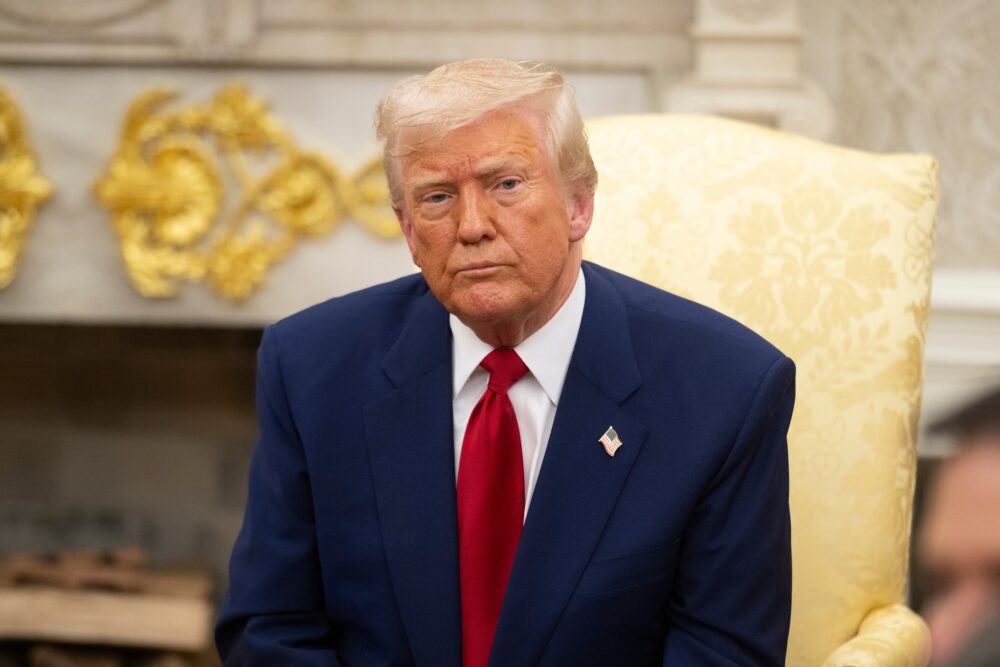
President Donald Trump is attending the White House Correspondents Association Dinner for the first time since returning to the Oval Office, ending what had become one of the most talked-about absences in the event’s century-long history. During his first term, Trump was the only sitting president to skip the dinner entirely, making his appearance this year a notable shift in tone and perhaps in strategy.
The annual spring gala, long regarded as a cornerstone of Washington’s social calendar, raises money for journalism scholarships and honors reporters who cover the White House. But this year, the mood surrounding the event is anything but festive for much of the journalism community.
A different kind of entertainment this year
In a departure from tradition, the correspondents association has moved away from booking a stand-up comedian to roast the president. Instead, mentalist Oz Pearlman is headlining the evening’s entertainment. It’s the second consecutive year that the association has steered clear of the comedy roast format, placing more emphasis on journalism awards and the organization’s scholarship mission.
The shift in tone may be intentional. With Trump in the room, a comedian’s sharp political barbs could easily overshadow the evening’s stated purpose or ignite a confrontation the association would rather avoid.
A tense backdrop heading into the evening
Trump’s attendance comes at a complicated moment for his administration. A recent NBC News poll put his approval rating at 37%, a new low. The same survey found that 68% of Americans disapprove of his handling of inflation and the cost of living, while 67% are dissatisfied with his approach to tensions with Iran, a conflict that has also contributed to rising gas prices and turbulence in financial markets.
That context makes his presence at a dinner meant to honor the very journalists who report on those numbers all the more pointed.
Legal battles with major news outlets
Trump’s relationship with the press has been defined by conflict, and the legal front is no exception. He filed a $15 billion defamation lawsuit against the New York Times over its coverage of his 2024 campaign. A federal judge dismissed the case, but Trump refiled it shortly after. He also filed a $10 billion lawsuit against The Wall Street Journal related to a birthday card he allegedly sent to Jeffrey Epstein that case was also dismissed earlier this year.
The administration’s decision to bar the Associated Press from major presidential events led the wire service to sue the White House. Despite that ongoing legal dispute, former Trump adviser Taylor Budowich is expected to attend the dinner alongside AP representatives a detail that underscores just how layered and contradictory the evening’s dynamics are likely to be.
Journalism groups push back
The dinner has drawn pointed criticism from press freedom advocates and prominent former journalists, including ex CBS News anchor Dan Rather and former CNN White House correspondent Jim Acosta. A coalition of journalism organizations sent a letter to the correspondents association urging it to take a firmer stance against what they describe as coordinated attacks on press freedom by the Trump administration.
The letter made clear that many in the media community view the dinner not as an opportunity for détente, but as a moment that demands accountability rather than applause.
A night rooted in history
This will not be Trump’s first time in the room. In 2011, then President Barack Obama and comedian Seth Meyers delivered a now famous roast of Trump, who was seated in the audience. That evening is frequently cited as a turning point that helped propel Trump deeper into political life lending the dinner an almost mythological significance in his personal story.
Whether Saturday night adds another chapter to that story remains to be seen. But with a polarized press corps, a president with a complicated record on media access, and a room full of reporters he has long called the enemy of the people, the 2025 dinner is shaping up to be one of the most consequential in years.
